
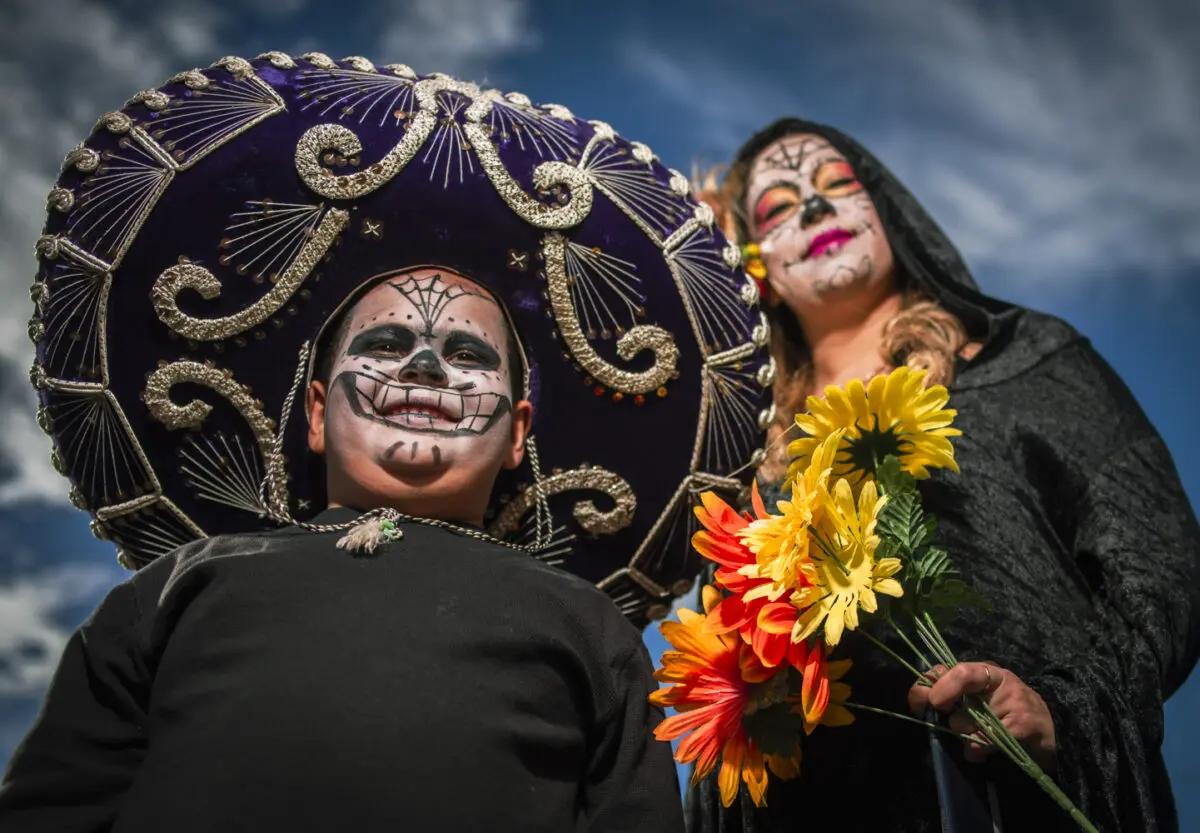
By Sara Atencio-Gonzales, The Paper. – Every fall, marigolds, colorful ofrendas and images of calaveras begin appearing across Albuquerque as communities prepare to celebrate Día de los Muertos, a holiday rooted in remembrance, family and cultural traditions.
While the holiday is often recognized for its vibrant decorations and celebrations, its meaning extends far beyond the festivities. For many Albuquerque residents, Día de los Muertos provides an opportunity to honor those who have passed, reconnect with their ancestry and preserve traditions that have shaped their communities for generations. These traditions reflect the city’s rich cultural identity, shaped by Mexican, Indigenous, Spanish and broader New Mexican influences.
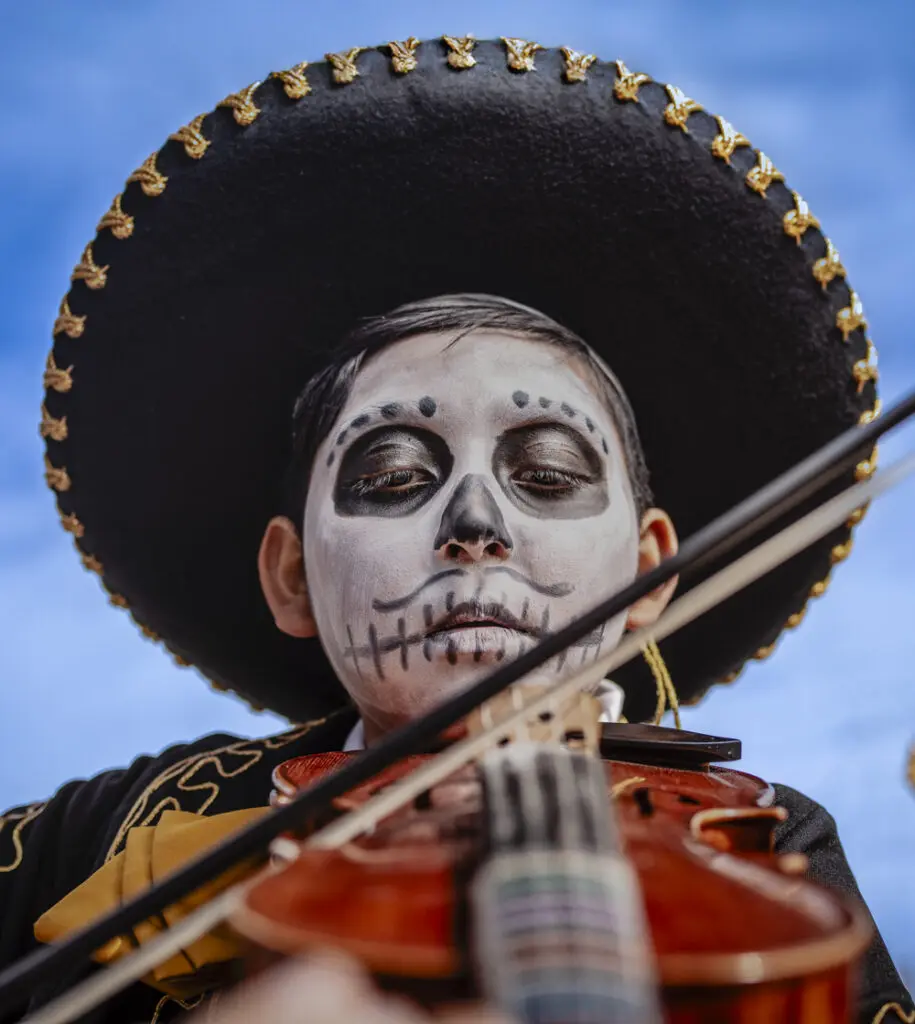
Sara Mancini, an organizer with the Historic Old Town Association, said the holiday’s significance in New Mexico is closely tied to the state’s cultural heritage. “A lot of us have heritage from Mexico, and so I think that’s something that’s always had a piece in our culture,” says Mancini.
That connection is particularly evident in Albuquerque’s South Valley, where Día de los Muertos celebrations have become an expression of cultural pride, community resilience and artistic activism.
Xavier Avila, project director of Muertos y Marigolds, said the organization’s roots date back to 1992, when organizers sought to establish a celebration that reflected the South Valley’s identity.
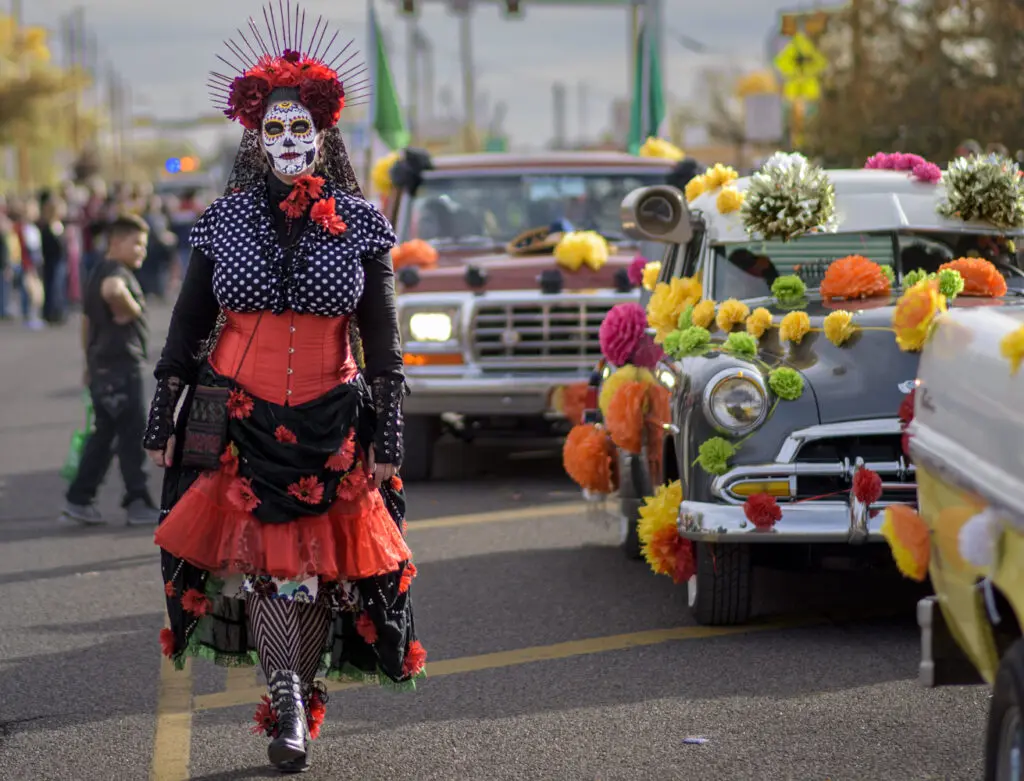
What began as a small procession of vehicles eventually developed into a longstanding community tradition. “In the beginning, it started out as just a handful of cars, and you know, it was very, very sort of guerrilla because they didn’t have permits or anything,” says Avila.
According to Avila, the celebration is rooted in the Chicano arts movement and draws inspiration from artists such as José Guadalupe Posada and Diego Rivera, whose work used art and political satire to examine society.
For organizers, the holiday is not simply about celebrating the past. It is also about strengthening the community’s connection to its cultural identity. “I think it makes our community more resilient, and harder to exploit and displace if they have a stronger communal sense of self,” says Avila.
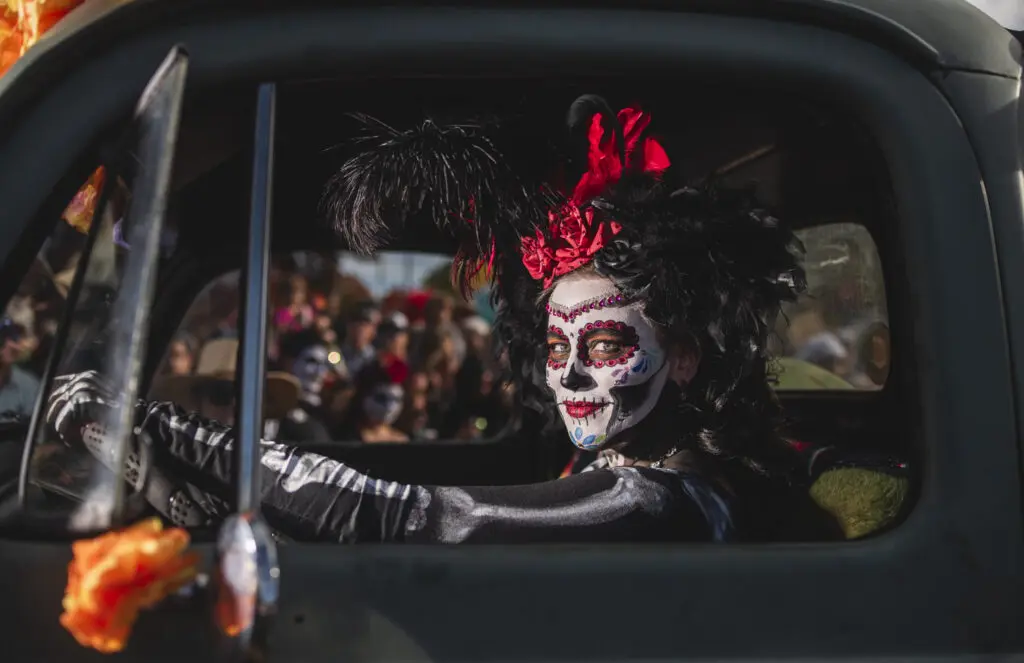
That emphasis on cultural preservation extends beyond the South Valley.
At the Gutiérrez-Hubbell House Museum, Día de los Muertos traditions are celebrated within a historic property that has served as a gathering place for the Pajarito community for generations. Located along El Camino Real de Tierra Adentro, the property has a history dating to the 1700s. Its adobe house, built in the 19th century, once served as a residence, mercantile and stagecoach stop.
Today, the museum continues its community-centered role through educational programming and cultural exhibits.
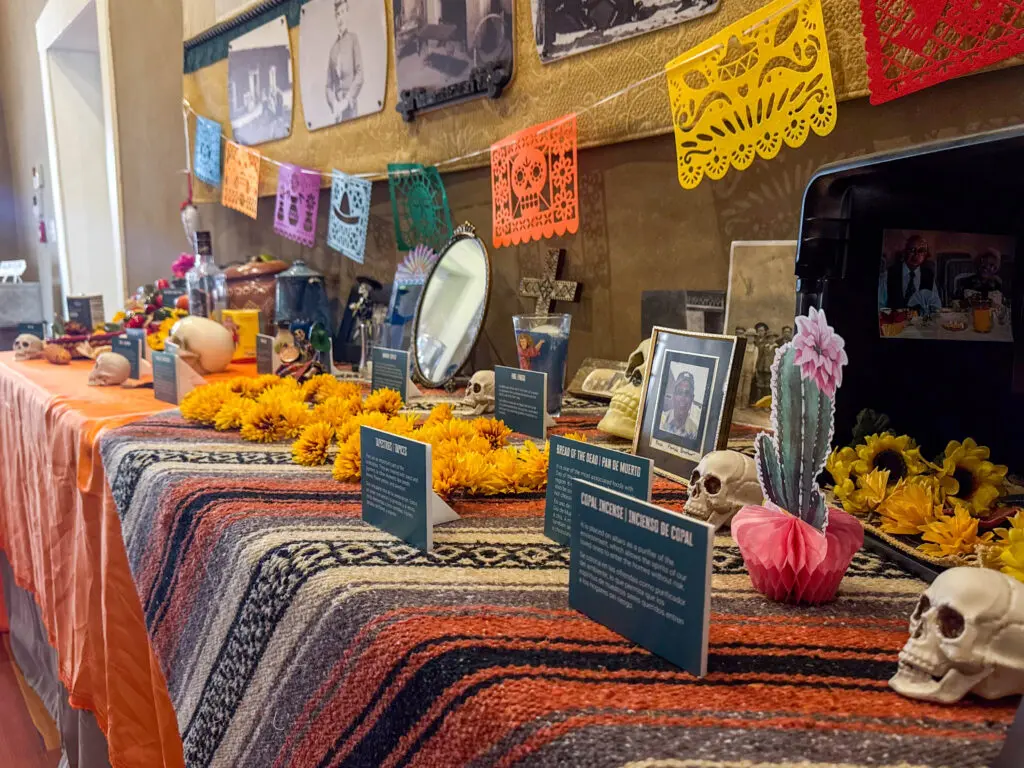
Esai Ramirez, a contractor for Bernalillo County Open Space who works on historic preservation and museum programming, said preserving Día de los Muertos traditions is similar to preserving historic buildings. “With historic preservation, you’re of course preserving a physical structure, but the purpose of it is to ensure that future generations can enjoy the building and use it as well,” says Ramirez.
Ramirez explains that cultural traditions must also have opportunities to evolve while retaining their meaning for future generations. The museum’s annual Ofrendas Comunitarias and Cultural Traditions exhibit invites local schools, nonprofit organizations and community members to create altars honoring people who have influenced their lives.
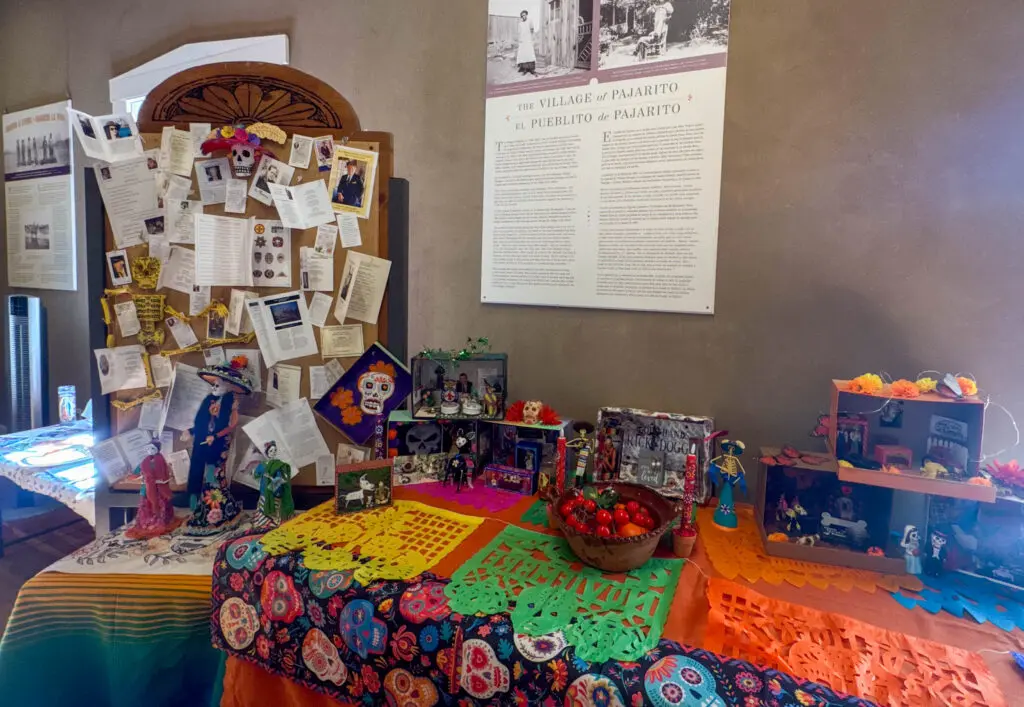
For Ramirez, the exhibit offers visitors an opportunity to understand that Día de los Muertos involves more than its recognizable decorations. The tradition of building ofrendas remains central to celebrations throughout Albuquerque. Altars may feature photographs, favorite foods, flowers and other offerings, each representing a personal connection to someone who has died.
Although the holiday acknowledges death, its traditions emphasize remembrance and the continuing bonds between generations.
In Old Town, that sense of connection is also shaping how the historic district celebrates. Mancini emphasizes that the Historic Old Town Association has worked to ensure its annual celebration prioritizes cultural significance and community participation rather than commercialization.
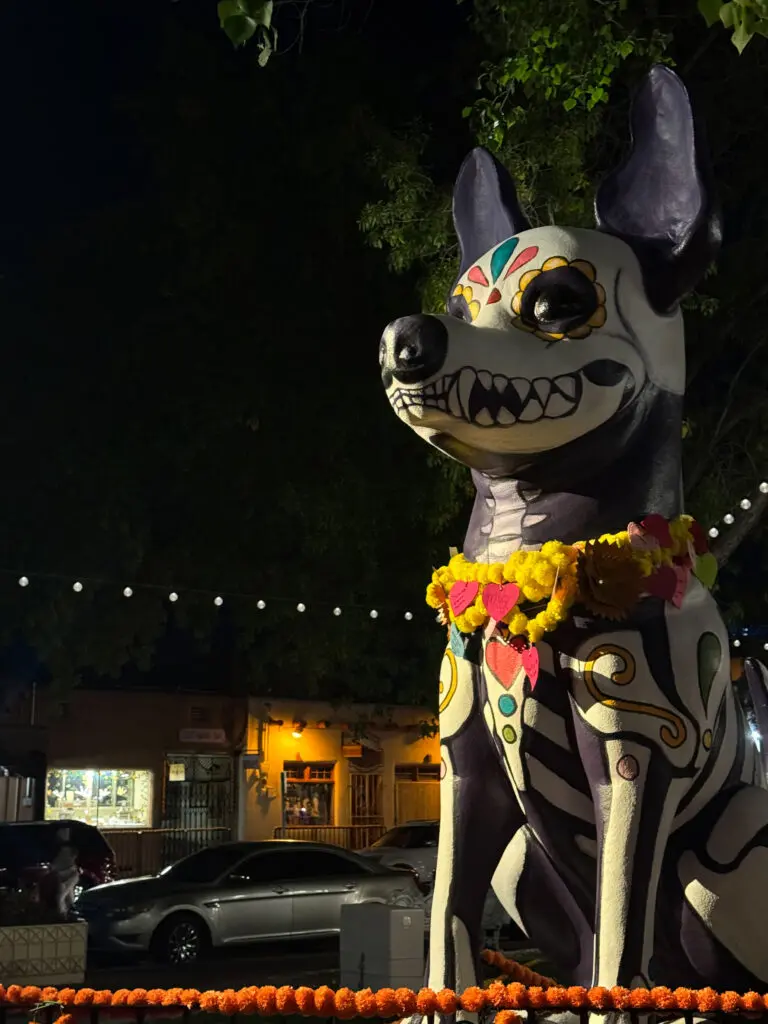
“We work really hard to make sure it’s culturally significant and appropriate, and not commercialized,” says Mancini.
Mancini explains that involving nearby schools and neighborhoods helps preserve the community’s connection to the holiday. Students from San Felipe de Neri School and Escuela del Sol Montessori School are participating in the creation of an ofrenda displayed in Old Town Plaza’s gazebo.
“We aren’t just a commercial district or a community, and so involving the schools and the neighborhoods around us for events like this is what brings the meaning and the richness to it,” says Mancini.
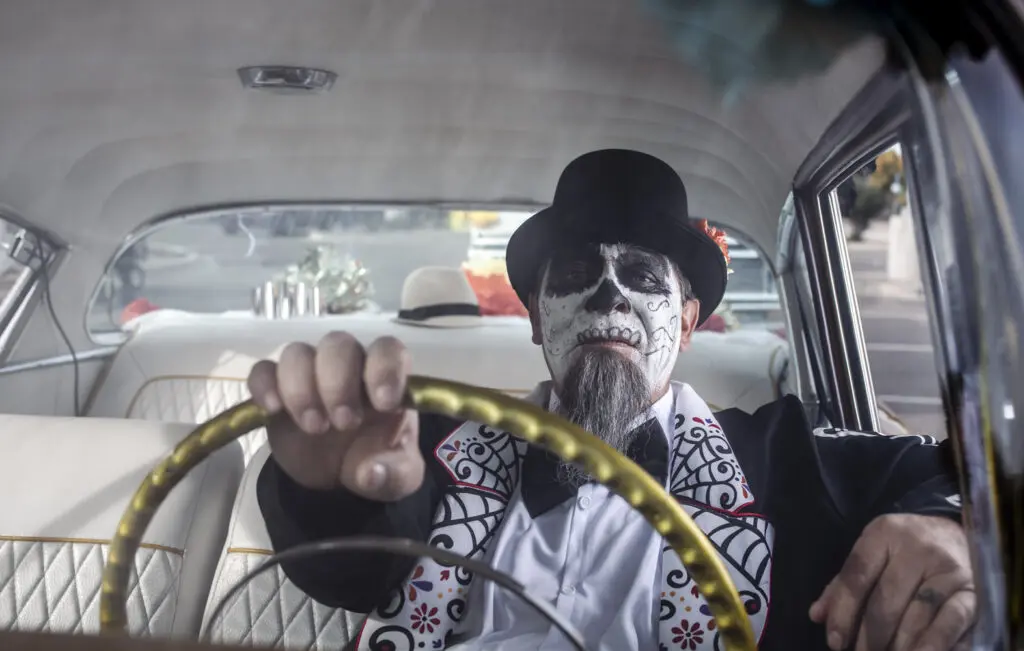
(Photo by Roberto E. Rosales for The Paper) Credit: The Paper
Across Albuquerque, these efforts are reflected in several public celebrations taking place this season.
Muertos y Marigolds will bring its South Valley Día de los Muertos Celebration and Marigold Parade back on Nov. 1 after a seven-year parade hiatus. The procession begins at noon, with festivities continuing until 4 p.m. at the Westside Community Center (1250 Isleta Blvd. SW).
At the Gutiérrez-Hubbell House Museum (6029 Isleta Blvd. SW), the annual community ofrenda exhibit, which opened Oct. 3, remains on display through Nov. 7. This year’s exhibit also includes artwork from local artists.
Meanwhile, Old Town’s fourth annual Día de los Muertos celebration runs from Oct. 30 through Nov. 8, featuring the Marigold Mile, community ofrendas, cultural performances and a candlelight procession. On Nov. 1 and 2, Old Town Plaza will become Plaza de los Recuerdos, where families can honor loved ones through community altars.
Although each celebration reflects a different part of Albuquerque, they share a commitment to keeping cultural traditions meaningful and accessible.
For Avila, that commitment ultimately comes down to helping community members recognize the value of their own history and identity. “Our very most basic goal was to try to make people feel like it’s okay to be who they are, and that they don’t have to feel so strange in a land where they belong,” says Avila.
As Albuquerque prepares to celebrate Día de los Muertos, the holiday serves as a reminder that honoring those who came before is also a way of preserving culture for those who come next.
Share this story and start a conversation