
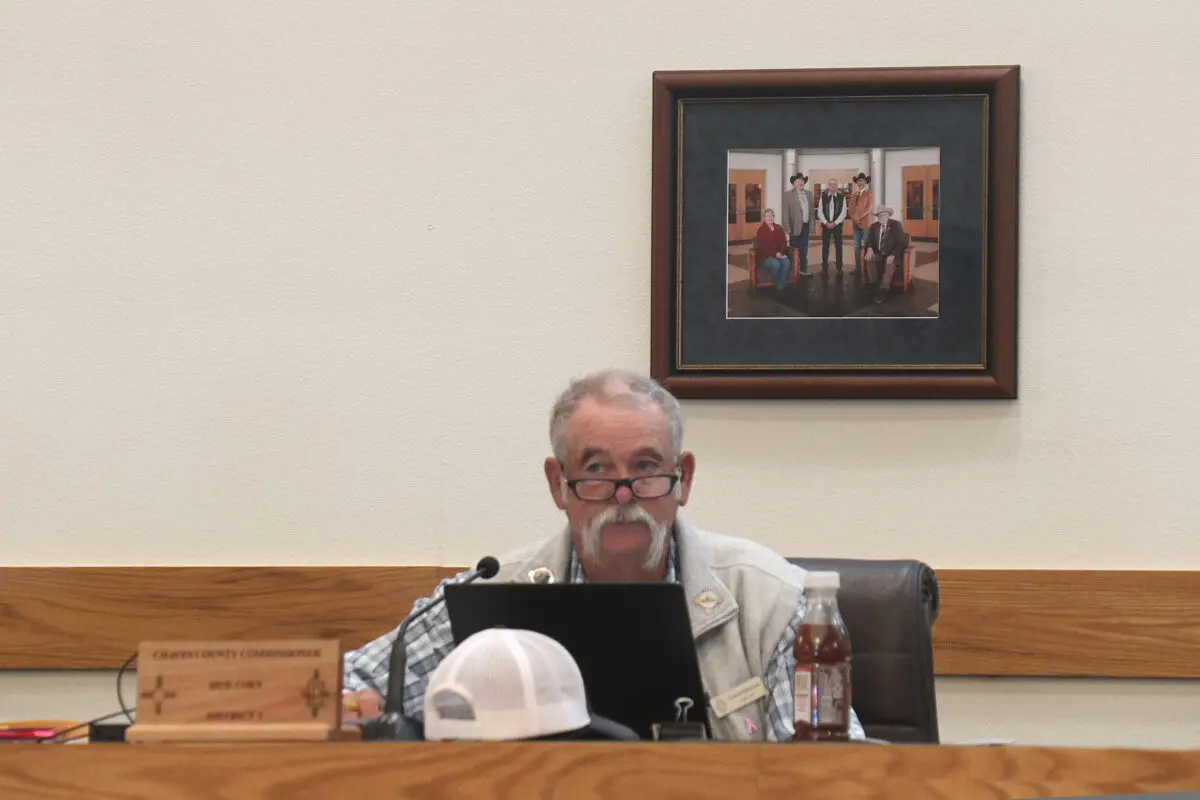
By Terri Harber, Roswell Daily Record — Resolutions that would have started the process to issue two Industrial Revenue Bonds (IRBs) for an energy company project in Chaves County were put on hold after a motion to vote on the matter didn’t receive a concurring second vote. This occurred during the county commission meeting on Oct. 15.
The resolutions are precursors to an ordinance that would authorize the county to issue up to $86 million in bonds on behalf of NextEra Energy Resources LLC, which proposes to construct a 15-acre battery energy storage facility at 445 Wrangler Road and 70 Outlaw Trail. Separate resolutions, R26-051 and R26-052, represent the county and the local school district, said Chaves County Manager Bill Williams.
The battery facilities would complement the two solar energy plants in the location that has been operating for a decade across 1,400 acres. The existing solar sites contain 600,000 solar panels and provide enough operating capacity to power more than 40,000 homes.
Williams also explained that the resolutions are to offer “inducement” to businesses to continue negotiating. In turn, there would be more details stemming from the talks to share. This resolution also stated that any agreement “in no way obligates the County to any further action unless approved by the County Commission,” because NextEra is financially responsible for the bonds.
Commissioner Herbert Corn provided financial information about the company, such as the CEO’s annual compensation being more than $24 million and that the median amount paid to its employees is about $164,000 a year. “I don’t feel like this is a thing we need at the moment,” Corn said to the company representatives. “Y’all have a big enough leg to stand on.”
As of Oct. 20, NextEra had total equity of $163.3 billion, according to Macrotrends, which provides financial information about stocks and long-term investments.
“We just don’t understand, except that you’re just trying to do tax abatement,” said Commissioner Cliff Waide as he also looked toward the NextEra group seated in the meeting room. “Is there another reason?”
“When we came to the ETZ hearing to get our rezoning permit approved, (the committee) felt as though … they weren’t seeing the type of economic benefit they would like,” said Kayla Di Donado, an associate project manager for NextEra. “And so, we are doing that… I just want to make sure you’re feeling as though you’re getting value.”
“That’s what we want for the community also,” said Waide.
The company is also working on a community benefits agreement.
“What you’re doing is abating their taxes for 20 years on this property that currently isn’t making you any money,” County Attorney Martin Riggs told the commissioners. ”It’s just a question of ‘Is it worth the value of whatever the taxable amount is that the assessor would collect on the personal property tax?’”
Share this story and start a conversation