

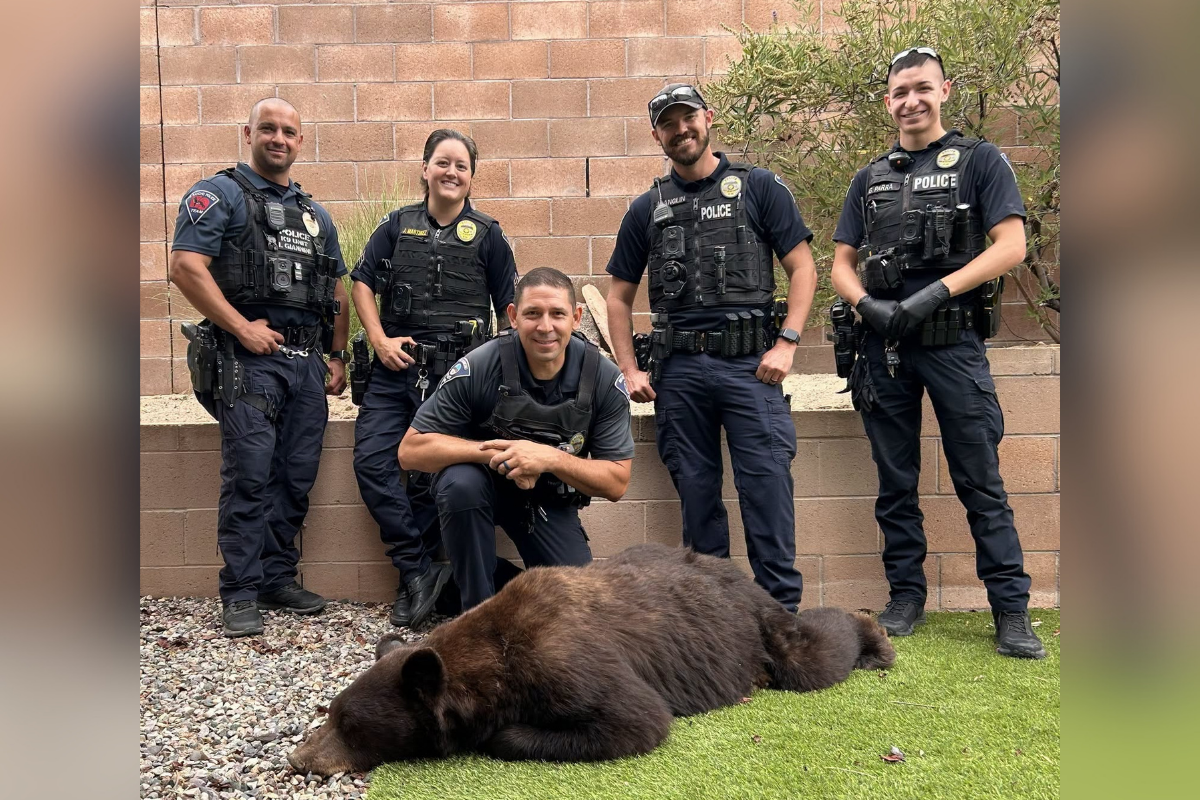
By Rodd Cayton — Here, a bear! There, a bear! Is 2026 the year of the bear in Corrales?
The police department earlier this week reported a bear sighting on El Dorado Road. That’s at least the fourth in the area since spring. In an August message to the community, Mayor Fred Hashimoto wrote of a bear near the Sandoval Lateral, an agricultural irrigation canal that runs through Corrales and Rio Rancho. In May, another ursine visitor was spotted in the village and in northwest Albuquerque, staying a step ahead of state and local animal control authorities as it explored the area.
A police department urges residents to “be bear aware,” which includes securing garbage and food sources, keeping children close and pets leashed when outdoors and never feeding or intentionally approaching a bear.
Spokesperson Darren Vaughan of the New Mexico Department of Game and Fish told the Corrales Comment that as of Oct. 20, authorities have opened 34 complaints related to bears in Sandoval County and 51 in Bernalillo County.
The number reflects reports of bear activity that warrant further investigation by wildlife officers and potential interventions. The number of bear sightings across the state, he said, has been abnormally high this year due to higher temperatures and a lack of moisture this spring and summer, resulting in reduced food and water availability at higher elevations.
Vaughan said the department is seeing a significant number of bears in populated areas, including some that have been spotted multiple times.
He said a bear’s behavior ultimately determines what action wildlife officers will take.
“The department’s priority is to keep bears alive and prevent them from becoming habituated to people,” he said. “The best way to accomplish this goal is to eliminate food and water sources around homes. The public can help in these efforts by eliminating attractants from their yards, which will prevent bears from becoming habituated to human-provided food sources.”
When bears find food around homes, Vaughan said, they can learn to associate neighborhoods and people with a quick way to find a meal. “When they become habituated in this way, humans and pets are put in danger and bears are put in a situation where they must either be relocated or euthanized,” he said.
Vaughan said there are several safety measures that the public can take to keep themselves safe and prevent potentially dangerous encounters with bears:
Never feed or approach bears. Feeding bears — intentionally or otherwise — trains them to approach homes and people for more food. Bears will defend themselves if a person gets too close, so don’t risk your safety and theirs.
Remove bird feeders when bears are active. Birdseed and other grains have a high caloric content, making them very attractive to bears.
Never leave pet food outside. Feed outdoor pets portion sizes that will be completely eaten during each meal; remove leftover food and food bowls, and secure stored foods so nothing is available to bears.
Clean and store outdoor grills after use and, clean it thoroughly and make sure that all grease and fat are removed. Store cleaned grills and smokers in a secure area.
Share news about recent bear activity with friends and neighbors.
Electric fencing has proven to be an effective deterrent to bears without causing long-term harm, and will help protect their livestock, beehives and bird feeders.
Homeowners in bear country are encouraged to take the following steps to keep themselves, their property and their pets safe:
Fruit trees should be planted away from the residence, with fruit picked as it ripens and spoiled fruit because as it falls to the ground. Woodpiles attract rodents, which some bears eat. They should be kept away from the residence
The department offers the following tips, should one encounter a bear while walking:
Do not run. If you see a bear, stay calm.
Stand upright. Slowly wave your arms.
Slowly back away from the bear.
Look for cubs and avoid coming between a mother and her cubs.
If attacked, fight back aggressively. More information is available here.
“All of us here are in this tough climate change together, but our faucets still run, groceries are still available and we have fans and air conditioning,” Hashimoto wrote in the August message. “Be nice to our black furry friends from the east. If left alone, they’ll find their way back home.”