

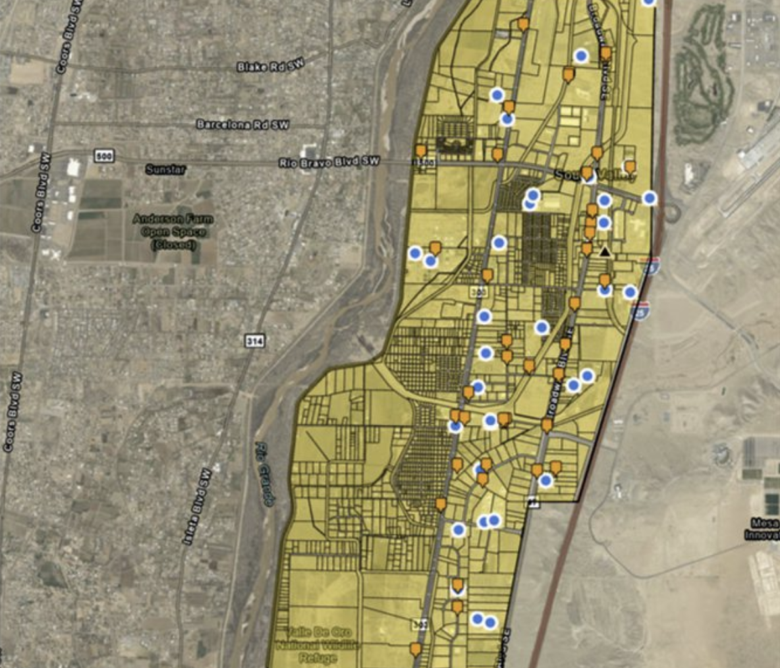
By Jesse Jones, The Paper. — For years, Mountain View residents near fuel terminals and scrapyards worried about neighborhood pollution. Now, a new county database puts local environmental records in one place.
At its Nov. 10 meeting, the Bernalillo County Board of Commissioners heard the final report on the Mountain View Environmental Inventory Database. Approved in 2024 after community pollution concerns, the $250,000 interactive tool compiles property records, county permits and environmental data previously scattered across local, state and federal websites. The Public Works Department’s Technical Services Division and Wilson & Co. built the inventory, which covers roughly 2,170 parcels and catalogs air, soil and water records — including Superfund sites, hazardous waste generators, cleanup programs and air pollution sources.
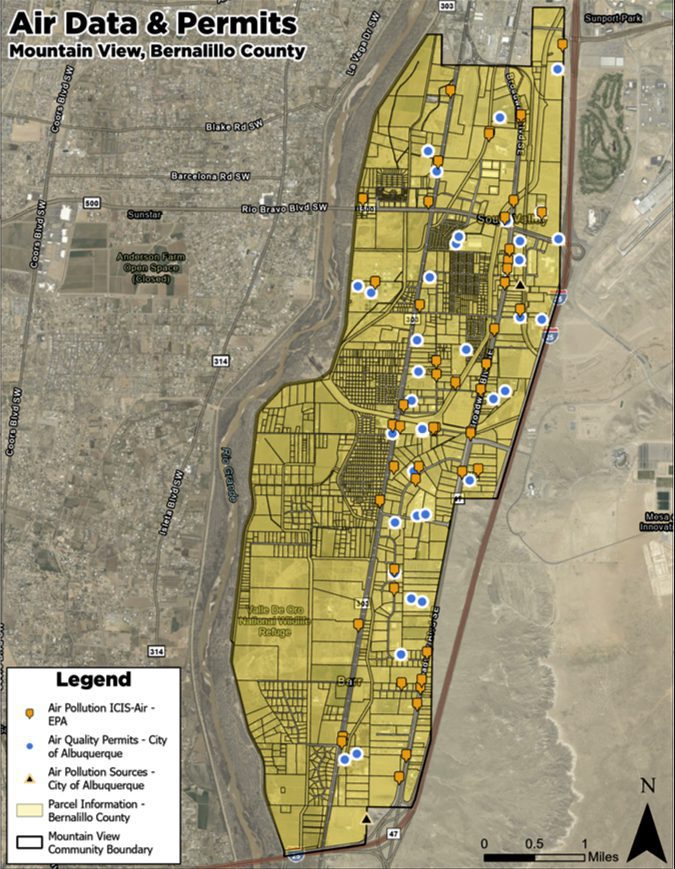
Commissioner Eric Olivas said more than half of Mountain View’s commercial and industrial businesses lack county permits, raising questions about whether they follow other environmental rules. “If they don’t have a county permit, what are the chances they have the state permit that they might need for their advanced operation?” Olivas asked. He also questioned whether businesses had required air quality permits or were subject to federal Environmental Protection Agency oversight. While the report identifies 172 commercial properties without county business licenses, it doesn’t show whether businesses on those properties have other environmental permits or are breaking any rules.
The database is one piece of the county’s response to Mountain View pollution concerns. It is also launching a three-year air-monitoring network through its Air We Share project. On Nov. 10, commissioners also approved a $1.5 million EPA grant to assess potentially contaminated commercial properties in Mountain View and three other corridors. The funding covers environmental testing and reuse planning, not cleanup. Meanwhile, South Valley residents are organizing against a proposed Marathon Petroleum permit change that would increase the fuel terminal’s permitted volatile organic compound emissions by more than 15 tons annually.
Technical Services program manager Dan McGregor said the inventory reflects 2025 and 2026 data, requiring ongoing updates and maintenance funding. The next step could be the Gap Mapping Analysis, estimated at $250,000 plus inflation adjustments, to identify policies, plans and projects to reduce pollution, improve code enforcement and department coordination, and attract cleaner businesses. Before starting that phase, staff recommended adopting the Mountain View Sector Development Plan to guide growth, zoning and infrastructure priorities. Vice Chair Frank Baca said he has discussed funding the analysis in the next county budget, though commissioners haven’t approved it.