

By Kevin Hendricks, The Paper. — Rio Rancho’s groundwater stopped sinking about a decade ago. But the recovery hasn’t reached every neighborhood, and shallow wells near the Rio Grande have dropped sharply in the last couple of years.
Water levels fell from about 2005 to 2015, then rebounded “at various magnitudes.” That’s according to researchers from the New Mexico Bureau of Geology and Mineral Resources at New Mexico Tech, who presented to the Governing Body on Oct. 20.
Layers, not a lake
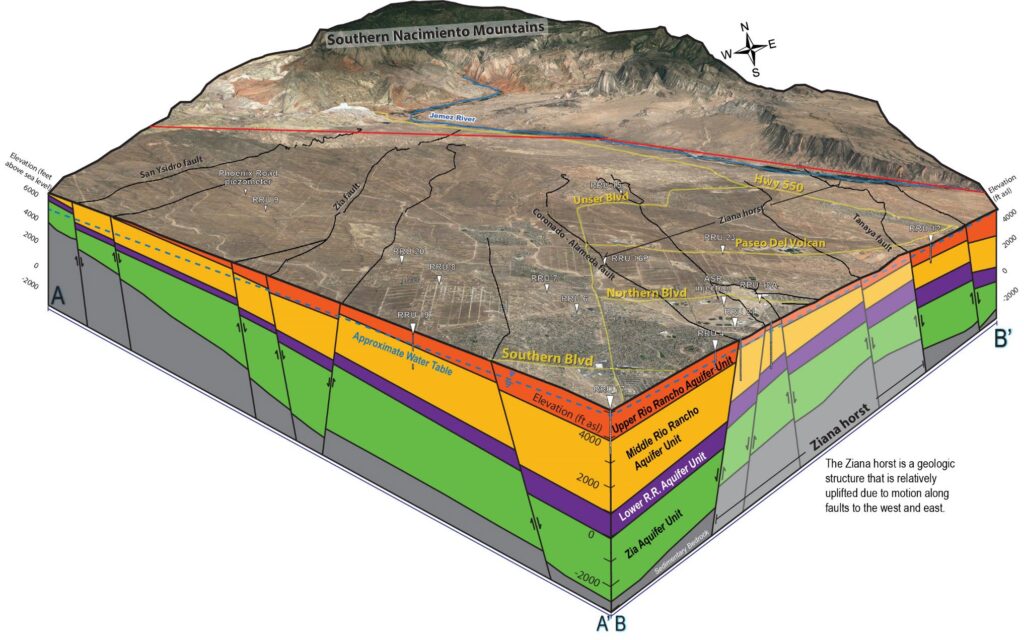
Rio Rancho draws from the Albuquerque Basin, a deep bowl filled mostly with sand that holds far more water than the bedrock beneath it. A team led by geologist Daniel Koning mapped four stacked aquifer layers under the city: the Upper, Middle and Lower Rio Rancho units, plus the deeper Zia unit.
Depth to water ranges from 27 feet near the Rio Grande to 1,300 feet in the northwest. Pump tests show groundwater moving only a few feet a day in most city wells.
The Upper Rio Rancho unit carries the best water but holds water only beneath the southeast quarter of the city. Wells near the Ziana horst, an uplifted block of ground, pull saltier water, especially north of Northern Boulevard. The researchers said deeper, saltier water may be rising along faults.
The rebound has gaps
The bureau reviewed U.S. Geological Survey monitoring wells across the area. Two deep wells west of the city center have climbed since 2015. Wells near Lincoln Middle School and near Kennard and Hummell show less recovery. Shallow wells near the river dropped 2 to 4 feet in recent years.
Putting water back
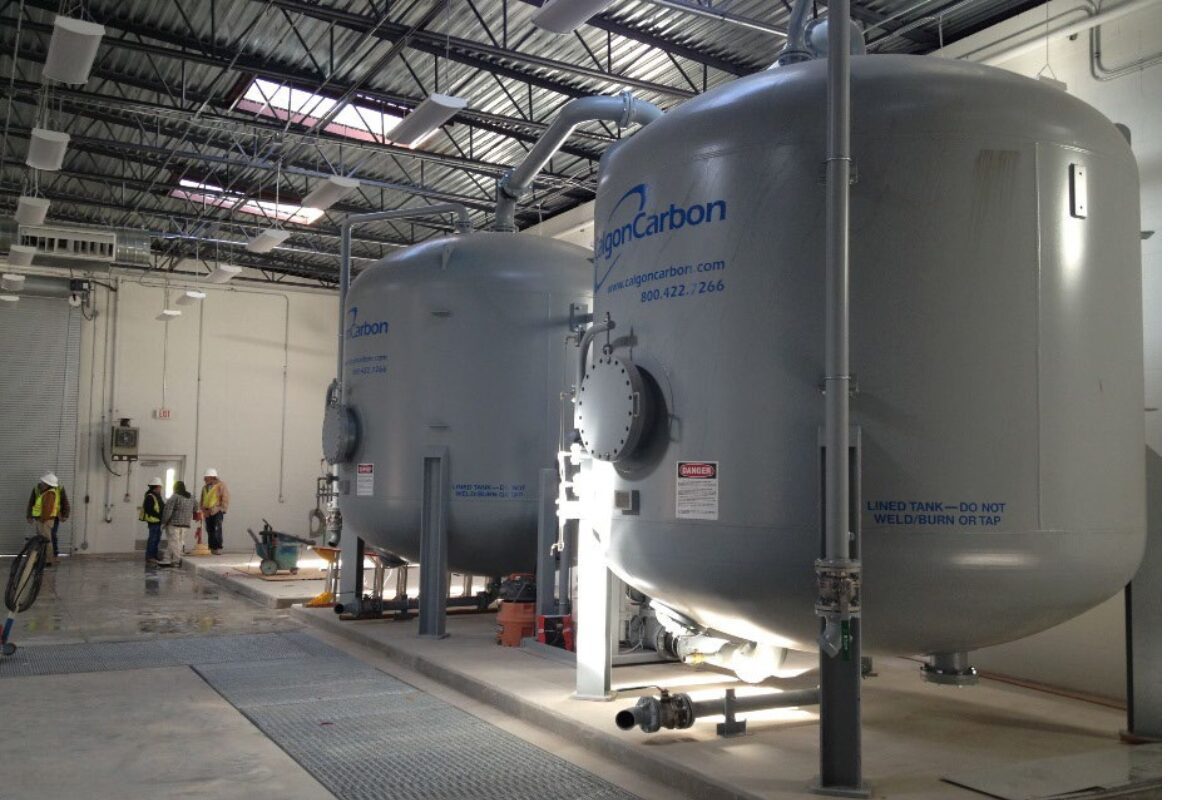
In 2017, Rio Rancho became the first New Mexico city permitted to inject highly treated wastewater into its aquifer. Albuquerque has since won a permit, too. Cities such as Scottsdale, Arizona, and Orange County, California, have used the approach for decades.
The program struggled for years. The city injected just 16 million gallons in 2025. From January through September of this year, it injected 71.1 million gallons, nearly matching the previous three years combined. The Utilities Department credits better troubleshooting, less downtime and ordering parts before they fail.
Since 2017, the city has injected 395 million gallons. Its goal is the permitted maximum of 1,000 acre-feet a year. A second injection well, backed by $2.5 million from the EPA and a 15% to 25% city match, will add reliability. But the treatment system will still limit how much water goes down, O’Brien’s presentation notes.
Recharge may eventually let the city count injected water toward its river offsets, and even pump more.
State scientists plan helicopter surveys of the region’s aquifers during the 2026–27 season. The surveys can image as deep as 1,500 feet. They’re part of the state’s 50-year water action plan, which aims to map all major aquifers by 2032 and add 100 monitoring wells by 2037.
BY THE NUMBERS
- 4: aquifer layers beneath Rio Rancho
- 27 to 1,300 feet: depth to groundwater across the area
- 395 million gallons: treated water injected since 2017
- 71.1 million gallons: injected January through September 2026
- 1,000 acre-feet: the city’s yearly injection goal
INFO BOX
Bureau of Geology presentation: rrnm.gov/DocumentCenter/View/89988
Rio Rancho Pure injection program: rrnm.gov/4024/Rio-Rancho-Pure
Questions for the researchers: laila.sturgis@nmt.edu
Share this story and start a conversation