

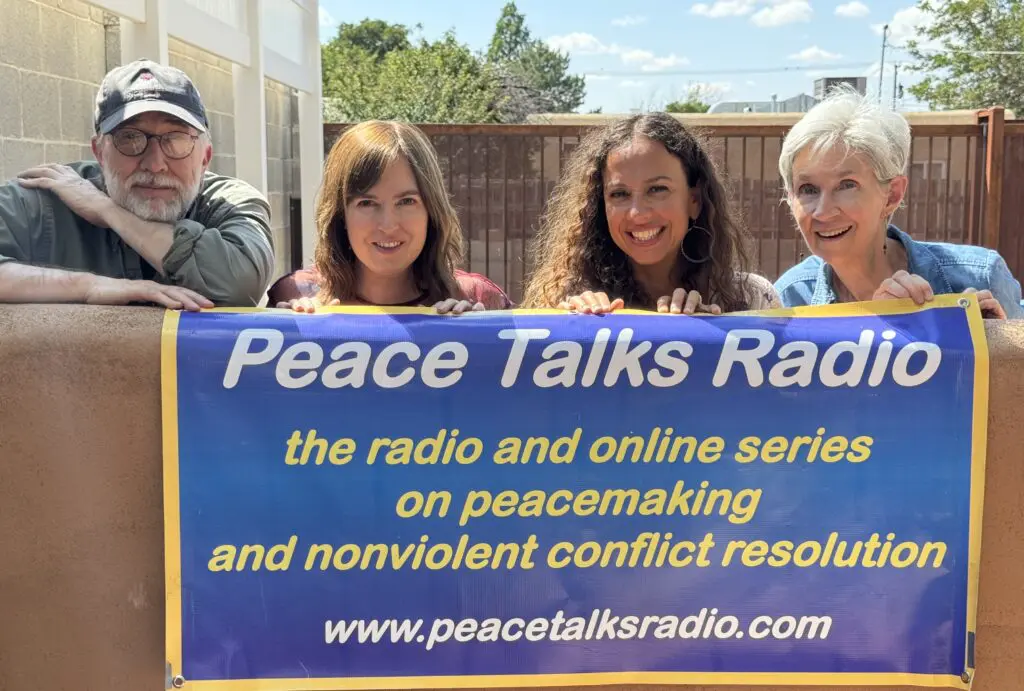
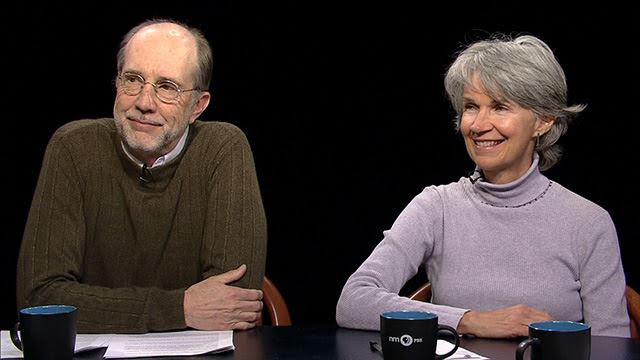
By Sara Atencio-Gonzales, The Paper. – Paul Ingles has spent more than 50 years behind a microphone, but for the past two decades, much of his work has centered on a deceptively simple subject: peace. The Albuquerque radio producer is the co-founder and executive producer of Peace Talks Radio, a nationally syndicated series that explores peacemaking and nonviolent approaches to conflict, from disagreements in everyday life to complex international issues.
Peace Talks Radio has now been on the air for more than two decades. How has your understanding of what it means to talk about peace changed over the course of producing the series?
Honestly, not much has changed since co-founder Suzanne Kryder and I launched the program soon after the 9/11/2001 attacks on America. We knew then that most media outlets would be reporting on war without reserving much on-air real estate to talk about making peace, diplomacy, and constructive dialogue that can prevent wars and conflict from exploding. We’ve tried to make the focus of each Peace Talks Radio show the upstream prevention of conflict, and effective nonviolent conflict resolution strategies. We’ve now made over 260 such programs in these 24 years.
Wars, fear, conflict, crime and chaos drive commercial media audience ratings up, in both news and entertainment programming.
We chose to counter program that by exploring peacemaking from a concentric circles model that starts with making peace with ourselves, then moves outward to making peace with others in our daily lives — in our primary relationships, in parenting, in school settings, work settings, travel settings, consumer settings, on and on — all the way up to complex international conflicts.
Peace Talks Radio explores peacemaking through topics ranging from social justice and the environment to art and everyday relationships. What have you learned about where peace and conflict show up in our daily lives?
There’s a famous Seinfeld episode where Jerry and George are trying to sell their idea of “A Show About Nothing” to NBC. George asks of the NBC exec, “What did you do this morning?” The exec says, “I got up and went to work.” George says “THAT’S a show!”
We feel the same about conflict and the opportunities for peacemaking every day. If we wake up thinking worrisome existential thoughts about what we’re doing with our lives … THAT’S A SHOW! We get up and there’s a disagreement with our spouse … THAT’S A SHOW! Then our teenager is sulking but won’t say why … THAT’S A SHOW. We drive to work and some aggressive driver cuts us off on the freeway. We get to work and there’s a problem with the boss. That’s five conflict scenarios right there before 10 a.m. We’ve done full programs on each.
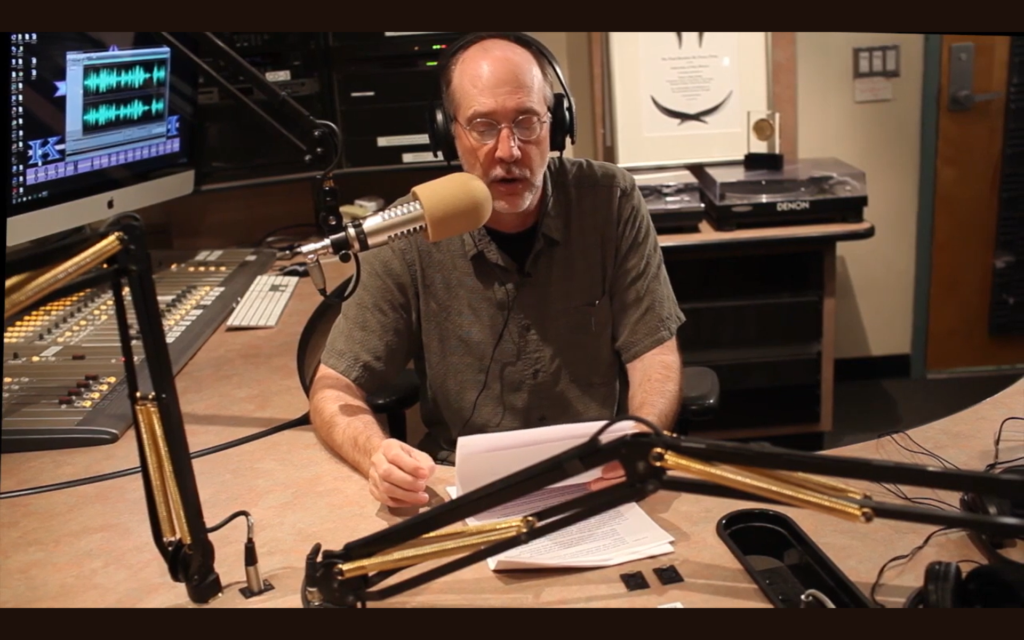
How has your experience in radio shaped the way you approach conversations about difficult subjects on Peace Talks Radio, and what do you think radio can offer these conversations that other forms of media can’t?
Most forms of media are only shrinking the spaces for meaningful conversations about the human experience. Sound bites have gotten shorter also now in TV and radio stories. Newspapers – if not folding – are smaller, their stories shorter. What passes for “news stories” on our phones are basically clickbait via misleading headlines, taking us to ad-strewn poor excuses for journalism where next to nothing of what the headline promised is even discussed, let alone offering any info useful to share with another. It’s noisy out-of-context “hot takes” and shouting matches that certainly don’t offer possible solutions to conflict scenarios in all our lives.
These trends are based on the insistence that viewers’ and listeners’ attention spans have also shrunk. Public radio, and some podcasters, and we at Peace Talks Radio, don’t believe this. We’ve doggedly held on to the hope that longer-form, old-school conversations that aim to seriously inform and inspire people, and generally improve the human experience, will appeal to a significant number of people who are understandably frustrated with today’s media choices. Our 70 stations in 26 states must be attracting these listeners to keep us on-air for nearly 25 years. Our million downloads and website hits each year to https://peacetalksradio.com suggest this too. Listeners write that they find us, stay tuned in, and walk away feeling more enriched. We hope they’ll tell someone else about Peace Talks Radio’s truly useful thoughts and empowering ideas that help us all handle conflict non-reactively, and certainly, nonviolently.
Listeners can tune in to Peace Talks Radio on KUNM on Tuesdays at 8 a.m. The program is also available online at peacetalksradio.com, where listeners can explore past episodes, find podcast options and learn more about the series. To keep up with Ingles and his other projects, visit paulingles.com.
Share this story and start a conversation