

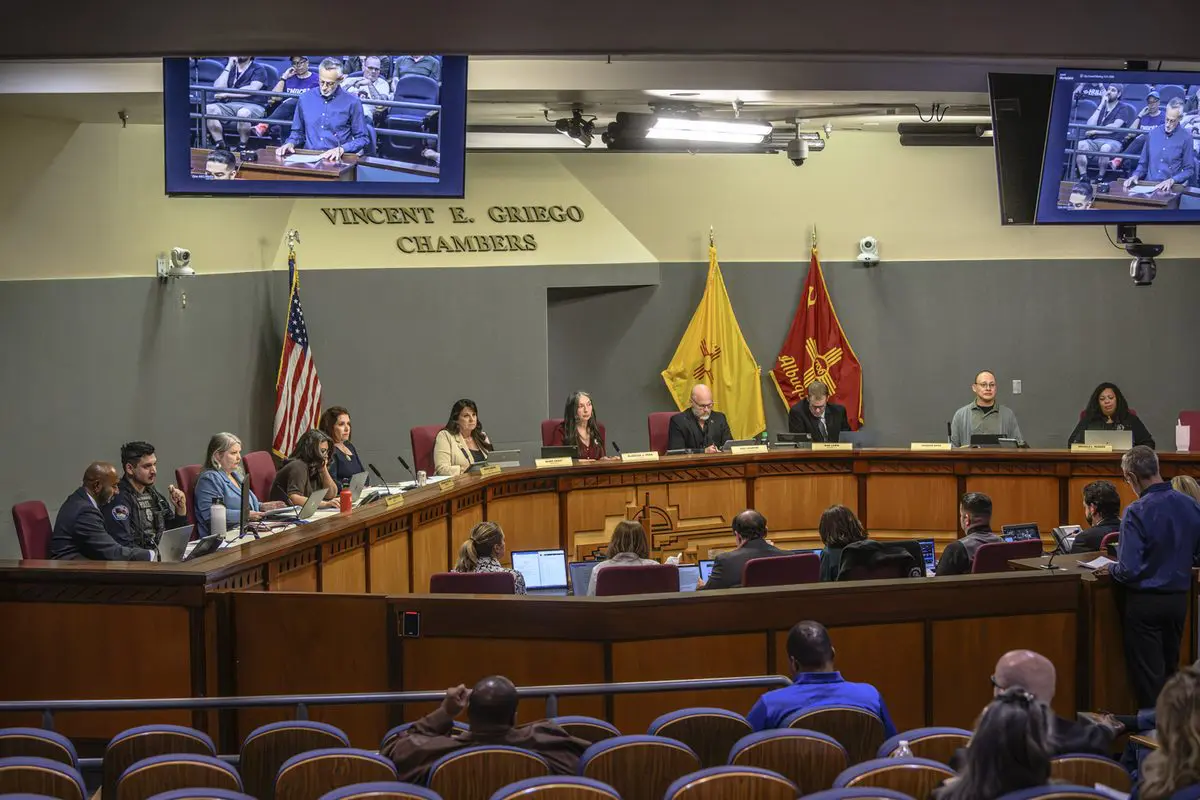
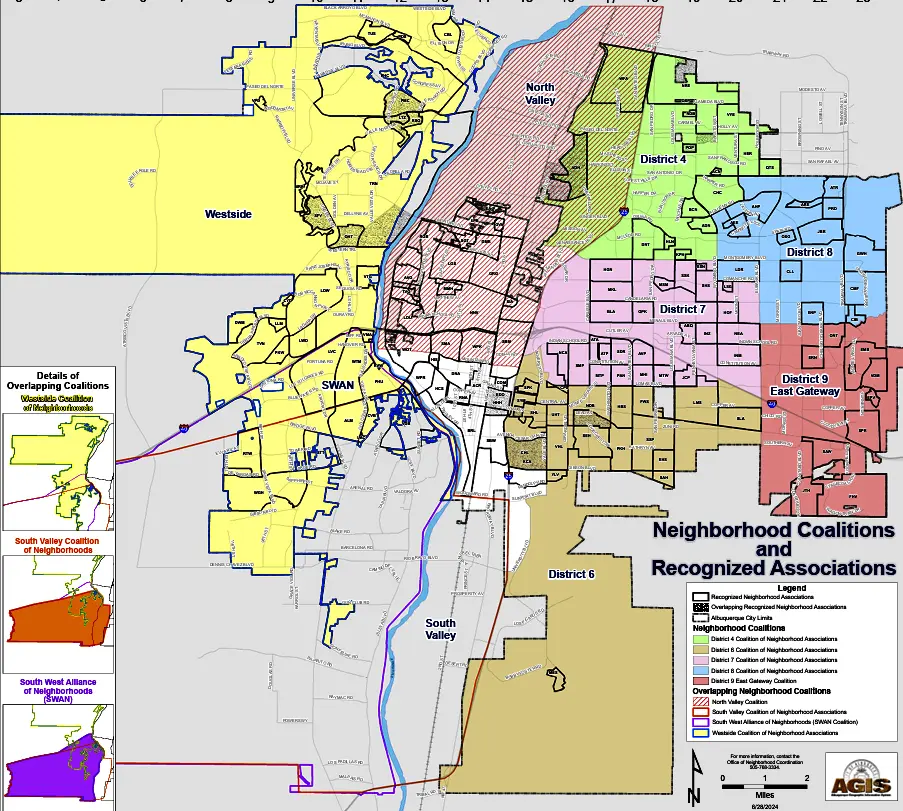
By Jesse Jones, The Paper. — Who decides what gets built on your street? When a new apartment complex, business or other development is proposed nearby, Burqueños often look to neighborhood coalitions to challenge projects. That role changed Monday after the City Council voted to strip coalitions of formal recognition and automatic development notice and appeal rights under new city rules.
The changes came through a 4-part package sponsored by Councilor Dan Lewis that included two ordinances and two memorials. Councilors approved Ordinance O-26-61 in a 5-4 vote, with Council President Klarissa Peña and Councilors Nicole Rogers, Brook Bassan and Joaquín Baca opposed. The ordinance limits formal city recognition, development notices and appeal rights to neighborhood associations made up of residents near a project. Councilors approved four amendments during debate. They capped association boundaries at 2 square miles, gave groups until July 1, 2027, to comply, encouraged outreach to apartment buildings and public spaces and adjusted meeting notice rules so associations can act faster on appeals. Another amendment requires approval from at least 10% of an association’s members or 15 confirmed members for an appeal.
The council deferred O-26-60, which would raise the appeal fee for approved projects to $925 while keeping the fee for denied projects at $225. Amendments added indigency waivers for people who cannot afford the fee, extended the payment deadline to two business days and required the Planning Department to give the City Council an annual report on land-use appeals and their outcomes. Lewis said O-26-61 “right-sizes” neighborhood representation by putting authority back with “the neighborhoods that are closest and have a direct stake.” The two memorials also passed 6-3, with Rogers, Bassan and Peña opposed. M-26-1 asks state lawmakers to remove restrictions so home-rule cities can set local definitions for legal standing, while M-26-2 asks the Legislature to allow cities to designate certain land-use categories for direct appeal to District Court.
Nearly 75 residents spoke during the meeting, with 44 opposing the reforms and 28 supporting them. Adam Silverman, a local real estate developer who supported the changes, said coalitions without local ties can stall projects and neighborhood associations closest to developments should lead community discussions. “I believe the neighborhood association should absolutely have the right to be involved in the process when something new is being proposed near their community,” Silverman said. Julie Rodosovich, president of the Hurley Neighborhood Association, opposed the package and said volunteer neighborhood associations rely on coalition expertise to navigate land-use rules and challenge improper developments. “Neighborhood coalitions serve as a buffer when actions threaten our neighborhoods,” Rodosovich said.
O-26-60 returns to the council Oct. 19 after a technical title correction. The local zoning changes take effect immediately, while the two memorials will head to the Roundhouse as city leaders push for changes during the upcoming legislative session. State Sen. Antonio “Moe” Maestas, who spoke in support of the measures, said the memorials will help advance zoning reform in Santa Fe. Residents can contact the Office of Neighborhood Coordination to confirm their neighborhood association is active and registered so they continue receiving development notices.