

By Rodd Cayton
The difficult part of the Corrales siphon replacement project is done, Jason Casuga told village councilors at their Sept. 22 meeting. Casuga, CEO and chief engineer for the Middle Rio Grande Conservancy District (MRGCD), said the specialized drilling equipment required for running pipes below the riverbed will be going away, and crews will finish with more traditional construction. He said the project should be done by Dec. 31.
Casuaga said a major milestone was getting the 1,200 feet of pipeline under the riverbed. “What’s interesting is they pulled this whole pipe in one day,” he said. Casuaga said crews were prepared to spend 12 hours on the job, which involved dragging the pipe pretty much continuously, stopping only long enough to fuse the next segment of conduit together. “They actually got it done in about seven hours.”
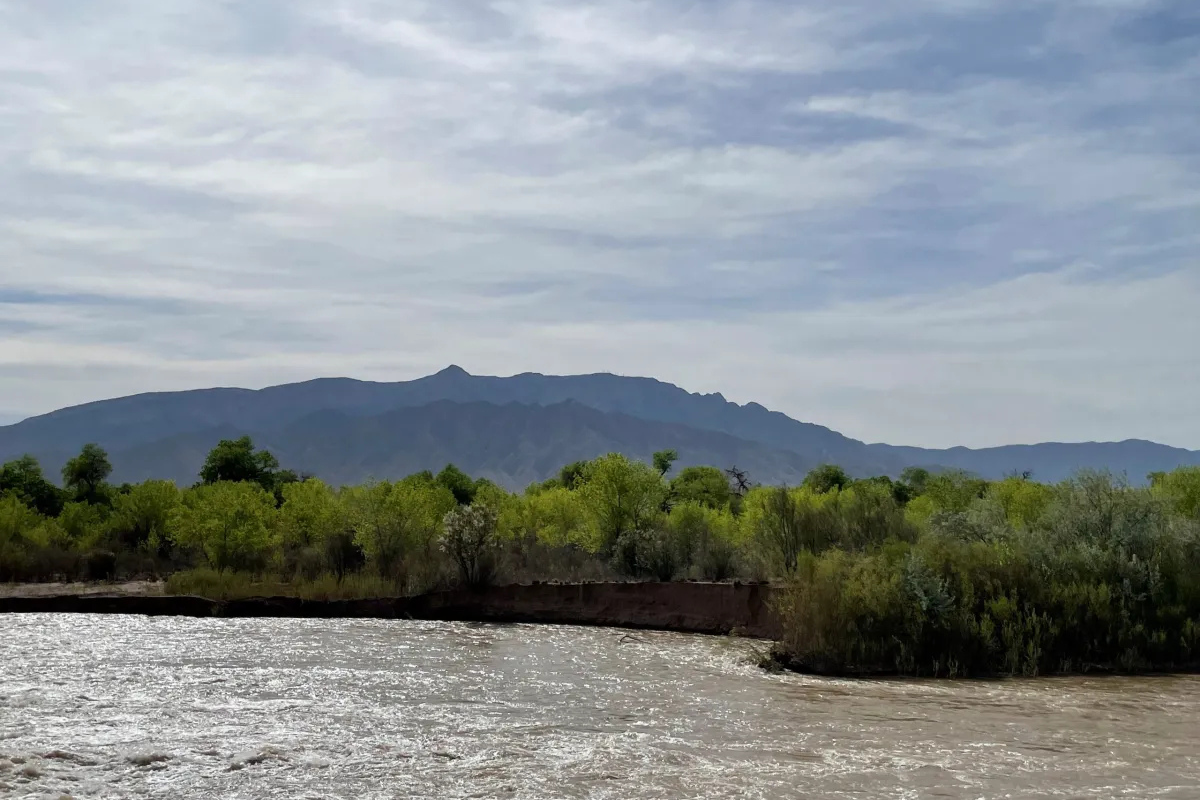
The siphon is how the conservancy district gets water from the Rio Grande to an agricultural ditch used by Corrales farmers; the old siphon has been unused since the 2021 irrigation season, when an unseen sinkhole shut it down. The MRGCD has been serving Corrales through a system of pumps when it could, a task made more difficult by historic drought that has seen the water level at times too low for those distributions to be made. The replacement spiphon was delayed when MRGCD officials realized they’d never gotten permission from the Pueblo of Sandia for access to tribal land. The parties last fall signed an agreement that led to the project going forward. An underground casing collapsed during an earlier phase, MRGCD officials said, but once that was redesigned and put back into the ground, the project has mostly gone as anticipated.
If the coming winter snowfall is normal or heavier, Casuaga said the village will receive its water through the new siphon next year, rather than through the pumps.
In response to questions from councilors, Casuaga said the MRGCD water team chose to activate the pumps in the wake of recent rainfall. “They’re trying to be as aggressive as they can,” he said. “And if the rain (continues like this) and there is demand, they have the ability to make that decision without necessarily asking me.”
Casuaga also told councilors that the MRGCD, for the time being, is unable to store water originating within the Rio Grande Basin until New Mexico is in a significantly better position related to the Rio Grande Compact, which governs water distribution among the states of Colorado, New Mexico and Texas. The state has a water debt of 132,000 acre-feet, according to New Mexico Water Advocates.
“So if we had a good year and the water was flowing, it would just flow past us and past the irrigators; Is that correct?” Councilor Stuart Murray asked.
Casuaga confirmed that is the case.