

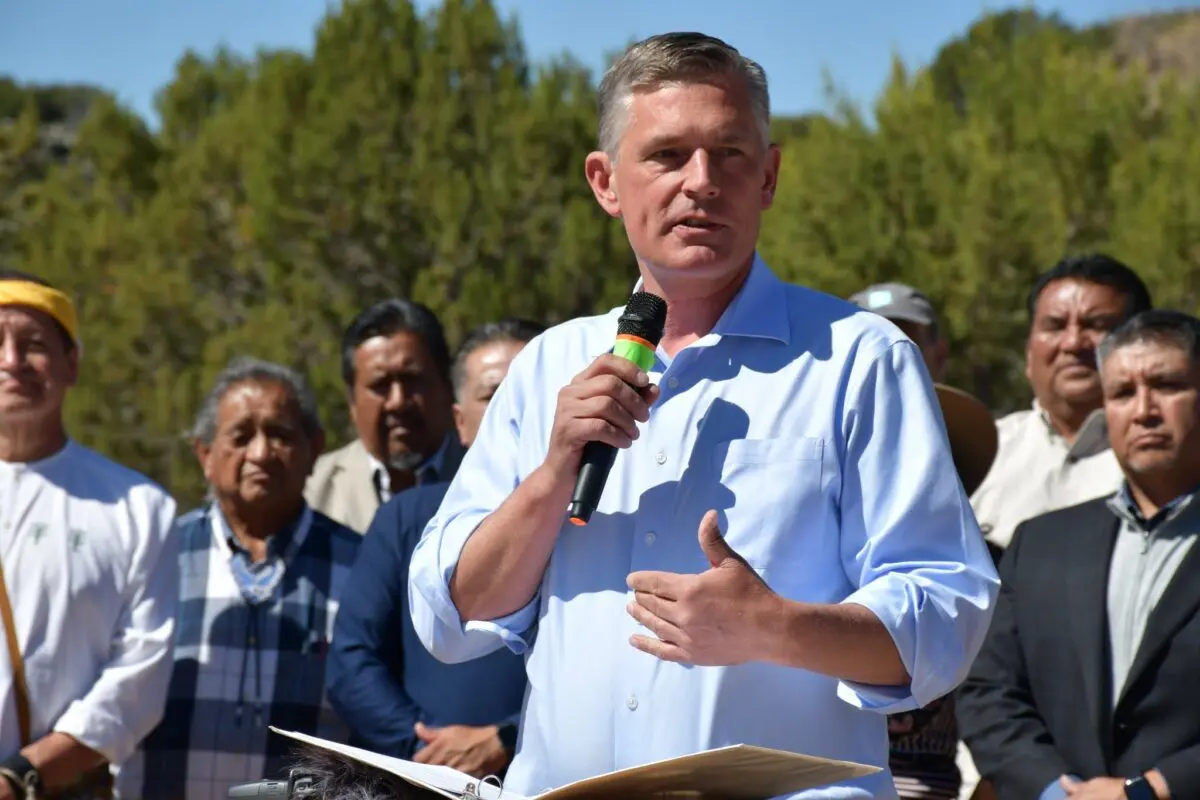
The United States has hundreds of thousands of abandoned hardrock mines and at least 33,000 posing environmental hazards, but one is finally getting cleaned up thanks to a new law New Mexico’s Senator Martin Heinrich passed establishing a pilot permitting program specifically designed to incentivize cleanups.
The bipartisan Good Samaritan Remediation of Abandoned Hardrock Mines Act, which Heinrich authored and championed alongside Sen. Jim Risch (R-Idaho), was signed into law in December 2024 after three years of efforts led by the senators. The initial permit issued this month authorizes Trout Unlimited to begin work at the Bodie Mine Project in Washington.
For decades, nonprofits and local governments willing to clean up contaminated sites faced potential liability under federal environmental laws for pollution they did not cause, Heinrich’s office explained. Heinrich’s legislation creates a new permitting pathway that shields eligible “Good Samaritans” from those legal risks while carrying out approved remediation. Under its permit, Trout Unlimited will excavate up to 790 tons of contaminated soil along Toroda Creek, preventing an estimated 104 tons of toxic tailings from eroding into the water annually.
“This is a landmark moment — and proof that our Good Samaritan law is working,” said Heinrich. “After more than 25 years of hard work to break down the legal barriers standing in the way of abandoned mine cleanup, we are finally seeing volunteers get to work restoring polluted lands and waters without taking on liability for contamination they didn’t cause. The first Good Samaritan permit has now been issued, and this is just the beginning. We can now use this new tool to clean up more abandoned mines, improve water quality, and make communities across New Mexico and the West safer and healthier.”