

By Kevin Hendricks, The Paper.
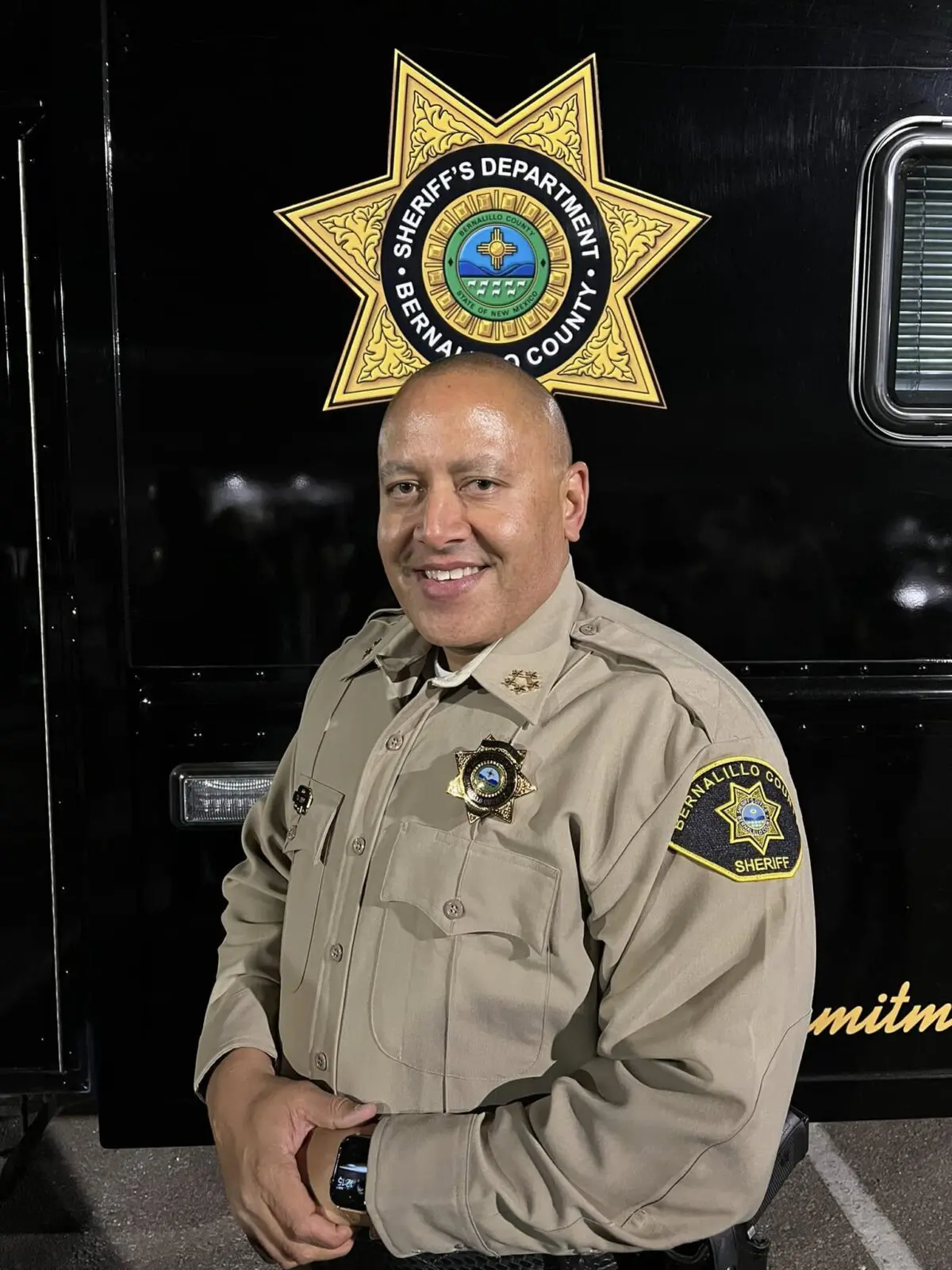
Bernalillo County Sheriff John Allen laid out, in detail Tuesday, how his office is expanding its Axon partnership to replace the Flock Safety camera network it’s dismantling.
Allen said in a press release the expanded partnership builds on Axon technology BCSO already uses through body-worn cameras, digital evidence systems and its Fleet 3 mobile ALPR units. “The public should know who controls the information, why it can be searched, how long it is kept and how every use is reviewed,” Allen said.
Why Axon
Allen said Axon’s model gives BCSO control over its own ALPR data, retention settings and sharing decisions — information isn’t automatically pooled into a national database, and sharing with other agencies is off by default and revocable. Access is restricted by user role, he said, and system logs track who accessed information, when and why. The rollout includes Fleet 3 mobile units, fixed-camera options and integration with BCSO’s existing crime center systems. Allen said the department aims to have the expanded system running before the end of 2026, pending contracting and training.
Last week, a Rio Rancho man was arrested after he filmed himself dismantling Flock cameras across Bernalillo County saying he was returning them to Allen, as The Paper. reported. He had previously been charged with vandalizing Flock cameras in Rio Rancho.
Public safety and privacy
BCSO policy limits license plate searches to active criminal investigations, Allen said, with access restricted, searches logged and activity cross-referenced against case numbers. He cautioned that an ALPR alert is a lead, not proof of a crime — deputies still have to verify it and establish lawful grounds before taking action. The department has used a 30-day retention window and plans to stay within 30 to 60 days, subject to final policy and state law.
How ALPR has assisted investigations
Allen said ALPR helps investigators connect vehicles to locations and timelines in serious cases, though it doesn’t close cases on its own. He pointed to a recorded jail call in which a homicide suspect described the cameras’ deterrent effect: “…they take pictures of every license plate in the area and then they catch the f***ing killer. … There aint nobody getting away with that.” Allen said that reaction, not a vendor’s pitch, is the real evidence the tool works.
Accountability
No BCSO deputies have been disciplined for misusing ALPR data to date, Allen said, calling that a sign the department’s audit controls are working rather than an absence of oversight. He noted his support for Senate Bill 40, the Driver Privacy and Safety Act, which took effect July 1 and set restrictions and penalties around ALPR use, though it left retention limits undefined. Allen said he plans to push for statewide retention standards in the 2027 legislative session.
The expanded partnership follows Allen’s decision earlier this year to end the county’s contracts for its 21 regional Flock cameras, citing trust and data-privacy concerns. Axon also uses what the department calls a Responsible Innovation Framework and an external Ethics and Equity Advisory Council to weigh in on how the technology is developed and deployed.