

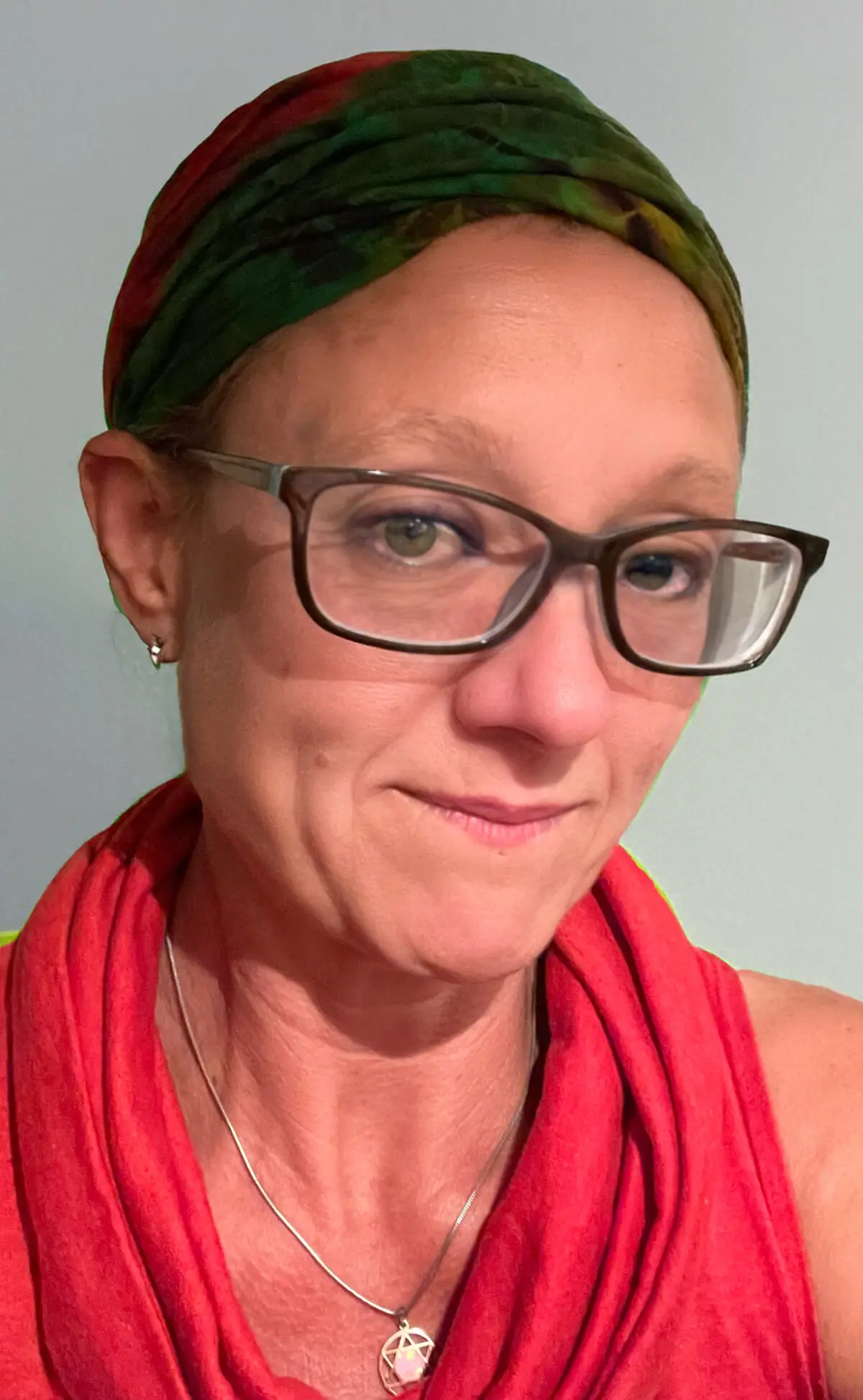
By Sara Atencio-Gonzales, The Paper. – Albuquerque artist Alexa Wheeler is exploring the stories held by the ordinary objects we inherit. Her latest body of work, kept + carried, examines memory, care and the often-unseen labor passed through generations of women using printmaking, textiles, photography, found objects and community participation. Wheeler was recently selected for the 2026 ARC Gallery Athena Fund Solo Exhibition Award and will bring kept + carried to Chicago’s historic feminist ARC Gallery for a solo exhibition opening Sept. 4.
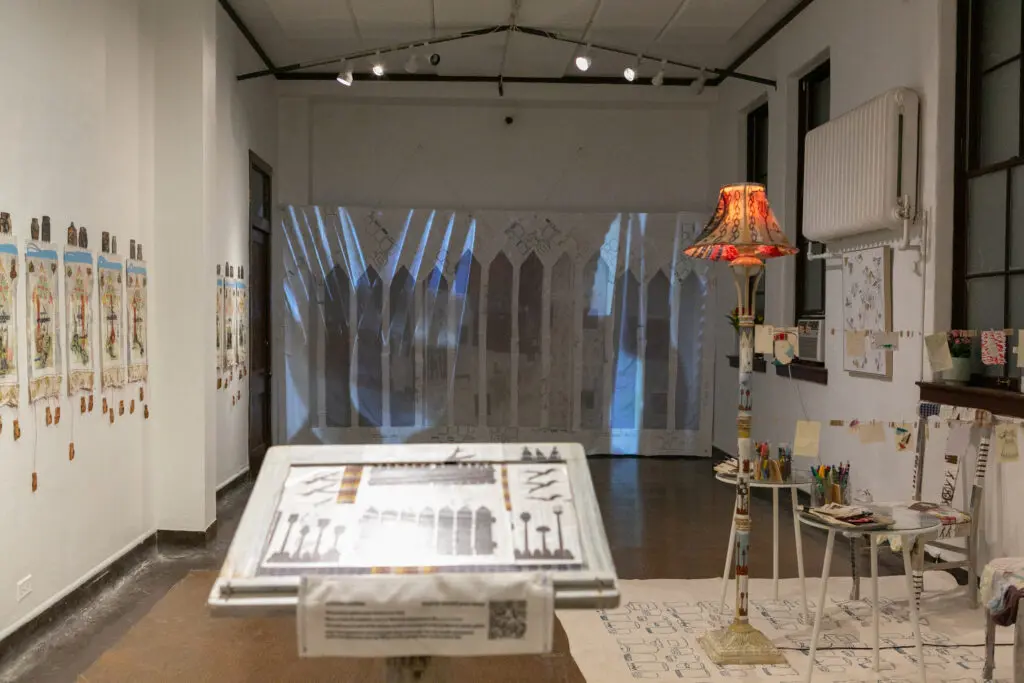
1. What kinds of objects first inspired kept + carried, and how did they become vessels for larger stories about memory and love?
The work began with the ordinary objects that are handed down, generation to generation, often forgotten but that still quietly outlive us. My grandmother’s handkerchiefs, preserving jars, handwritten recipes, sewing supplies, family photographs, worn utensils, embroidered linens. These are objects that have absorbed years of touch and use. They hold fingerprints, stains, repairs and evidence of care. I became interested in the idea that they are actual records of relationships and moments of nurture.
As I began researching my own family history and talking with others about the objects they had inherited, I realized how universal these experiences are. A wooden spoon can hold the memory of generations gathered around a table. A stitched handkerchief can carry grief, celebration, or devotion. These everyday artifacts become vessels for stories that are often missing from official histories. They remind us that love is not only spoken. It is cooked, mended, preserved, washed, repaired and passed from one set of hands to another.
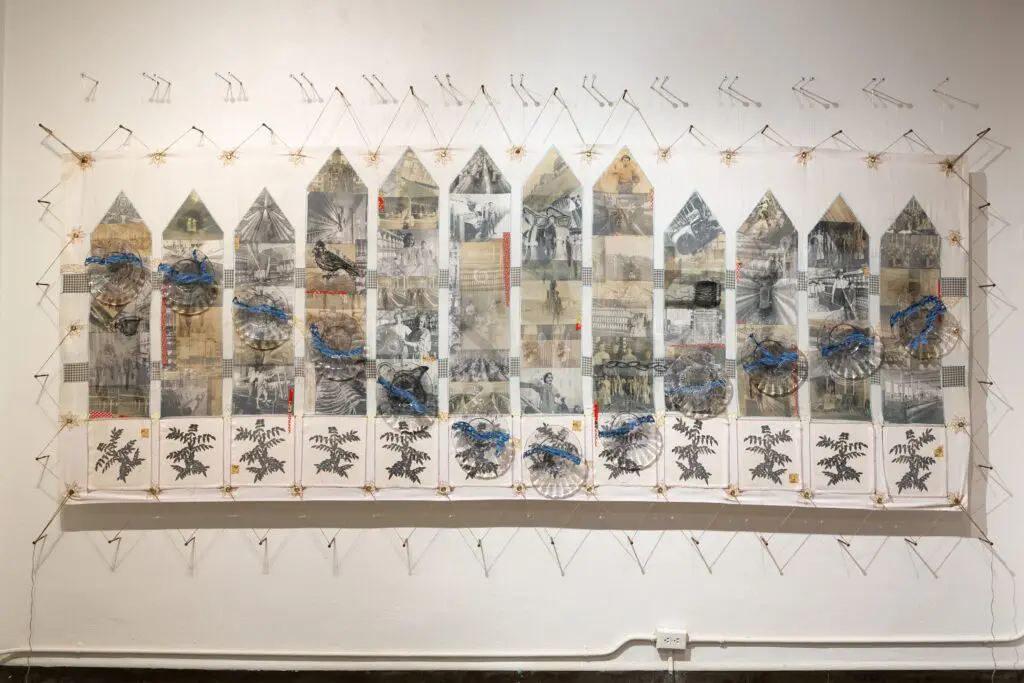
2. This work explores care, inheritance and the unseen labor carried through generations of women. What has making it taught you about those ideas?
Making this work has informed and deepened the way I understand labor – for others and especially for the labor of caring for oneself. I am very interested in recognizing that acts of care are creative acts – cooking, sewing, cleaning, preserving food, tending to children, remembering birthdays, keeping family stories alive. These have historically been dismissed as ordinary or expected, yet they shape entire lives and communities.
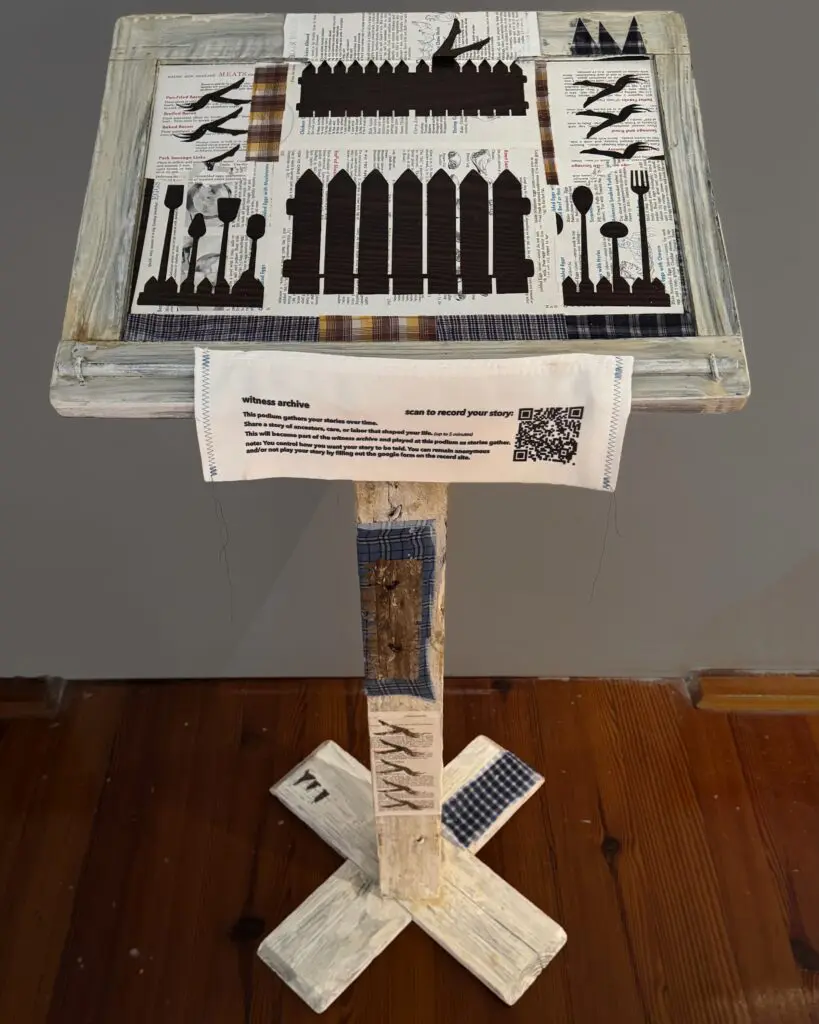
The process of making has become a form of listening. Through printmaking, embroidery, photography, video, sound, mixed-media and collecting stories from participants, I have found myself paying attention to what is often overlooked. The artwork itself is an artifact of that process. It records time spent, conversations shared and memories uncovered. It has taught me that healing often happens through repetition and the safety of that knowing, that expectation. A finished piece carries its own aura and presence, but the process is what marks the moment healing and change happen. In participatory work, which has become an essential focal point in my exhibitions, the process of making happens in the gallery space and transformation becomes alive in that space.
3. What does receiving the 2026 ARC Gallery Athena Fund Solo Exhibition Award and bringing kept + carried from Albuquerque to ARC Gallery in Chicago mean to you?
Receiving the Athena Fund Solo Exhibition Award is an incredible honor. ARC Gallery has a long history of championing women artists and creating space for conversations that are both personal and political. It was founded in 1973 at the height of the women’s movement to champion women artists whose work was not breaking through the patriarchal barrier in the artworld at that time which, unfortunately, continues even today. To be invited into that history feels deeply meaningful and feels like a pivotal moment in my development as an artist.
For me, bringing kept + carried from Albuquerque to Chicago is also about expanding the conversation. Although the work grows from my own family history, it was never intended to stay there. When some of the work was recently exhibited at the Harwood Art Center, people began telling me their own ancestral stories and about artifacts and heirlooms they still take great care to preserve. Those moments remind me that memory is something we build together and, through that building, empathy begins to expand.
If you go…
Alexa Wheeler’s kept + carried
- Exhibition dates: Sep. 4 – 25, 2026
- ARC Gallery in Chicago (1463 West Chicago Ave
Chicago, IL)