
By Rodd Cayton
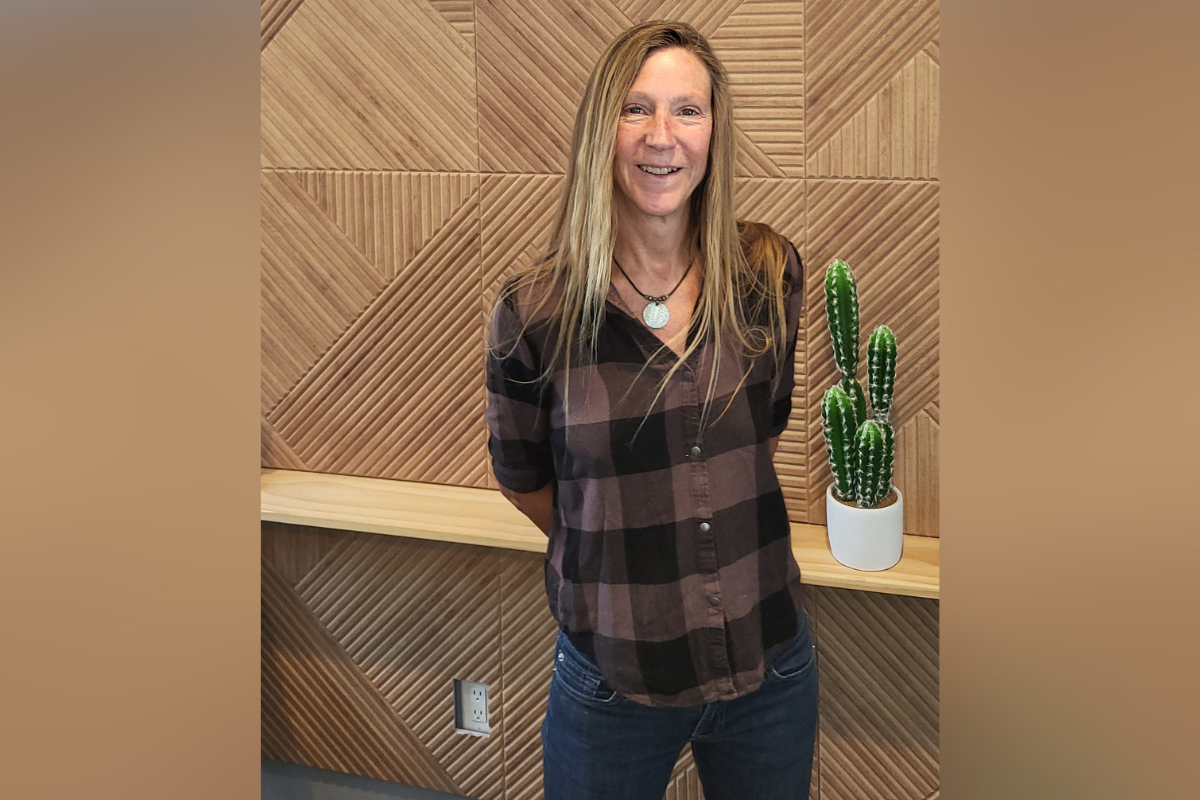
Potatoes grow very well in New Mexico, Lisa Brown says.
Brown, recently appointed to the Corrales Village Council, knows that firsthand, having been raised there, farmed there and sought solutions there. She served on the village’s farmland preservation commission.
Brown sat with the Corrales Comment to discuss her connection to the village and her hopes for her time on the council. She was appointed by Mayor Fred Hashimoto to replace District 4 Councilor John Alsobrook II, who died in May.
Corrales Comment: Have you always lived in Corrales?
Lisa Brown: I grew up in Corrales. I came with my folks in the ’70s. My dad was working for the (Navajo) tribe in Window Rock, and then he started doing consulting for other tribes. Corrales is centrally located, among the Pueblos and other tribes. So that’s why we relocated here. I left New Mexico and moved to California, where my extended family was. I intended to get residency in California and go to UC schools, but I missed New Mexico, and I realized within about two years that I wanted to be back in New Mexico that it was home and so I came back and finished at UNM and then went to law school at UNM as well.
What’s your career been?
I was a late law school graduate, so I did a lot of things. I bounced around. I actually did a little journalism a long time ago for the (Albuquerque) Tribune. I did a little construction. I had worked in a lot of restaurants, and then I went to law school. After I graduated from law school, I practiced Indian water rights law first, and then more general water rights law. I worked for the state engineer for a while on contract and worked in northern New Mexico with the acequias up there, and that’s when I decided that I wanted to farm. I wanted to be the water user, not the water advocate. So, after about 10 years practicing law, my daughter Aidan, was born, and I was very fortunate to be able to quit practicing law for a while and start farming and take her with me. I put her on my back and went out to the potato field.
Potatoes grow in New Mexico?
Yes, they grow very well in New Mexico.
When my daughter graduated from high school and got ready to go to college, I needed to pay for it, so then I started working for the New Mexico Department of Justice as an attorney again. That was in 2024, and I worked up there, commuting to Santa Fe for two years. And though the work was really good and important work, I missed feeling connected to my community, and my folks are in their 80s and live down the road and really I wanted to be close to them and be able to help them out, and so I resigned from the DOJ and came back to Corrales.
You’ve left and come back and left and come back. What do you like about Corrales?
The history and the culture, and that is directly tied to the agricultural community or agricultural activities in Corrales. It’s how that part of the valley was settled; I think because growing food, you know, nurtures a community. It feels like our community takes care of itself, and people feed each other, and they look out for each other, and though it’s changed a lot, particularly since 2020, I think it’s still (true that) you can still feel that it’s got those roots and history. You obviously still see the fields and the farms. I feel very connected to the land.
Why did you decide to put your head in the ring to serve on the council?
When I chose to resign from (the Justice Department) position, I knew in my head that I wanted to be involved in issues that are important to Corrales. I knew that I would be in Corrales because my folks lived down the road from me, and I was in Corrales to be close to them, and those two things just sort of went hand in hand. It’s also a particularly important time, I think, not just in Corrales, but in the you know the world actually. But I mean, issues with water and issues with, you know, how we want to handle development. I think of being on the council as a real privilege. You know, to be able to have a vote in that special community and just just seemed like something really important.
How well did you know Councilor Alsobrook?
I was relatively familiar with him. He was my councilor, so if I had any concerns ever I always talked to him, and he was very responsive. I met with him on several occasions about farmland preservation issues. He was very thoughtful, very thorough, and it was a great loss to the village. I wish I’d known him better, but I did know him some, and I’m glad.
Has anything surprised you, or do you think you knew what to expect going in?
I didn’t know what to expect. I think It surprises me how much work actually is required to to get up to speed and on the issues that and the and the decisions that the council has to make and it makes me really really respect and appreciate those who have been doing it for years. My personal issue has always been agricultural and farmland preservation, and really supporting farmers and preserving land for farming in Corrales. That was kind of my single issue, and now it’s really interesting to learn about so many other things. Just for example we had a work study on the first traffic code the village has ever had of its own, and it’s almost 200 pages long. I never thought I’d know so much about traffic laws.
What has it been like working with the other councilors and the mayor?
I feel like it’s a really proactive and thorough and thoughtful body. The mayor seems really to be listening to the community and wanting to gather facts, and understand what the community wants. feel like that’s true of the council members as well. So I’ve been really impressed with how hard everybody is working, and I mean, because it’s volunteer (work) essentially. And for the most part, everyone’s really easy to get along with and listens to other opinions.