

By Sara Atencio-Gonzales, The Paper. – A new exhibition at Gallery One in City Hall is using art to explore freedom, resilience and the expansive possibilities of Black creative expression.
(Un)bound to Boundless, the Juneteenth exhibition, brings together nine local and regional artists working across poetry, textiles, photography, ceramics, sculpture and printmaking. Curated by Angie Chandler, the show features artists Oneida Brooks, Shirley Edmondson, Jakia Fuller, Karen Hampton, Hana Kostis, Nina Robinson, Gwen Triay Samuels, Mayowa Tomori and Stephanie J. Woods.
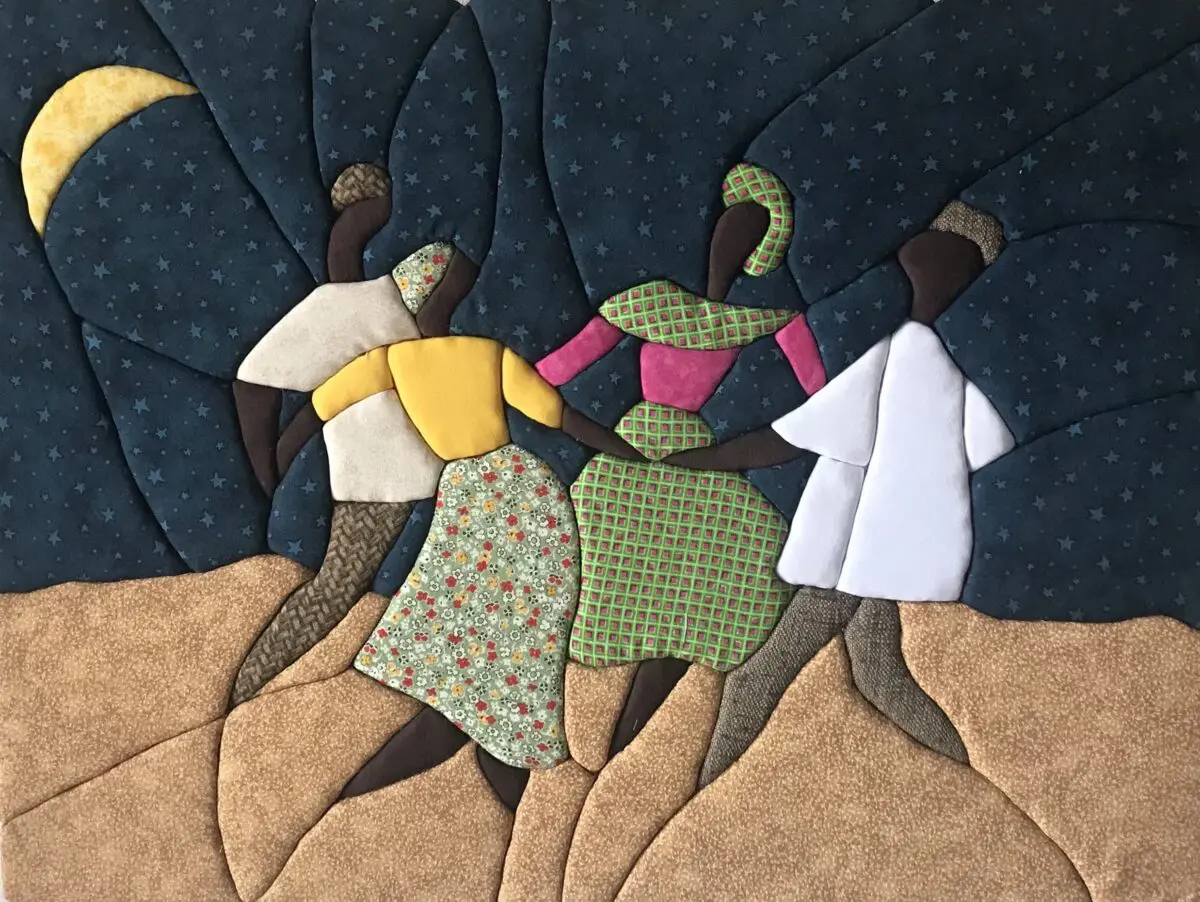
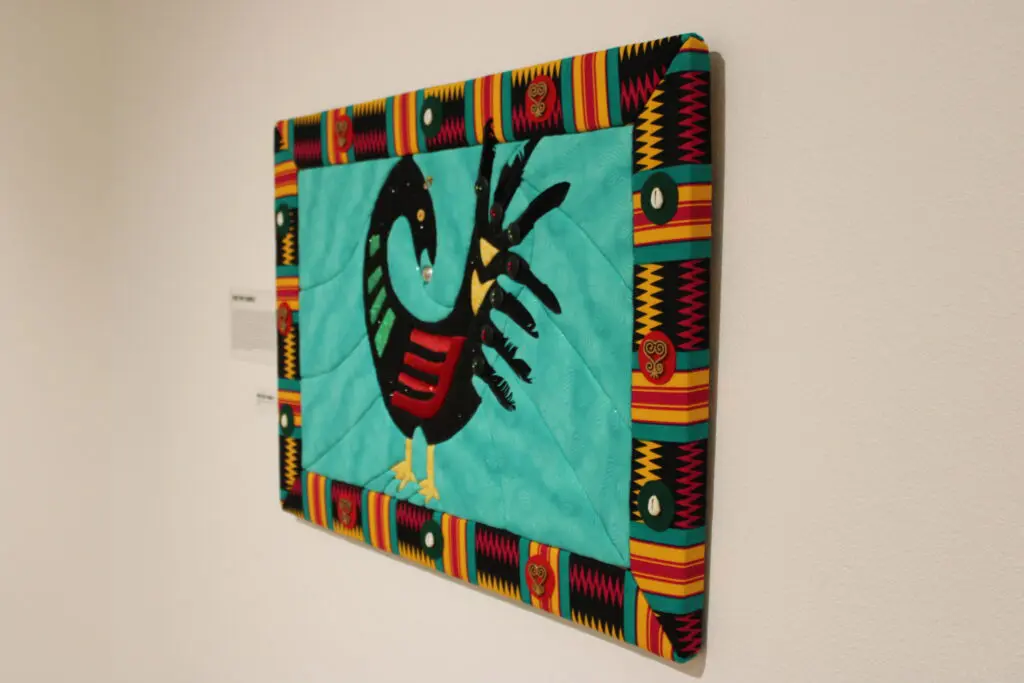
One of those artists, Samuels, contributes two punch quilts to the exhibition. One of the works, Hush! Somebody’s Calling My Name, depicts a hush harbor, where enslaved people gathered to sing and worship. “The slave masters always thought that, oh, you know, they’re just such good negroes, you know, they love God, and they’re praising God,” says Samuels. “But actually they were singing in codes to plan their escapes.”
For Chandler, the exhibition’s title reflects both the history of enslavement and the refusal of Black people to be defined by the limitations imposed upon them.
“If we think back to the times when African Americans were enslaved in the United States, they were always unbound,” says Chandler. “We were never in any of the bounds or the categories or the constraints that society or government things dictated.”
Even under oppression, Black people continued creating. Chandler says, “I wanted to have that term of unbound, one coming out from enslavement, but also the fact that we were never bound to any categories.”
Chandler, who moved to New Mexico in 2024, described her curatorial practice as place-based. Building the exhibition meant spending time learning about local communities and developing relationships with artists throughout Albuquerque and Santa Fe.
The exhibition’s broad theme of Juneteenth allowed for many possible approaches. Rather than focusing on a single medium, Chandler intentionally assembled an interdisciplinary and multi-generational group of artists.
“When you’re creating a show with such a big theme as Juneteenth, I think there’s so many ways you can approach it,” says Chandler.
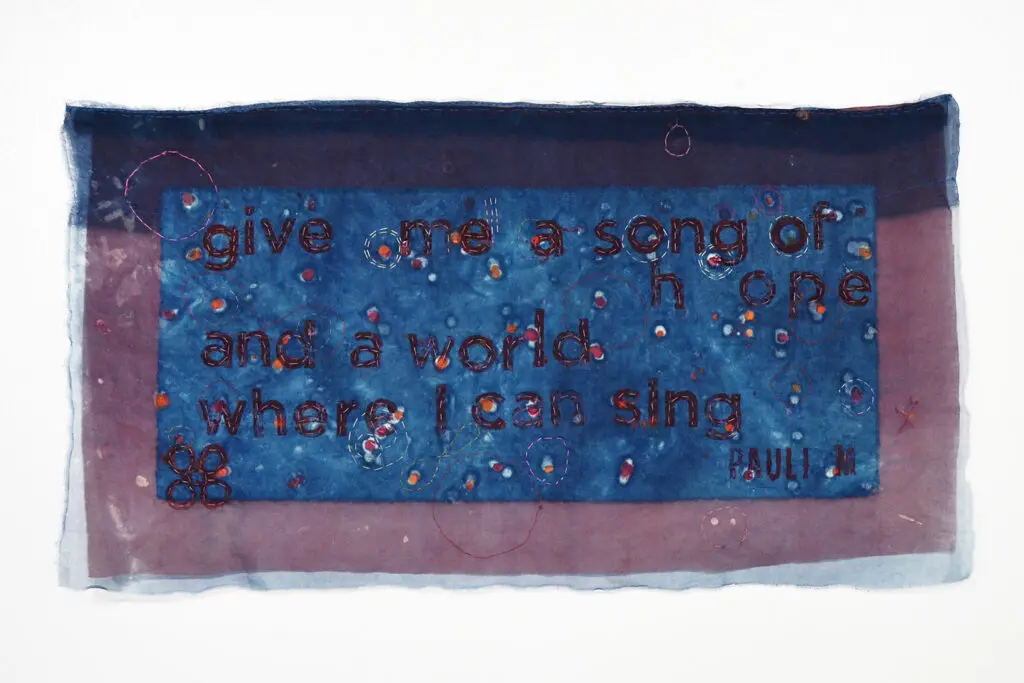
That approach led her to include artists working in a wide variety of forms, from ceramics and fiber art to photography and poetry.
“The thing about New Mexico that I’ve kind of experienced since being here is, one, how much the generations each have their own stories to them,” says Chandler.
Textiles and ceramics became especially important to the exhibition because of their strong connection to New Mexico’s artistic traditions. Chandler explains that she wanted to ensure Black artists working in those mediums were included in conversations that often overlook their contributions.
“I knew we had Black artists working in that medium, so I wanted to feature them,” says Chandler.
The exhibition also includes historical elements that connect contemporary work to local Black history. A QR code allows visitors to access archival footage of Juneteenth celebrations in Albuquerque during the 1980s, while audio from the University of New Mexico helps provide additional context.
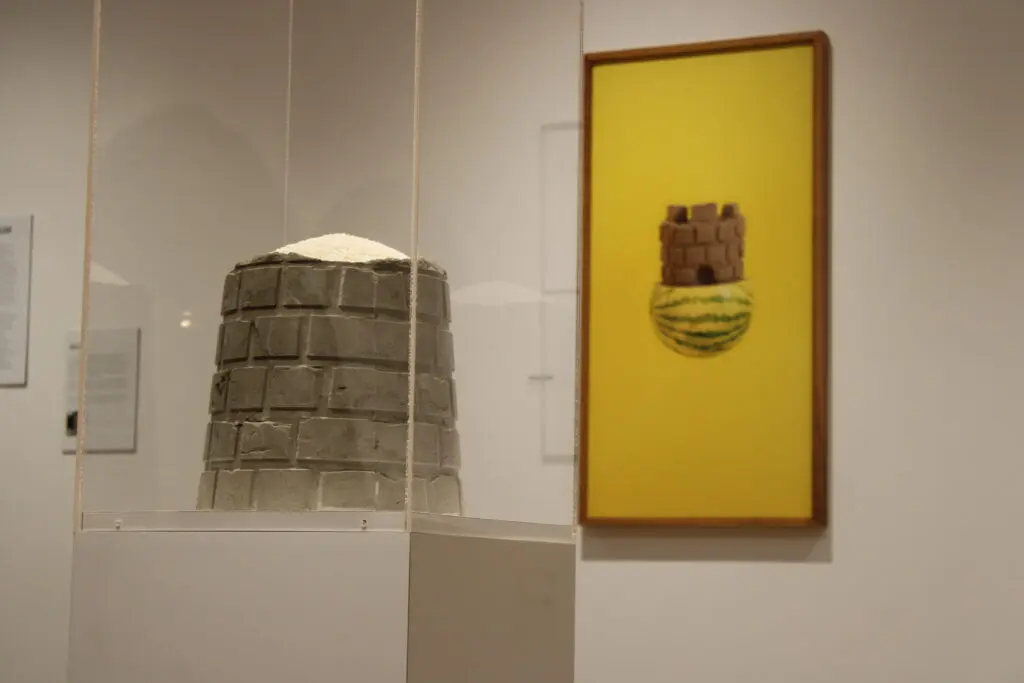
Several works make direct references to Juneteenth and African American history. Chandler pointed to Stephanie J. Woods’ work incorporating rice from North Carolina and sand collected from Galveston, Texas, where the first Juneteenth celebration took place.
Other works highlight stories that may be less familiar to audiences. Chandler cited photographer Nina Robinson’s images exploring the relationship between Black communities and the land.
“I think people don’t realize how much of a connection African American folks still have to their land and to agriculture,” says Chandler.
The exhibition’s variety of mediums is intentional. Chandler hopes visitors leave with a broader understanding of both contemporary Black art and the many ways people can connect with creative work.
“I’d love for them to think about that when you tell the story of art, it’s not one thing,” says Chandler. “There is just such an expansive amount of art you can love.”
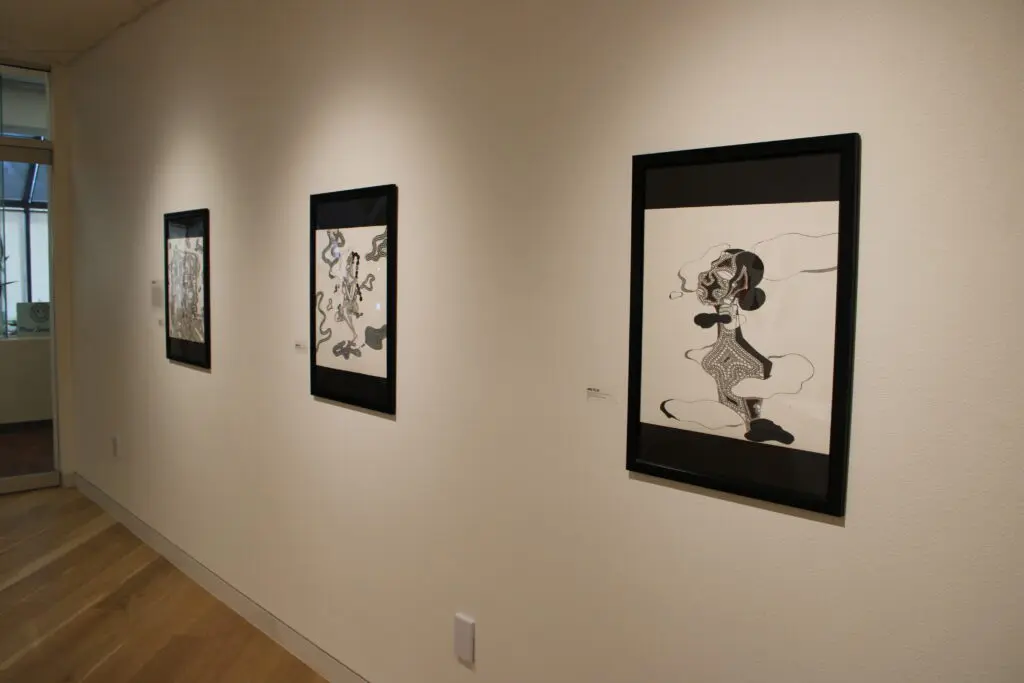
That expansiveness is reflected throughout the exhibition, from Samuels’ punch quilts and Brooks’ ceramics to Fuller’s prints, Hampton’s textile work, Kostis’ mixed-media pieces, Robinson’s photography, Tomori’s work and Woods’ sculptures. Together, the artists present a vision of Black creativity that extends far beyond any single narrative.
Samuels hopes visitors see both the history and the beauty represented in her work.
“Black people were more than our struggle,” says Samuels. “It also depicts the beauty, you know, of themes and stories in black life.”
Chandler says she wanted visitors to see the full scope of Black artistic expression and history. “I wanted people to really see that full story, not just a condensed story that only focused on slavery, but we were making, even while we were enslaved.”
(Un)bound to Boundless is on view at Gallery One, located on the first floor of Albuquerque City Hall (1 Civic Plaza NW), through July 2. The exhibition and gallery are free and open to the public. Gallery One is open Monday through Friday from 10 a.m. to 4 p.m. Visitors can also contact galleryone@cabq.gov to schedule appointments outside regular hours.
If you go…
(Un)bound to Boundless
- Exhibition closes on July 2
- Gallery One (1 Civic Plaza NW)
- The gallery is open Monday through Fridau from 10 a.m. to 4 p.m.
- Free!