

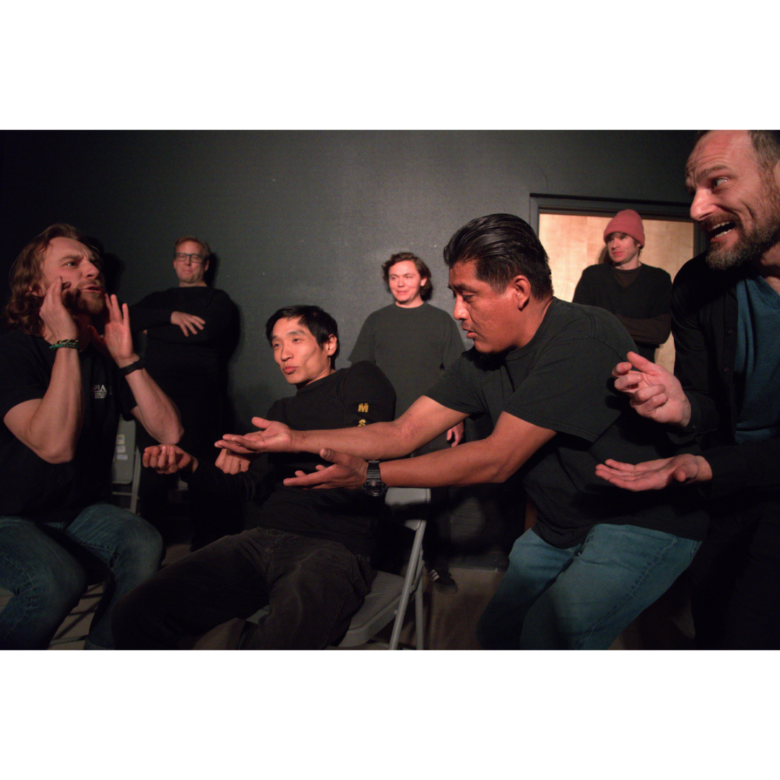
By Sara Atencio-Gonzales, The Paper. – The actors will have about 10 minutes.
That’s all the time performers in As They Are Written will get to read their scripts before stepping onstage at Q-Staff Theatre on June 13. There are no rehearsals. No director telling them where to stand. No carefully planned character choices.
“The actors won’t see the scripts ahead of time,” says Andrea Vestrand, co-creator and co-producer of the show.
For Vestrand, that’s part of the appeal.
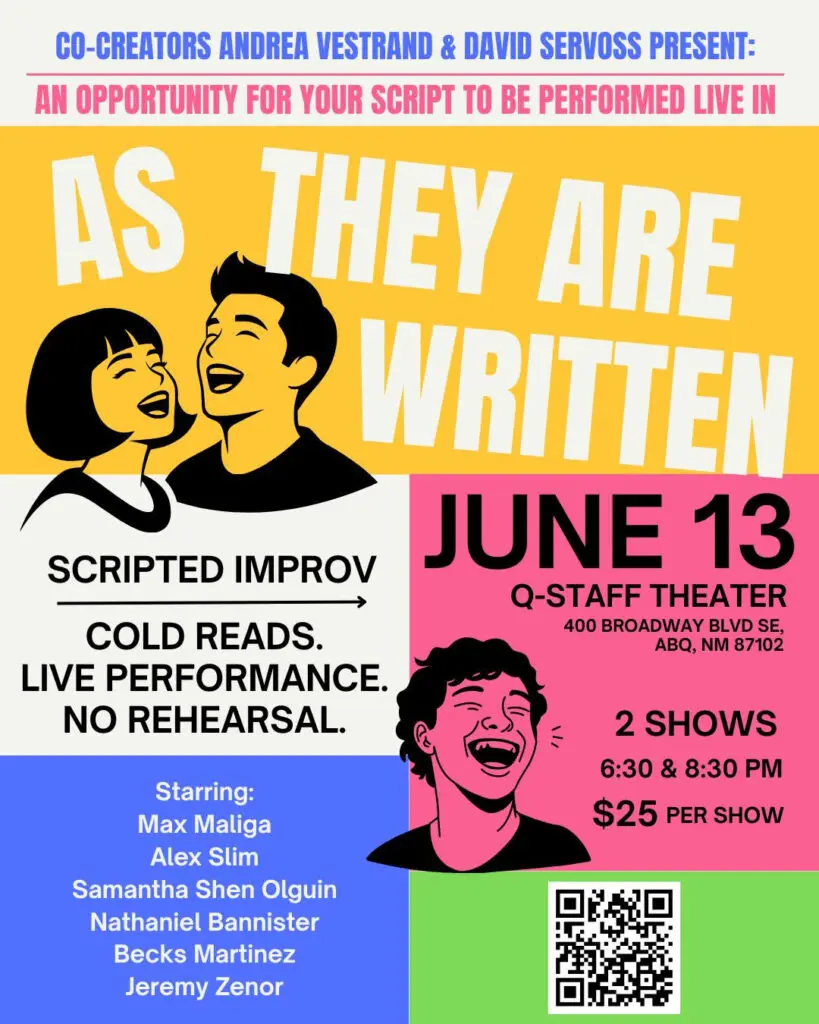
While the stories themselves are already written, the performers must figure out everything else in real time. The result is a hybrid of theater and improv that reflects a larger trend happening across Albuquerque’s growing improv community.
From longform storytelling and debate competitions to burlesque-inspired performances, local improvisers are finding new ways to build comedy, community and connection.
“We don’t know what we’re going to get out of it,” says Vestrand. “It’s really interpersonal to the performers at that moment in time.”
Traditionally, improv involves performers creating scenes, characters and stories from audience suggestions. Albuquerque-based groups such as The Faculty Lounge and The Boyz focus on longform improv, where entire shows emerge from a single suggestion.
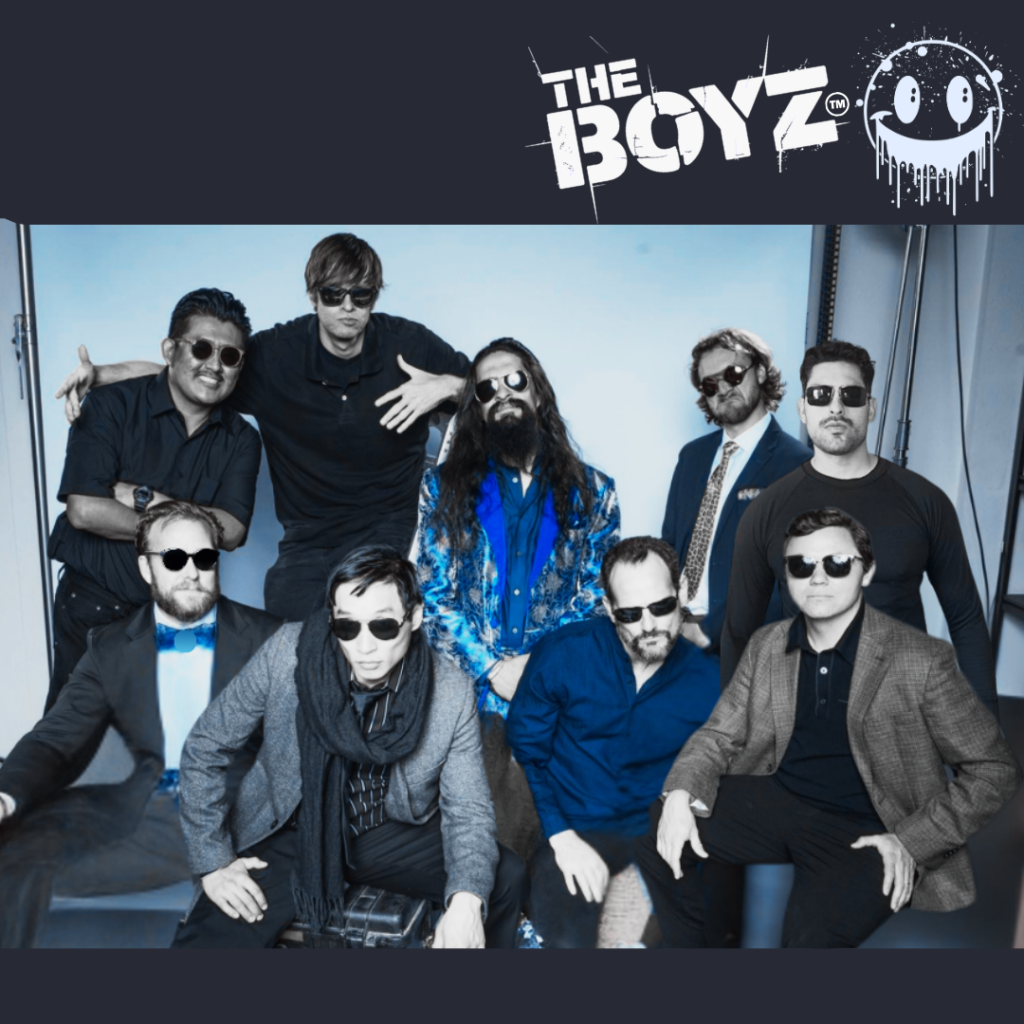
“The audience gives us one word, and then we do pretty much a comedic improvised play script,” says Andrew Salazar, a performer in The Boyz. “It’s just right off the cuff.”
For performers, the challenge is not simply being funny. “You have to really listen to your scene partner,” says Salazar. “It’s really understanding the subtext and understanding what they’re really saying.”
That emphasis on listening appears repeatedly throughout Albuquerque’s improv community. Rachel Michaela, executive and artistic director of Improv New Mexico and co-founder of a comedy troupe known as The Faculty Lounge, explains that many people misunderstand what improv actually is.
“I think one of the biggest misconceptions is that you want to try and trick your scene partner and deny what they’re doing,” says Michaela. “Improv is only good when there’s agreement between the two performers.”
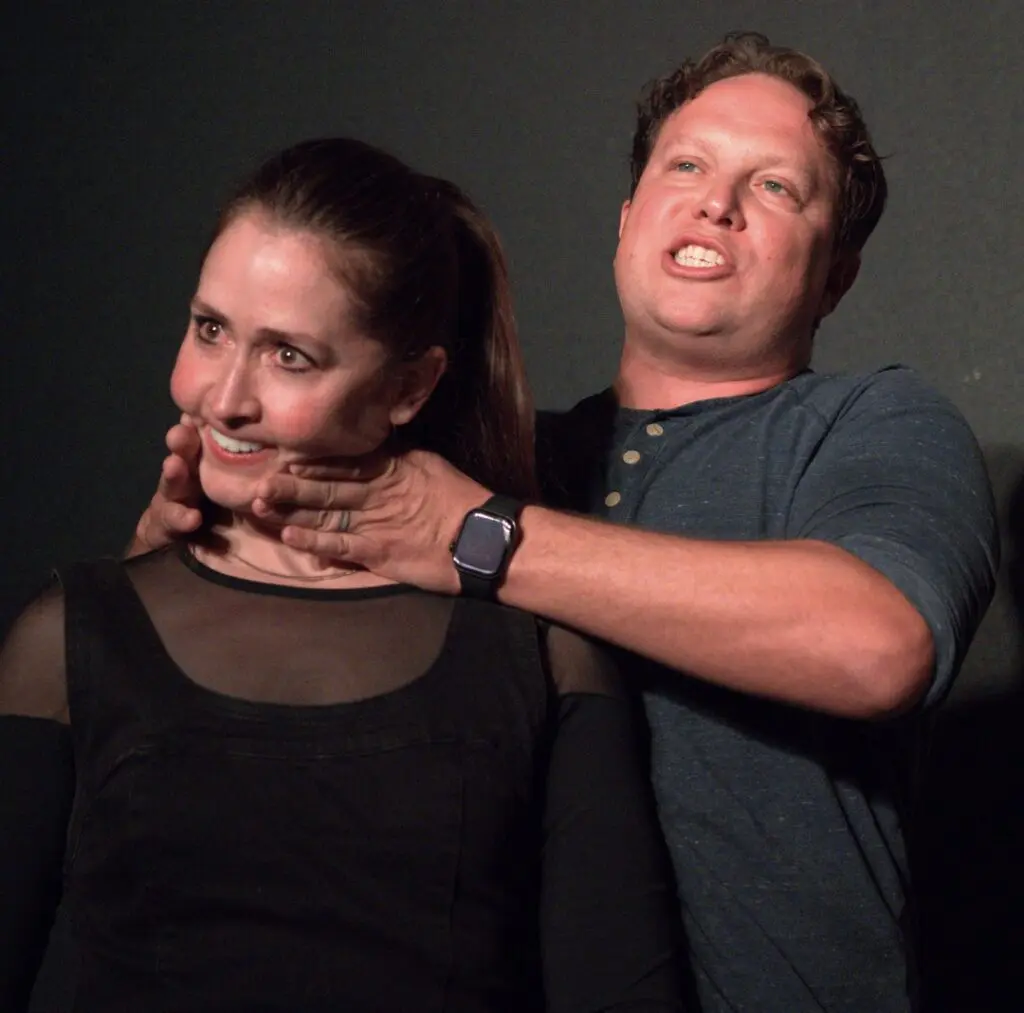
(Photo by Russel Maynor) Credit: Jane Doe
Marc Esquibel of The Boyz says people often confuse improv with sketch comedy. “When we go out there, we have no idea what the show is going to be about.”
While traditional improv remains a cornerstone of the scene, many Albuquerque performers are experimenting with new formats.
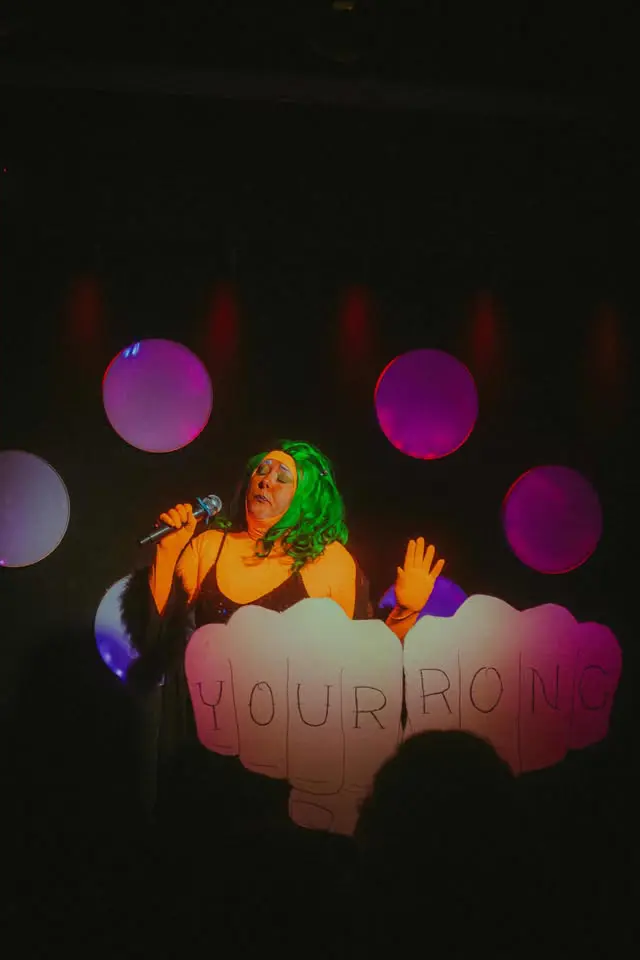
At Your Rong Debates, performers argue passionately about deliberately ridiculous topics. Hosted by Matthew Blood-Smyth and Traye Holland, the show combines elements of stand-up comedy, improv and theatrical performance.
Blood-Smyth explains that the goal is to bring together comedians, improvisers, writers and actors while pushing them outside their comfort zones. “The point was to kind of challenge these different types of performers by pitting them against each other,” says Blood-Smyth.
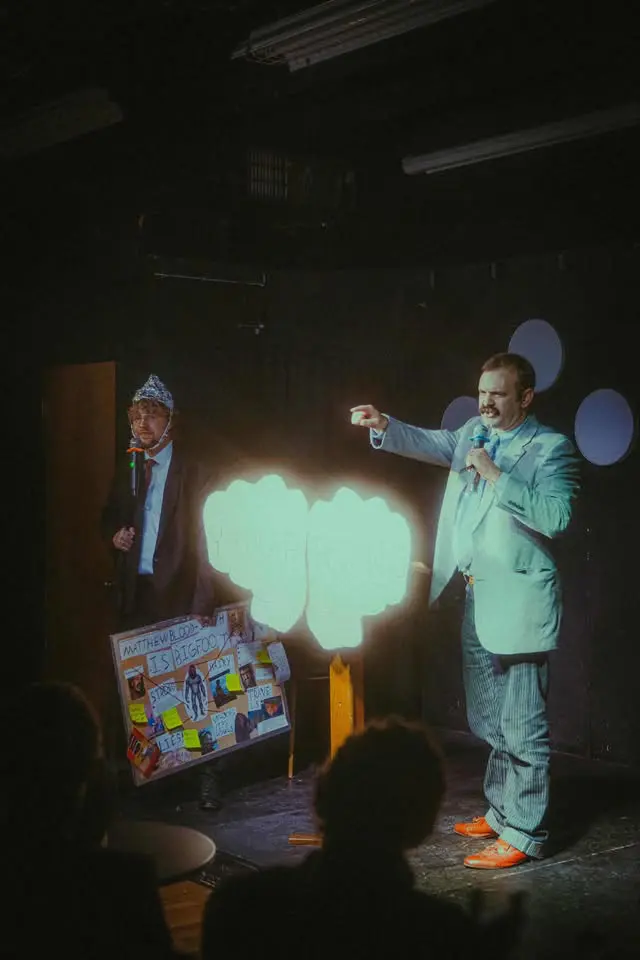
The debates might feature subjects such as imaginary friends, monsters under the bed or other absurd scenarios. The seriousness comes from the performers, not the topics.
“There’s nothing more funny than somebody taking something completely ridiculous and very serious,” says Holland. “Every debate is completely nonsense, ridiculous, but you go into it like it’s life or death that you win.”
Another example of Albuquerque’s creative approach is Whose Chorus Is It Anyway?, a monthly show produced by Stacia Vu that combines short-form improv with burlesque performance.
“I love improv and I love burlesque,” says Vu.
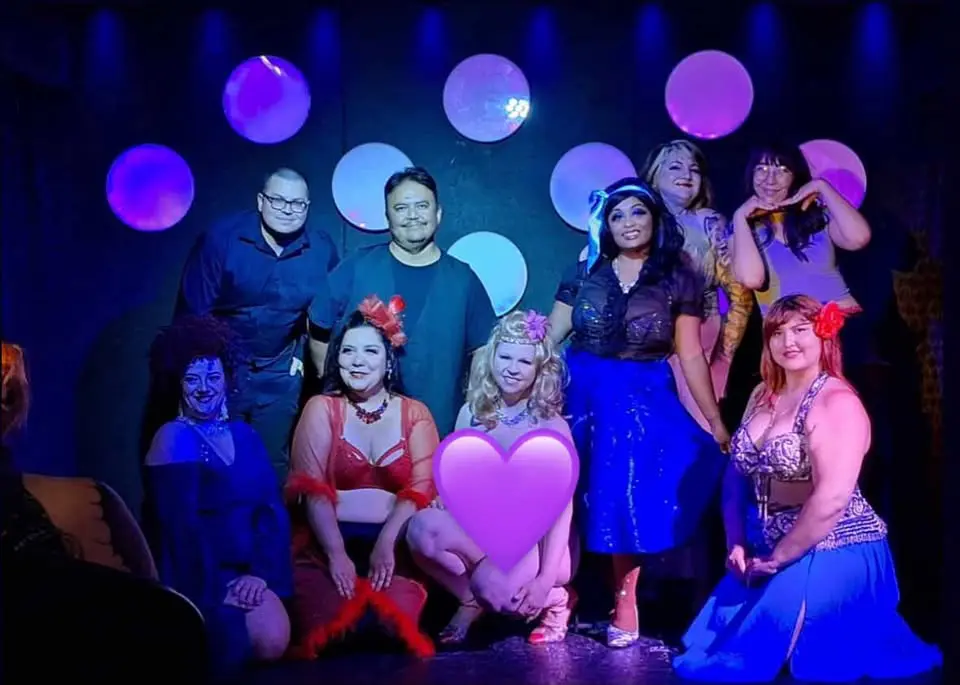
Inspired by her experiences in both communities, Vu created a format where performers must improvise burlesque routines based on songs they do not know in advance.
Despite improv’s reputation for randomness, Vu explains that successful performances rely on structure. “There is structure, and it is funny when it has structure and a story,” says Vu. “It’s not just pulling everything and just being funny and random for the sake of being random.”
While Albuquerque’s improv offerings vary widely, many performers point to the same reason for its continued popularity: connection.
Though audiences often see only comedy, performers say the skills behind improv extend far beyond the stage.
Salazar says the listening skills required onstage often carry into everyday life. “I learned to be more of an empathetic listener. I’ve noticed, just in my professional pursuits and even with my family.”
Improv New Mexico, a nonprofit organization that offers pay-what-you-can classes and workshops, was founded on the idea that improv can be a tool for personal growth as much as entertainment.
According to executive and artistic director Rachel Michaela, students often come to classes expecting to learn comedy but leave with something else entirely.
“The biggest set of skills are communication skills,” says Michaela. “It’s not just speaking, it’s listening. It’s being able to read the room.”
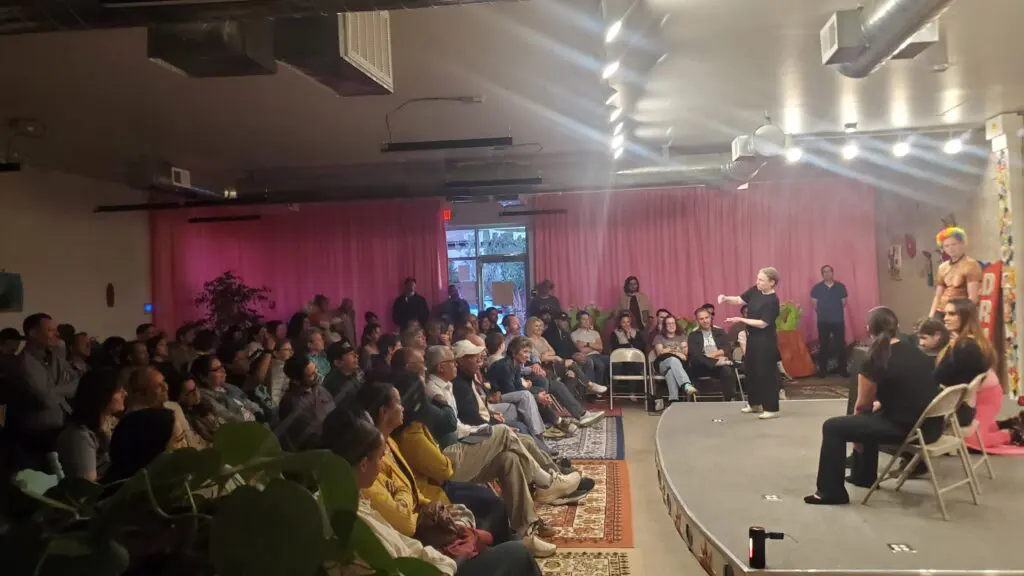
The organization’s commitment to accessibility is reflected in its pay-what-you-can model.
“Accessibility is key,” says Michaela. “Not everyone can afford to sign up for classes and be in the arts.”
Today, Improv New Mexico offers classes, showcases and community events while helping train performers who go on to join local troupes such as The Faculty Lounge and The Boyz.
For Max Maliga, a Faculty Lounge performer and Improv New Mexico instructor, the value of improv comes from creating a rare space where adults can play.
“We have so few spaces for play right now in our society,” says Maliga. “Having this kind of space for play ends up being this amazing, fantastic relief.”
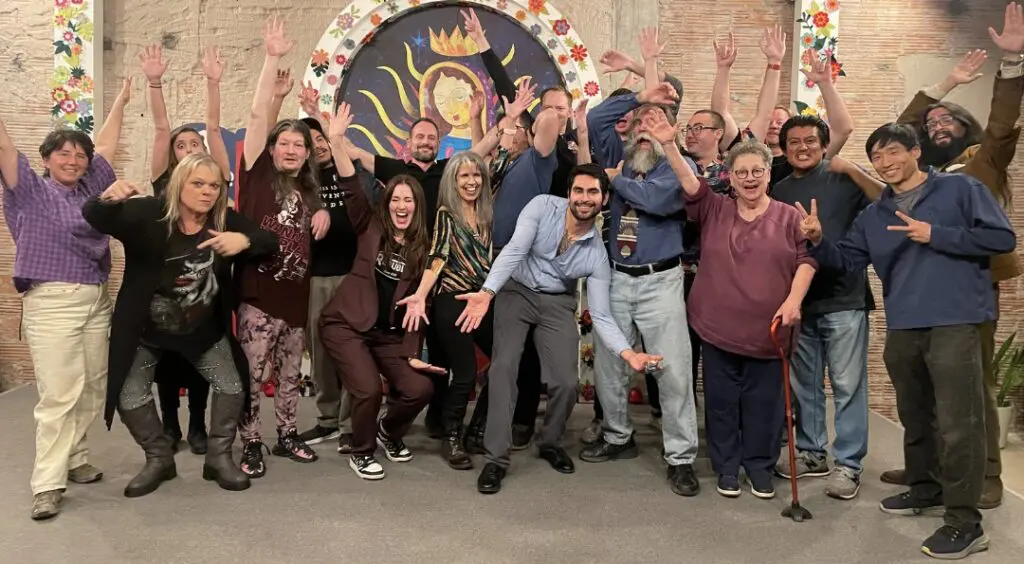
Maliga says improv encourages people to trust themselves and become more authentic. “When you’re performing, you’re asking to be your true self in that moment and trust yourself and be authentic.”
Students frequently report increased confidence after taking classes, a benefit Maliga attributes to confronting fears in a low-stakes environment. “Improv gives you the confidence to overcome, to persevere, to be brave,” says Maliga.
That focus on collaboration also shapes the broader Albuquerque improv scene. Unlike larger comedy hubs such as Chicago, Los Angeles or New York, performers interviewed for this story repeatedly described Albuquerque’s community as collaborative rather than competitive.
“It’s pretty supportive,” says Vu. “Nobody’s necessarily copying on one another.”
Several performers described a scene where artists regularly move between classes, troupes and productions, creating connections across Albuquerque’s comedy community.
Despite their differences, many productions share a similar philosophy. Whether performers are cold-reading scripts at As They Are Written, debating absurd topics at Your Rong or building stories from audience suggestions, success depends on collaboration.
That spirit of collaboration may explain why the art form continues to attract audiences.
Whether performers are stepping onto a stage with an unfamiliar script, arguing over ridiculous debate topics or building an hour-long story from a single audience suggestion, every show begins the same way: with a leap into the unknown.
Over the next two weeks, Albuquerque audiences will have several opportunities to watch that happen. Your Rong Debates returns June 12 at The Box Annex. As They Are Written takes the stage June 13 at q-Staff Theatre. Whose Chorus Is It Anyway? follows June 20 at The Box Annex. Audiences can also catch The Faculty Lounge and The Boyz, which perform on the fourth Monday of each month at The Shop NM.