

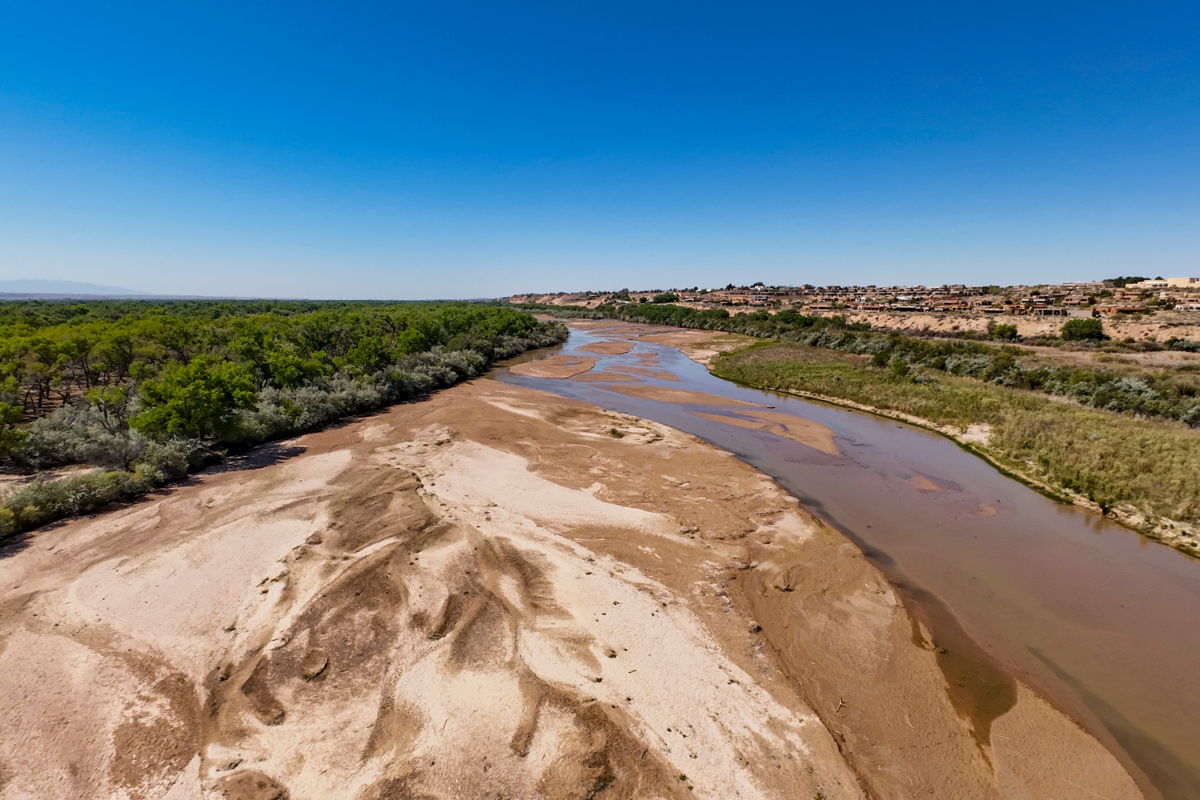
By Danielle Prokop, Source New Mexico — In a single-paragraph assent this week, the U.S. Supreme Court accepted a deal between Texas and New Mexico, ending the 13-year lawsuit between the states and the federal government over the waters of the Rio Grande.
With the dismissal of the case, the deal establishes new rules in the stretch of Rio Grande below Elephant Butte, an area reshaped by water scarcity and agriculture. Among other agreements, the parties will divide irrigation water into a 57-43% split, with the majority going to New Mexico farmers. The agreement also mandates less groundwater pumping by New Mexico.
Gov. Michelle Lujan Grisham characterized the resolution for the case, officially titled as Original No. 141 Texas v. New Mexico and Colorado, as a win.
“Water is the foundation of New Mexico’s agricultural economy and the lifeblood of communities across the southern part of our state,” Lujan Grisham said in a statement Thursday. “This settlement means farmers in the Lower Rio Grande can plan for the future, communities have certainty about their water supply and New Mexicans aren’t on the hook for a liability that could have cost billions.”
New Mexico Attorney General Raúl Torrez, similarly, in a statement described the agreement as ”a fair and responsible resolution to a decade of litigation that carried enormous financial risk for New Mexico.”
Burke Griggs, a national water law expert and professor at Washburn University School of Law, told Source NM the settlement strikes a balance for water uses by the federal government and states.
“It’s a good settlement and a remarkable one for the state of New Mexico, given how the litigation was going in the early stages — not very well for New Mexico,” Griggs said. “But New Mexico was able to recover and I think it’s achieved a lasting and durable settlement.”
A series of droughts in the early 2000s spurred a slew of lawsuits between irrigation districts, local governments, state agencies and the federal Bureau of Reclamation over the splitting of the Rio Grande water. The grievances snowballed into a 2011 federal lawsuit brought by New Mexico. The state alleged that the federal government’s operations of its network of dams, canals and irrigation ditches favored Texas farmers and shorted New Mexico its rightful Rio Grande water.
Jeff Wechsler, the lead attorney representing New Mexico, could not be reached for comment prior to publication.
In 2013, Texas elevated the dispute to the U.S. Supreme Court, and alleged that New Mexico’s groundwater pumping from farming and development on the Rio Grande violated the 87-year old compact between the states and could mean damages totalling $1 billion. The Supreme Court allowed the federal government to join the case in 2019.
This is the second time the court has considered a settlement in the dispute. In 2024, SCOTUS — in a close 5-4 decision — sided with the federal government’s objections that a deal between the states unfairly excluded the “unique federal interests,” and sent the parties back to settlement talks.
After continued negotiations, parties reached a four-part settlement in August 2025. That deal ends overlapping disagreements about water accounting between the states; and between New Mexico and the federal government.
Under the settlement, New Mexico will need to reduce groundwater pumping in the Lower Rio Grande by 18,200 acre-feet within the next 10 years. In 2026, the Legislature approved more than $22 million for New Mexico water officials to retire irrigated farmland, improve water conservation and implement more monitoring for the settlement.
“This agreement gives New Mexico the tools, flexibility, and time needed to meet our legal obligations while continuing to support agriculture, economic activity, and responsible water management across the region,” State Engineer Elizabeth Anderson said in a statement on Thursday.
Source New Mexico is part of States Newsroom, a nonprofit news network supported by grants and a coalition of donors as a 501c(3) public charity. Source New Mexico maintains editorial independence. Contact Editor Julia Goldberg for questions: info@sourcenm.com.