

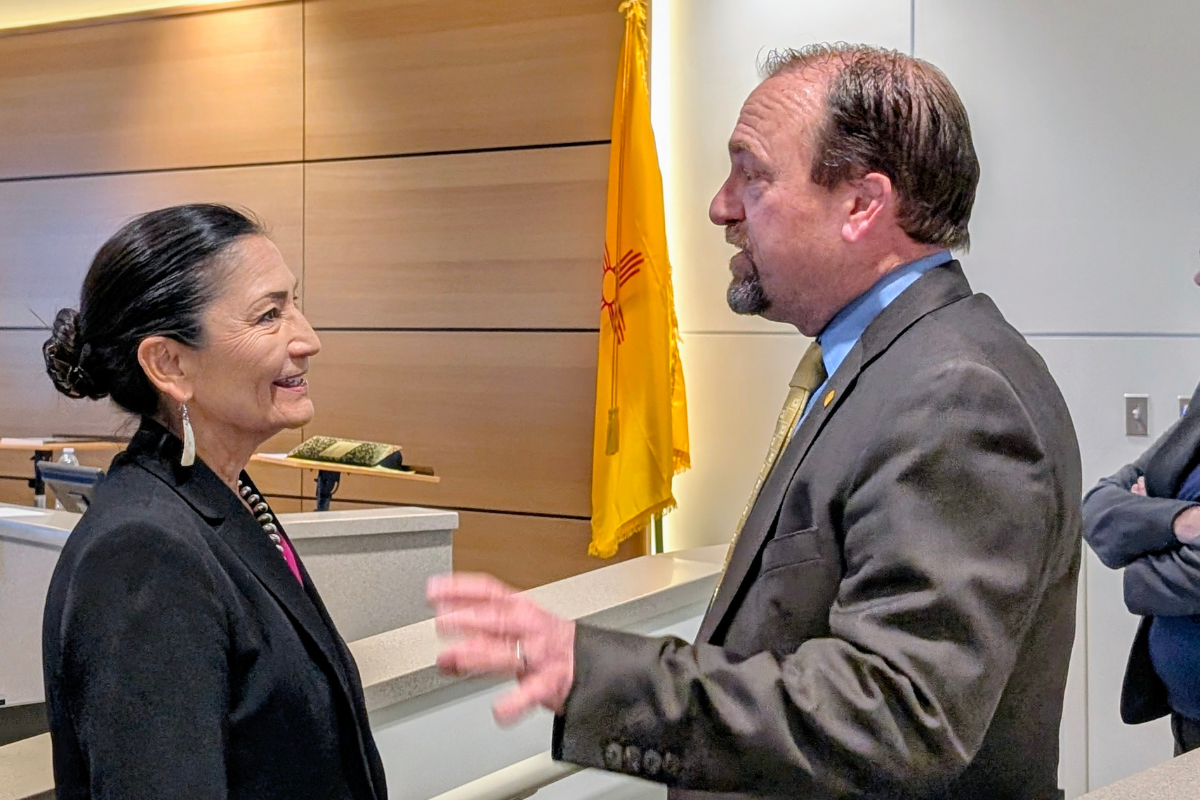
Tuesday night at Rio Rancho Public Schools’ Training Center, five people who want to be your next governor walked into a room, agreed on almost everything and somehow still managed to make it interesting.
The 2026 New Mexico Gubernatorial Primary Forum — co-hosted by the League of Women Voters of Central New Mexico and the Rio Rancho Regional Chamber of Commerce — brought together the two Democrats and three Republicans seeking their parties’ nominations in June. The venue was fitting: a school district training room in a city that outgoing Mayor Greg Hull spent the evening reminding everyone he has personally steered toward success.
More on him in a moment.
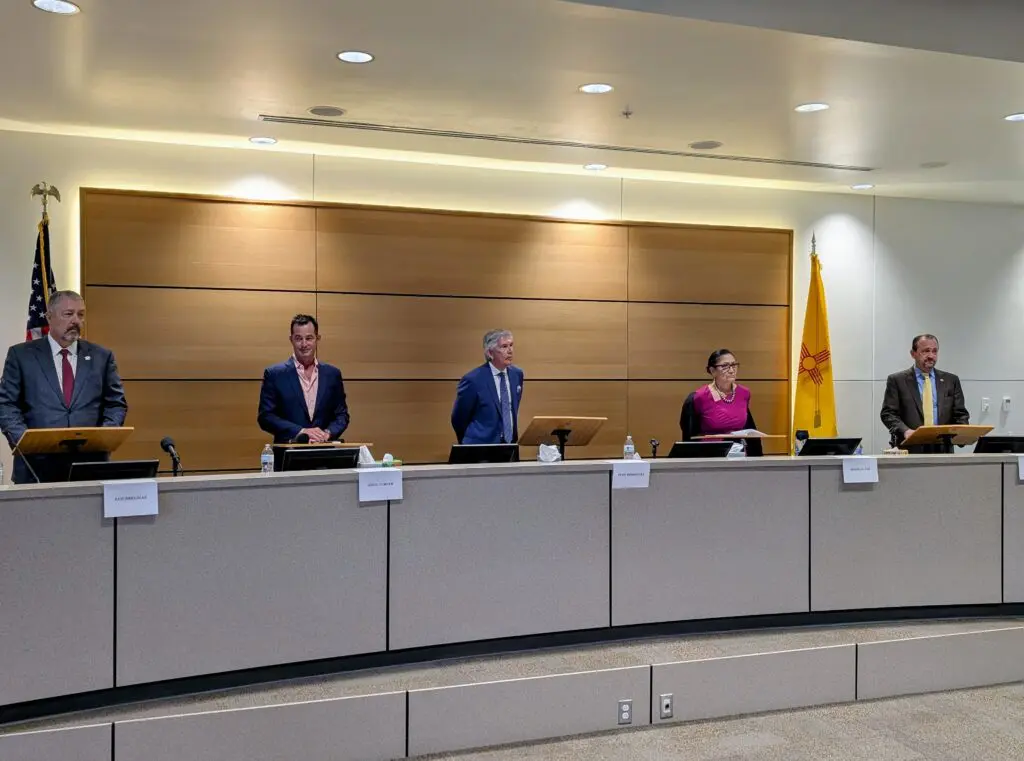
What everybody agreed on
Before getting into who’s fighting whom for what nomination, let’s acknowledge the remarkable consensus in the room: New Mexico is not doing great.
Education? 50th in the nation. Crime? A revolving door that spins faster than a Rio Rancho car wash. Healthcare? We’re losing doctors faster than we’re losing population — which is saying something. Every single candidate said some version of all of this. Five people, two parties, one shared diagnosis: the patient is sick and has been for 30 years.
The disagreement, it turns out, is entirely about the prescription.
The Democrats: Experience vs. energy
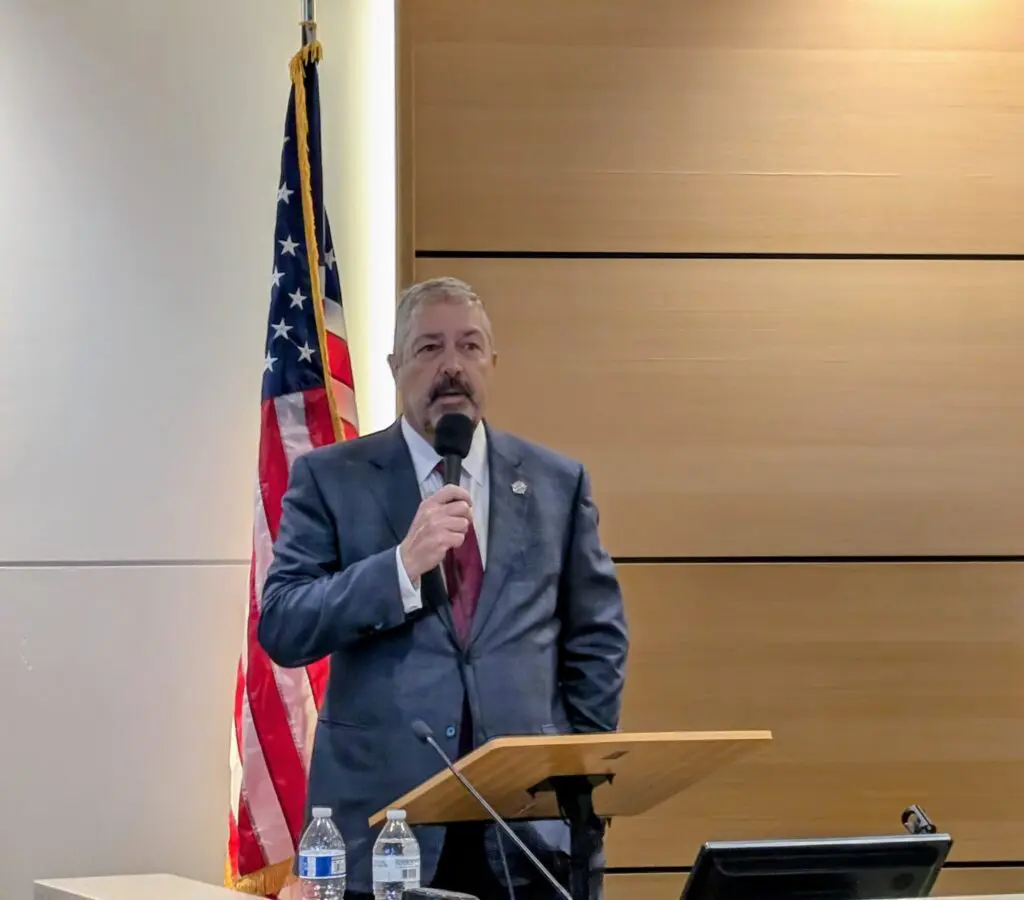
Sam Bregman is the Bernalillo County District Attorney, and he is running as the guy who has seen the crime problem up close and is furious about it. His office has indicted 77 juveniles for murder in the last three years alone. “It makes me sick to my stomach,” he said — and he meant it.
On healthcare, he rattled off policy with prosecutorial precision: join all 11 interstate medical compacts (New Mexico is in two), eliminate gross receipts tax on medical services, forgive a year of medical school debt for every year a doctor practices here. Bregman’s pitch is competence and urgency. He doesn’t want to be governor so much as he wants to fix things before they get worse.
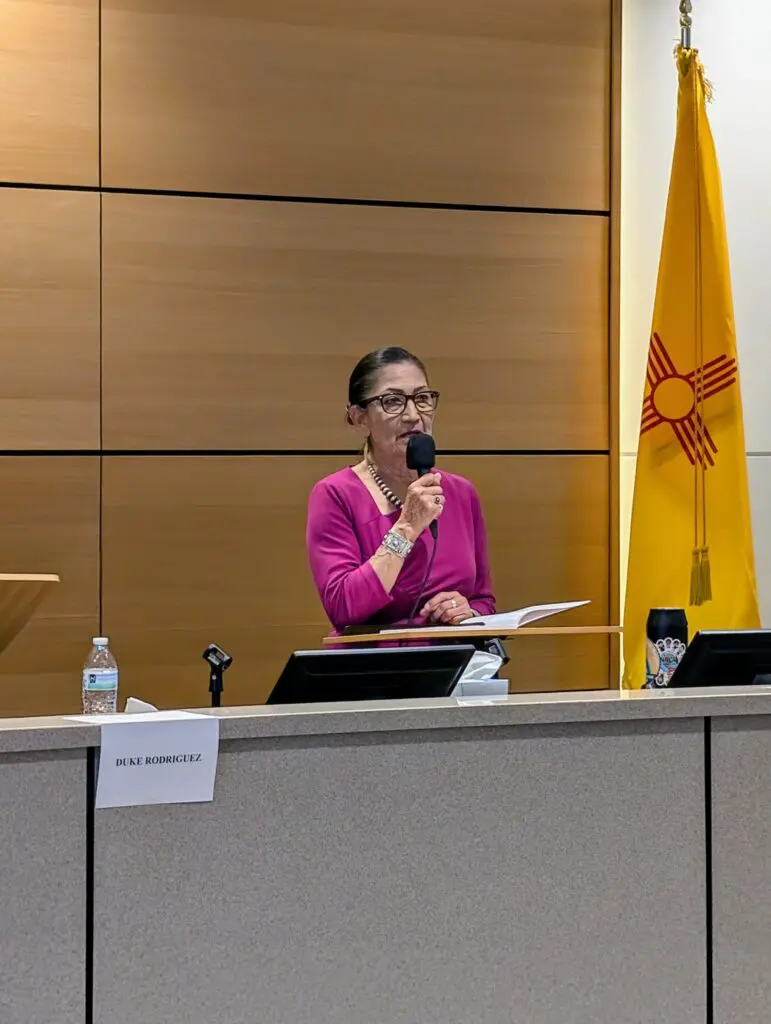
Deb Haaland walked in with the biggest résumé in the room — former congresswoman for District 1, former Secretary of the Interior, manager of a 70,000-person federal department with an $18 billion annual budget. She invoked her childhood — cleaning at her child’s preschool because she couldn’t afford the bill — and the Native American veteran Miguel Trujillo, who came home from World War II to find he still couldn’t vote in state elections. On voter ID, she was the forum’s most pointed voice against new restrictions, arguing that many Native Americans lack driver’s licenses or birth certificates through no fault of their own.
“When you go to register to vote, you prove your identity,” she said. “You shouldn’t have to keep proving it over and over again.”
Her declaration that New Mexico has essentially no voter fraud — “one or two cases perhaps” — drew audible laughs from the Republican-leaning crowd, a reminder that she was very much a Democrat making a Democratic argument in a room that was not entirely sold.
Where they diverge: Bregman is all edge and accountability. Haaland is warmer and leans into community and coalition. Both want to fix education. Bregman’s version involves consequences. Haaland’s involves reading coaches and, charmingly, hiking with science teachers.
Voters will pick which flavor of “we can do better” they prefer.
The Republicans: Three men, one economy, infinite opinions about taxes
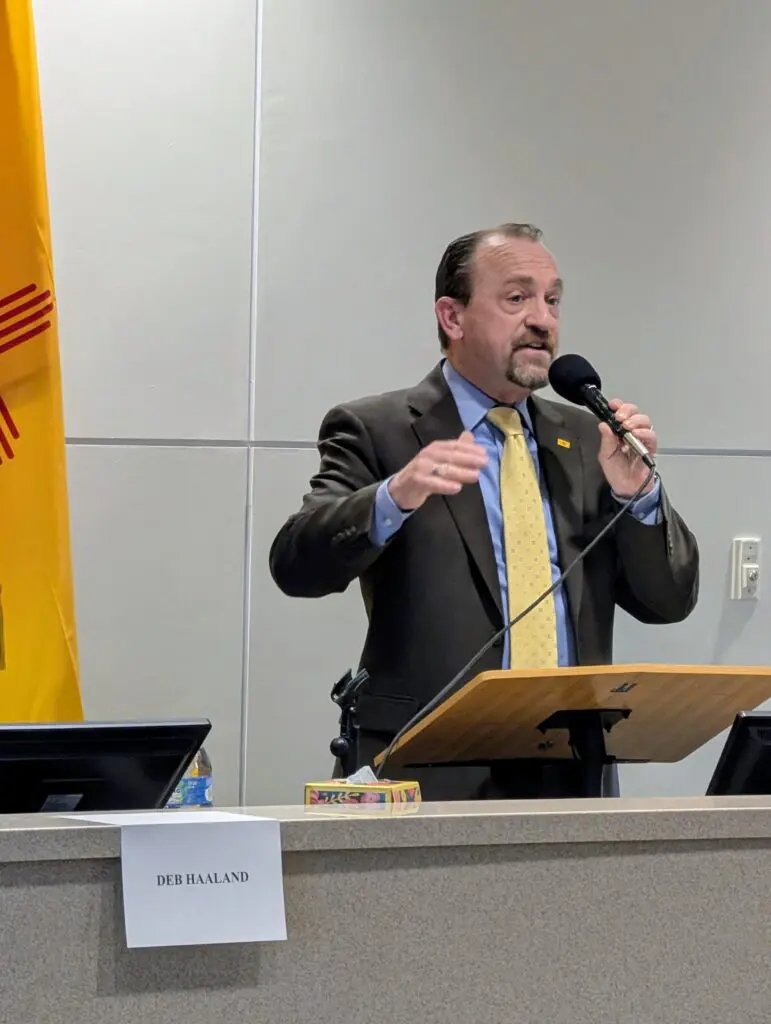
Greg Hull closes out his 12-year run as Rio Rancho’s mayor on April 30 — he mentioned this at the forum, graciously welcoming everyone to the city he was about to stop running. Hull’s pitch is essentially: I built something here, I can do it statewide.
This might be the Rio Rancho resident in me, but he has a case. Hull said Rio Rancho has genuinely outperformed the state on economic development, public safety and population growth under his watch. He cited $6-7 billion in private investment, a sales tax rate unchanged since 2014, and helped bring Intel’s local workforce from 900 back to 3,000 jobs. On infrastructure — roads, water, energy capacity — Hull was the most detailed voice on stage. His record is real and his experience is relevant. The question voters will weigh is whether running a successful city translates to running a state with very different challenges.
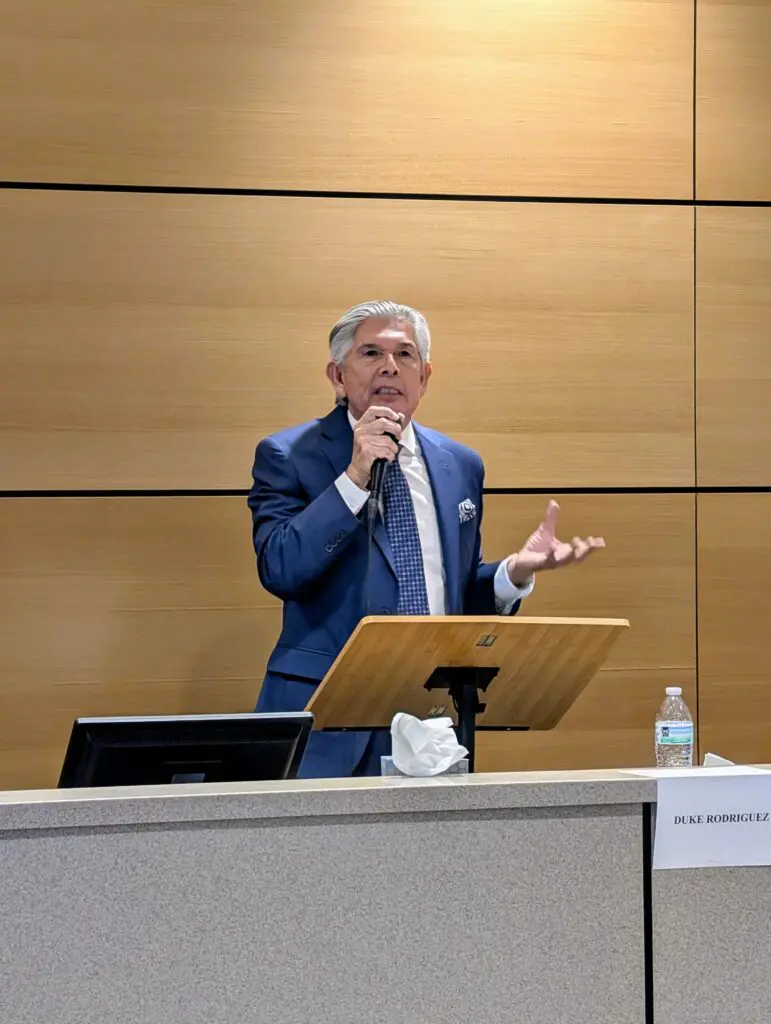
Duke Rodriguez is the forum’s most ideologically sharp candidate — a former cabinet secretary under Gov. Gary Johnson with Johnson’s endorsement and his general disposition toward dramatic tax cuts. Rodriguez wants to eliminate the state personal income tax, the gross receipts tax on retail sales, and reduce the property tax burden. He delivered all of this like a man who has thought about it for years and genuinely cannot understand why it hasn’t happened yet.
On crime, he made the night’s sharpest statistical point: during the Johnson years, New Mexico’s inmate population averaged around 10,000. Today it’s 5,000. “You can’t tell me people are just behaving better,” he said. “We just don’t hold people accountable.”
Rodriguez closed by telling Republicans in the room to pick someone who can actually win in November — a fair point in a state that has leaned Democratic for decades, and a sign he sees a lane if he can get there.
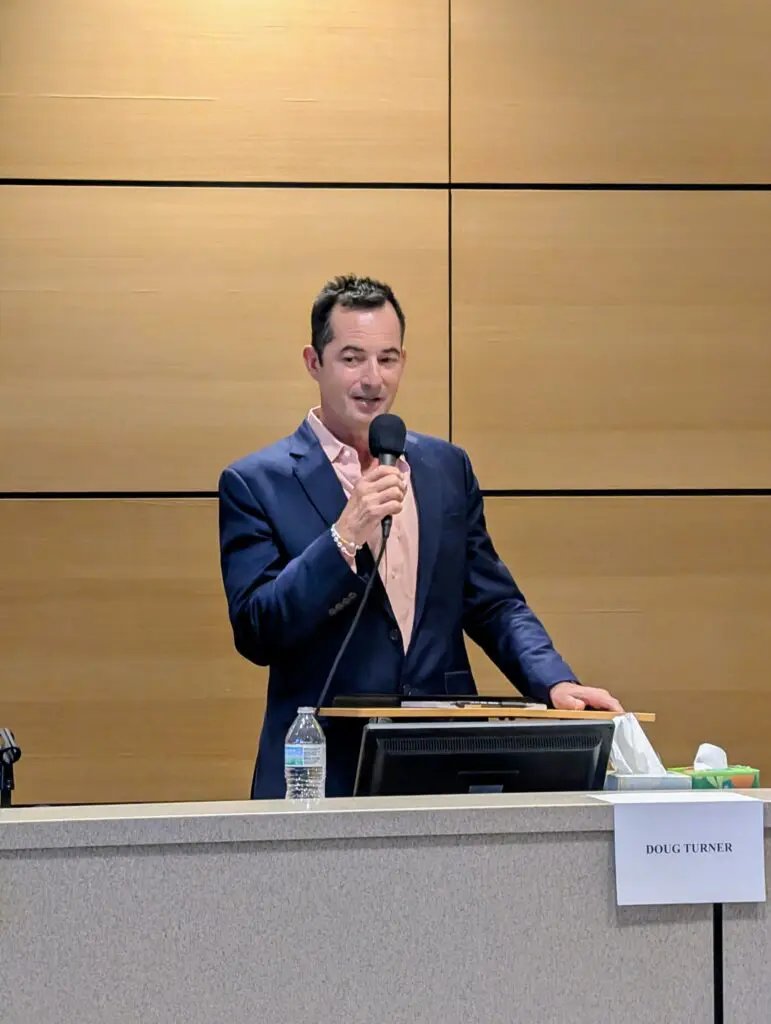
Doug Turner is an Albuquerque businessman who built a company now operating in 40 countries and has the kind of boardroom bluntness that plays well in a forum. His proposition is simple: New Mexico’s problems aren’t complicated, they’re just unsolved — for 30 years — because nobody in state government had the will to fix them. On bail reform, he wants violent offenders to stay jailed until trial. On taxes, he wants gas tax revenue to actually go to roads. Revolutionary stuff.
His closing was the forum’s most personal. He talked about arguing politics with his late wife — a Democrat — across the dinner table every night until he lost her to cancer in January 2025. “What New Mexico is missing right now is balance,” he said. It was the right note, even if the details of what that looks like in practice are still forthcoming.
What I learned
I was one of the 234 people in the school training room in Rio Rancho where five candidates agreed that New Mexico is in trouble. They disagreed — sometimes sharply — on whether the fix is tax cuts or public options, voter ID or voter access, more cops or more counselors.
But here’s what stuck with me: nobody in that room was wrong about the diagnosis. Thirty years of the same problems, 30 years of the same speeches. Now five more people are asking for two minutes to explain why this time will be different.
The primary is June 2. Early voting runs May 5-30. Someone on that stage will be on the November ballot.
Pay attention.
WATCH THE FORUM Full video available on the Rio Rancho Regional Chamber of Commerce YouTube channel: youtube.com/watch?v=4Lmi5IV6ook