

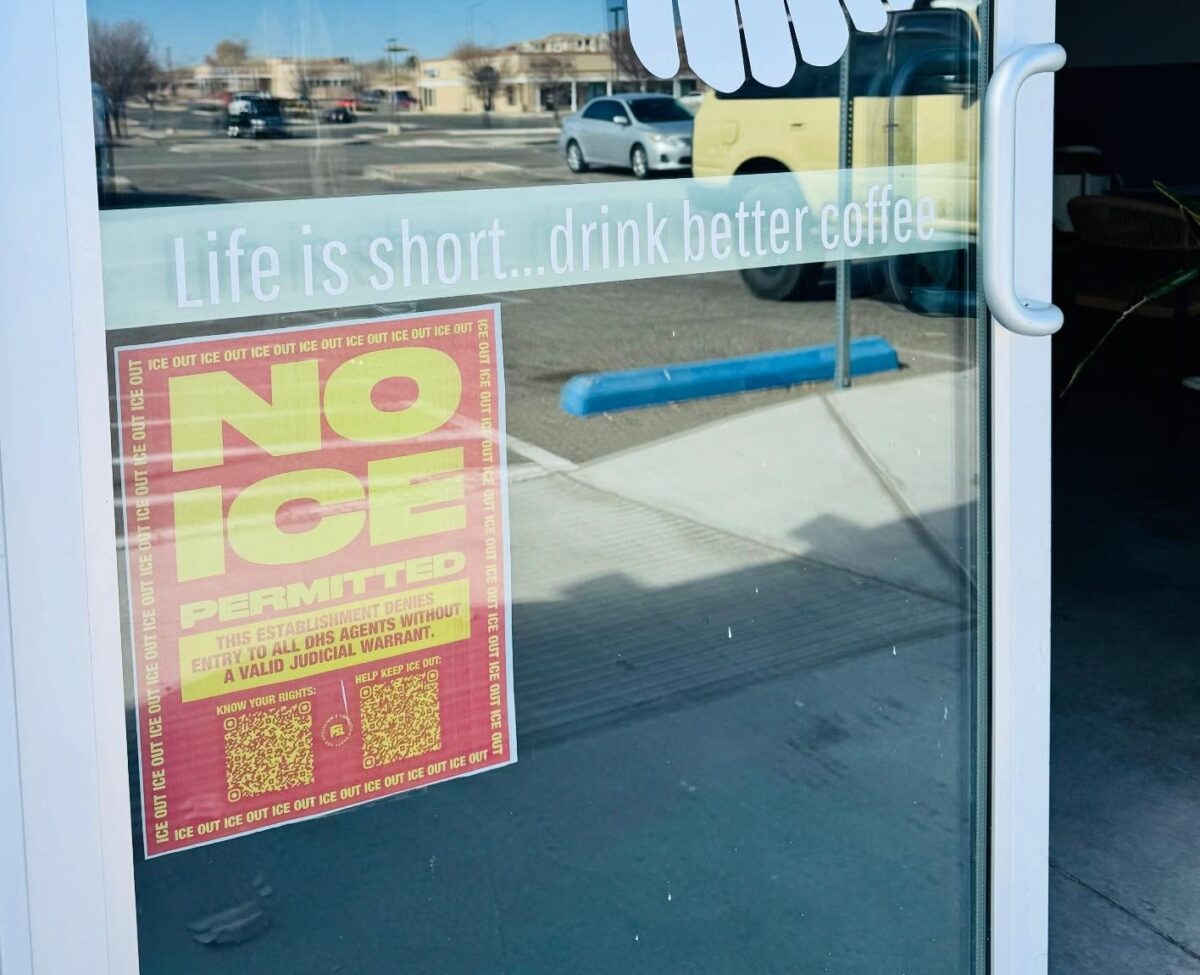

From local restaurants to construction crews, tens of thousands of Duke City businesses will soon have new requirements added to their annual business license renewal after the Albuquerque City Council approved the Safer Community Places Ordinance on Monday, March 16. Once enacted into law, the city has 90 days to determine how businesses will set clear boundaries for when federal agents can enter non-public spaces and provides a defined process for how employers and managers of public facilities like schools and hospitals must communicate with workers during immigration enforcement sweeps.

City leaders said the ordinance is designed to protect workers and give employers a predictable framework for responding to federal agents. The law introduces several specific requirements for business owners and their staff:
- Signed public and private areas: Businesses must clearly show which parts of the workplace are public and which are private to stop agents from entering restricted areas without permission.
- Safety plans: Businesses with five or more employees must adopt a plan to protect private spaces from unwanted law enforcement intrusion; the city will provide templates.
- Audit notifications: Employers must notify workers within 24 hours of an I-9 or record audit. Notices must include the agency name, inspection date, scope and worker rights resources.
- Document problems: If a federal audit flags a worker’s documents, the business must notify that employee of the errors, how long they have to fix them and their right to bring a representative to any follow-up meetings.
- Enforcement visits: If agents arrive for anything other than an I-9 audit, businesses must tell all workers and contractors within 24 hours. This notice must include the agency involved and the nature of their actions..
- City support: The city will create signs, templates and sample policies to help businesses comply with the rules within 90 days. Officials will verify that businesses comply with these rules during licensing and relicensing.
Business reactions: Support and concerns
Nearly all 31 speakers attending the council meeting urged councilors to approve the ordinance, emphasizing the immigrant community’s vital role in the city’s success. Among those testifying was a member of El Centro who read a statement in solidarity with her uncle, Rosalio Hernandez, the 30-year owner of Taquería México. “At my restaurant, individuals in white vehicles wearing green uniforms have shown up, spreading fear among my customers who then decide to leave my business out of fear,” Hernandez wrote, noting that these disruptions have significantly impacted his income and reduced his workforce.

Advocates view this as common-sense protection, but the move may face legal scrutiny. When asked to put back on his federal prosecutor hat to analyze how the government might respond, former U.S. Atty. Alex Uballez, a Democrat, told City Desk that while he agrees with the intent, linking mandatory signs to business licenses could prompt a First Amendment challenge. He warned that the federal government or other parties could argue that forcing businesses to display specific signs within their buildings restricts an owner’s free speech.
What happens next
A city spokesperson confirmed to City Desk that officials have a 90-day window to finalize the new policies before businesses have to include ICE response plans in their annual business license renewals, but exactly how it will work is still in flux. They told City Desk the rollout will likely be a multiagency effort involving the Planning Department, the Office of Immigrant and Refugee Affairs and potentially the Albuquerque Police Department. To bridge the gap, the city is also partnering with community groups like El Centro to provide webinars and toolkits for local employers.