

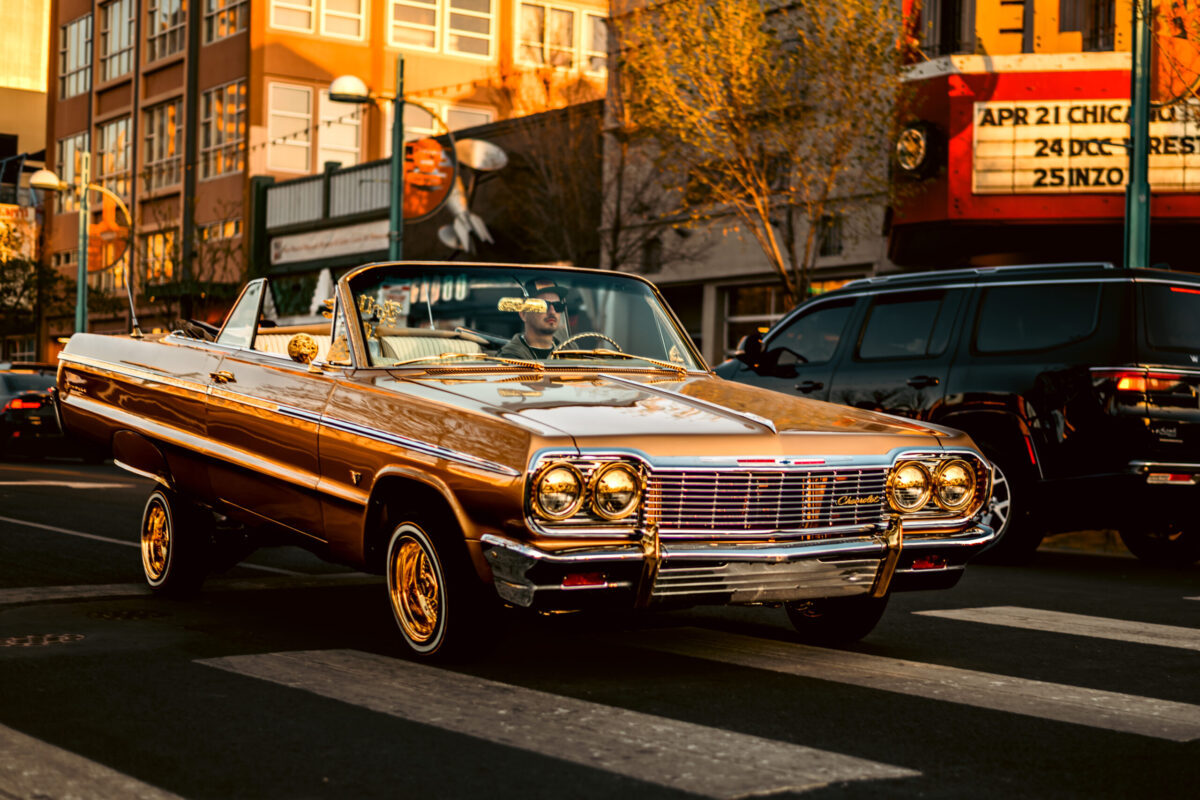
On Sundays in Albuquerque, engines idle low along Central Avenue. Families gather along the sidewalks as candy-painted Chevys glide past murals and storefronts. At Seventh Street and Central, a photographer found not only striking images, but a community that would reshape how he sees his hometown.
For Nathaniel Tetsuro Paolinelli, the project that became Seventh & Central: Lowriders did not begin with a formal pitch or even the intention to create a book.
“The project didn’t start as a project. It started just with taking photos, and it turned into that. So it didn’t really start off as a book, either,” says Paolinelli. “It started off as a magazine, and I made [it] just one time and [in] two days standing in my kitchen, like, crazy just designing this whole thing.”

That burst of energy at Paolinelli’s kitchen counter became the seed for what is now a photographed tribute to Albuquerque’s lowrider culture. The book documents chrome bumpers, intricate paint jobs and bouncing hydraulics, but it also captures intimate portraits and unguarded moments between friends.
“Well, for me, it’s always been about the people. The cars are just a bonus, because they’re so amazing, but I’m attracted to the people. I like the human connection, and that’s why there’s so many portraits,” says Paolinelli.
Lowriding in Albuquerque is often associated with the historic stretch of Route 66 that runs through Central Avenue. While lowrider culture spans cities across the country, it holds particular weight in New Mexico, where generations cruise together and car clubs function like extended families.
“That’s kind of where the whole world of low riding began, and that’s where I discovered all the people that I know now. Everyone was hanging out down there on Sundays. It was an amazing time for a couple years, and now that’s kind of gone, and the spaces that the cars go to always change. But it’s always the same people,” says Paolinelli.
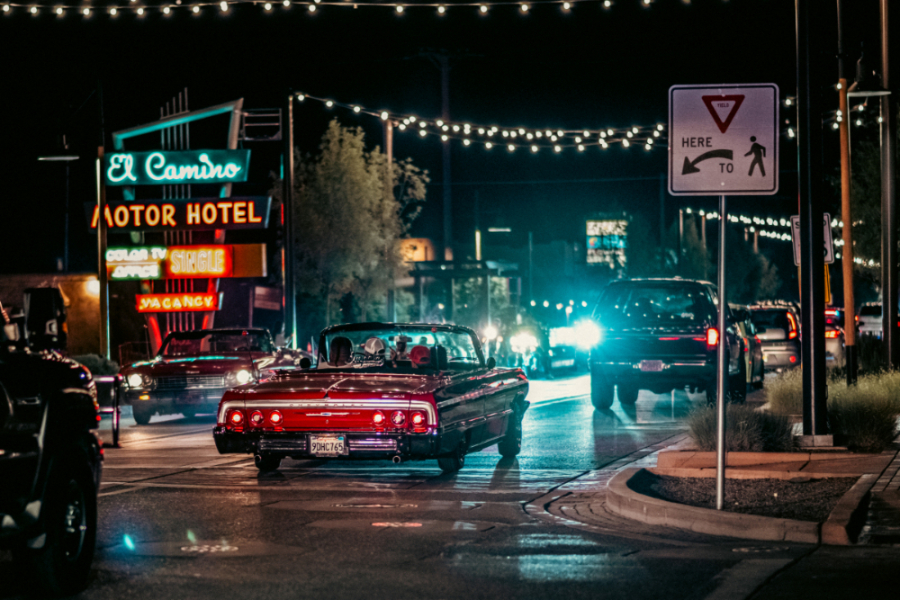
That constancy left a strong impression on Paolinelli. He says what often goes unnoticed from the outside is the strength of the community at its core.
“It’s a really family, friendly, tight community,” says Paolinelli. “I think what I learned about them is it’s community is so important to them, and that’s a really big deal, and it’s a very tight-knit community.”
Paolinelli did not grow up in the lowrider world. Gaining trust required consistency and sincerity.
“I think I earned trust by going back multiple times and also being cool to people. That’s really it. It’s not so much earning trust as a photographer, it’s just earning trust as a person. And once you do that, you can take all the pictures you want,” says Paolinelli.
Paolinelli’s approach behind the camera is equally intuitive. “There’s never a plan. I just go everywhere with my camera. And sometimes I take pictures, sometimes I don’t. It just depends,” says Paolinelli.

A shift in 2021 deepened his commitment. Although Paolinelli had long identified as a photographer, he realized something was missing in the way he approached the work. He wasn’t connecting with people the way he wanted to. “I wasn’t talking to the people the way I should have been,” says Paolinelli.
The adjustment wasn’t technical, it was personal. Instead of focusing first on the shot, Paolinelli focused on conversation. Once he began engaging more openly, the dynamic shifted. “When I just started talking to people,” says Paolinelli, it became “really easy to take the photos I wanted to take.” The breakthrough, Paolinelli explains, was understanding that friendship had to come first. “First, I had to be their friends.”
That change transformed not only the images Paolinelli captured, but the relationships behind them.
That friendship is visible in the images. Some portraits are direct and composed. Others are quick and unposed. He recalls one favorite moment created almost invisibly.
“They didn’t really realize I was taking it. It wasn’t posed. It was just this moment they were kind of lining up to get their picture taken by somebody with the phone, and I just crouched in and shot that, and then pulled away,” says Paolinelli.

The result is a visual record of a specific era in Albuquerque’s cultural life. Looking ahead, Paolinelli considers what someone might notice if they open the book decades from now, reflecting on the way photographs have the power to freeze time.
“Anytime you look at an older photo, you notice the style, how people were looking, what they were doing, how they were dressed. And I think it will make the book more interesting, because it’s a moment in time from just a few years,” says Paolinelli.
The project also reshaped his relationship with his hometown.
“It made me like Albuquerque more and made me appreciate Albuquerque,” says Paolinelli. “The lowrider culture is such a rich, exciting culture that we have here, and low riding isn’t unique to New Mexico. But New Mexico goes really hard for it, and I just love that there’s so much history and rich culture with it.”
Place has always shaped his work. “It shapes everything about my work. This is the place that I have lived my entire life, and I wake up every day here,” says Paolinelli.

In the end, Seventh & Central: Lowriders is less about spectacle than about belonging. It documents cars that gleam and bounce, but also friendships, fashion and shared history. Through Paolinelli’s lens, an intersection becomes more than a crossroads. It becomes a living archive of a city cruising forward, powered by the same people who return week after week, wherever the gathering spot may be.Seventh & Central: Lowriders will be available for purchase on March 17, offering readers a chance to experience that living archive for themselves. The book can be purchased through the University of New Mexico Press, as well as through other major online booksellers and select independent bookstores.
For more information or to order a copy, visit unmpress.com.