

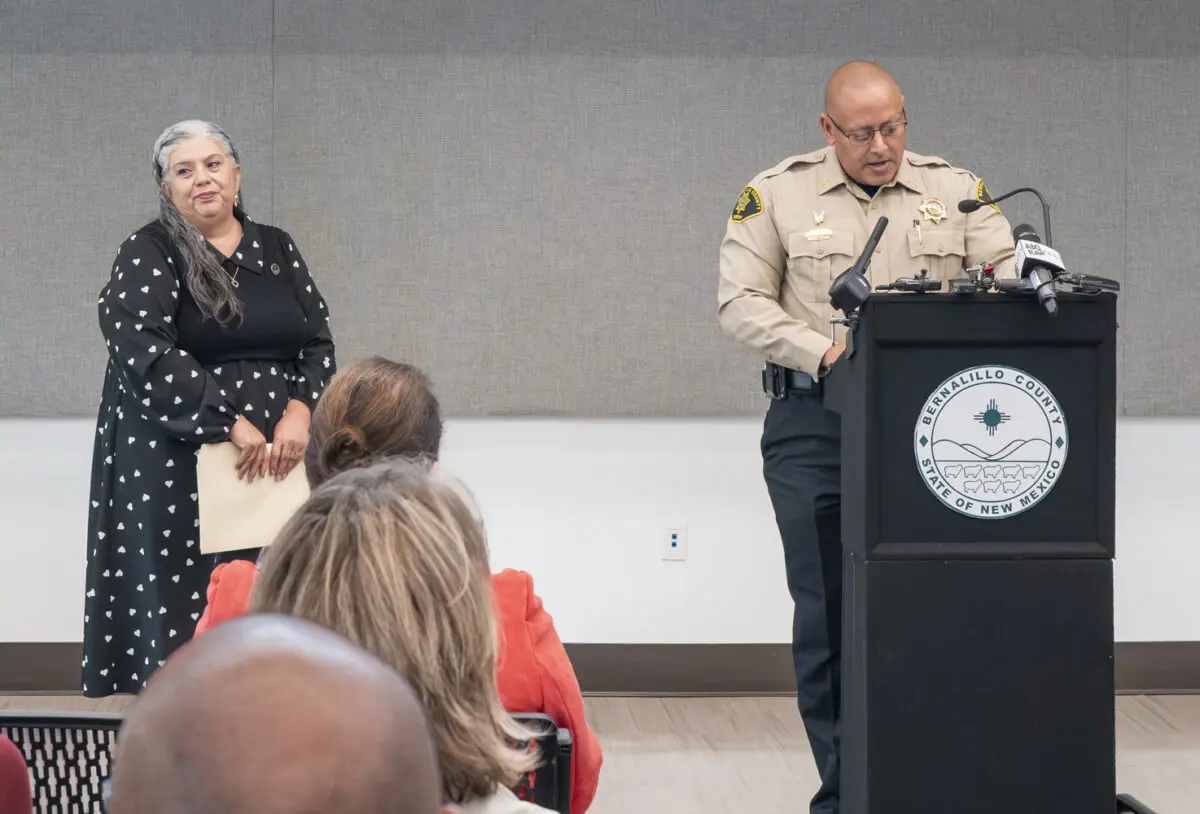
By Jesse Jones, The Paper. — About six people a week died from opioid-related causes in Bernalillo County last year. Now, county commissioners are considering an emergency declaration to help fund a more robust response, including expanded street medicine and addiction treatment, real-time overdose tracking and a new sheriff’s operation targeting drug traffickers.
Bernalillo County Commission Chair Adriann Barboa outlined the proposed emergency response during a news conference Wednesday at the county’s CARE Campus. While national overdose deaths declined, drug overdose deaths in New Mexico rose 23% to 28% between 2023 and 2025, according to county documents citing state Department of Health data. Commissioner Barbara Baca said recent multiyear data from the department show more than 1,860 overdose deaths in Bernalillo County. Barboa linked the crisis to pharmaceutical companies’ aggressive marketing of prescription painkillers in past decades. Meanwhile, Sheriff John Allen said drug traffickers use Interstates 25 and 40 as major routes to move fentanyl through the state. “We must stop treating release from jail as the end of our responsibility,” Barboa said. “It should be the beginning of a coordinated transition to care, recovery and stability.”
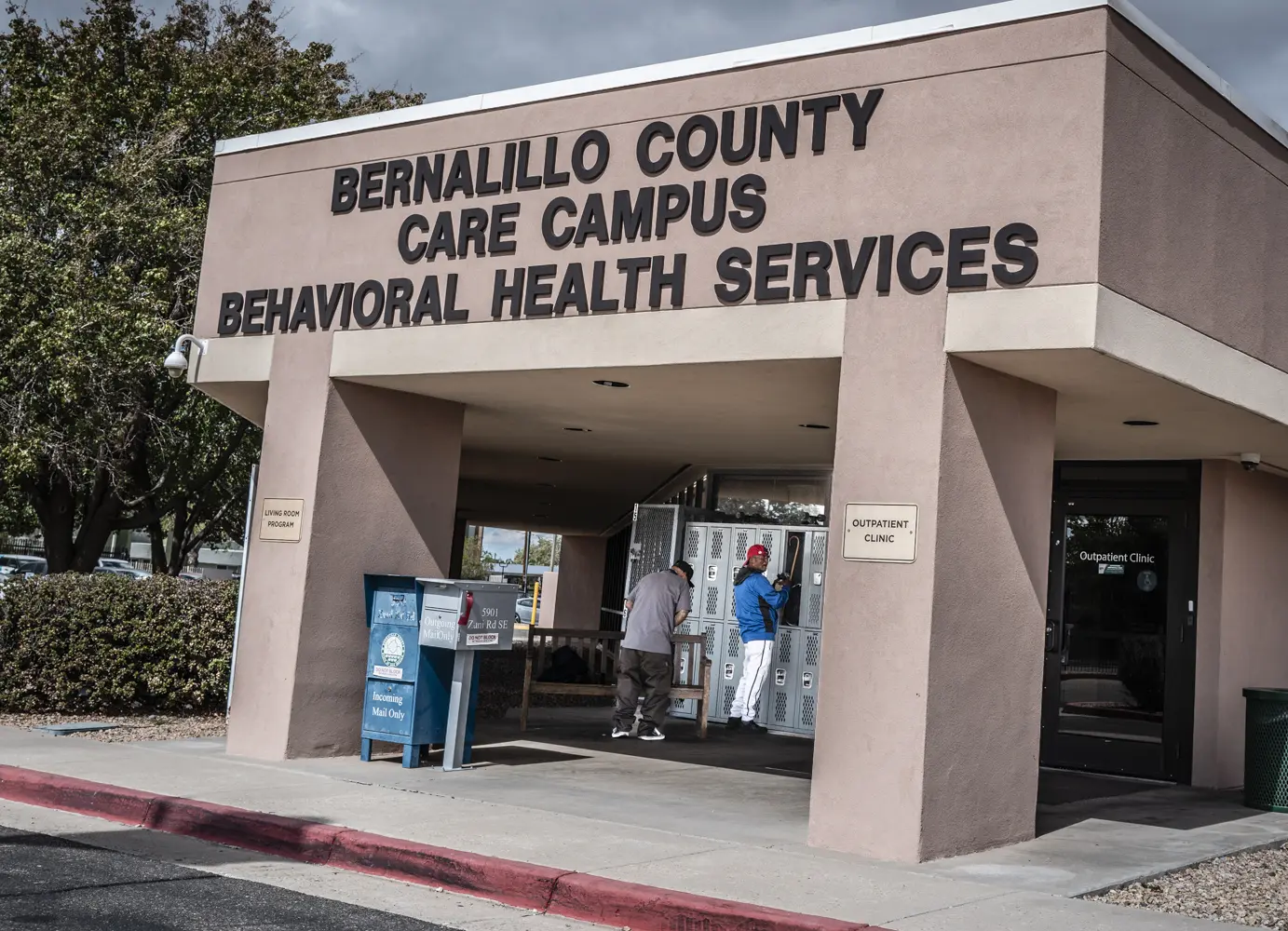
Barboa outlined six priorities the county hopes to advance through the proposed emergency declaration:
- Street outreach: The county plans to double outreach by medical teams, including the University of New Mexico School of Medicine’s Mobile Medical Team, known as Street Medicine and Albuquerque Healthcare for the Homeless.
- Real-time overdose tracking: First responders would log overdoses in a mapping system to identify clusters and help trigger community alerts when overdoses spike.
- Expand recovery services: The county would increase support for providers who connect people with treatment and guide them toward long-term recovery.
- Promote the 988 crisis line: A public awareness campaign would highlight the free, 24-hour crisis line that connects people with support.
- Improve jail transitions: The county would strengthen care for people leaving the Metropolitan Detention Center, where 80 to 100 people undergo detox each day. Allen said he wants to establish a pharmacy at the jail to support long-term care.
- Target Cartels: The Sheriff’s Office announced Operation Street Shield, a long-term operation focused on cartels and other drug traffickers, to intercept drugs before they reach local neighborhoods.
Allen said the sheriff’s office plans countywide enforcement operations and is discussing additional investigations with federal partners, including the FBI and DEA. “As sheriff, I understand that enforcement alone is not going to solve this epidemic,” Allen said, adding that the department will focus on disrupting drug traffickers rather than solely targeting people who use drugs. Barboa also highlighted plans to expand long-acting medications for opioid use disorder, which she said could provide people with 30 days of stability after release from jail.
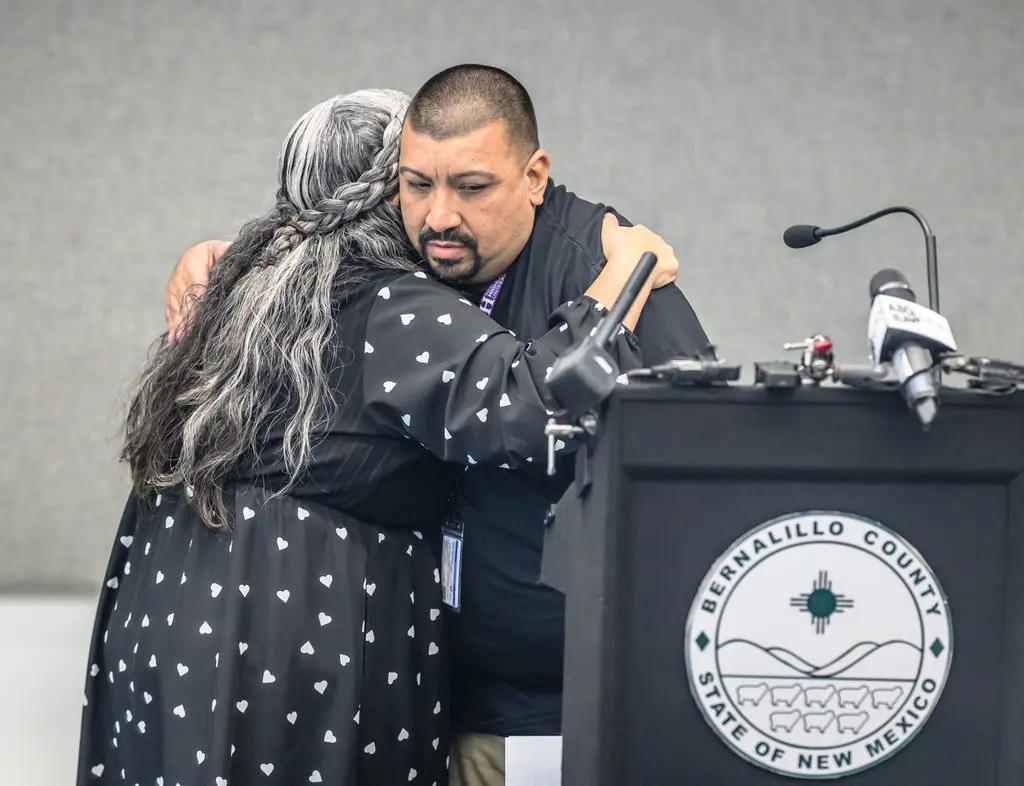
Francisco Delgado, a community case manager at the county’s Tiny Home Village, said the county’s detox and aftercare programs helped him achieve eight years of recovery after he experienced homelessness. “For me these services were more than just a program,” Delgado said. “They were the opportunity to rebuild my life.”
County commissioners will consider the Fentanyl Crisis Emergency Declaration at their meeting tonight. County officials said the declaration could unlock emergency funds and help secure additional state and federal resources. The county also generates about $34 million annually through a local behavioral health tax that funds treatment and outreach, according to Barboa.