

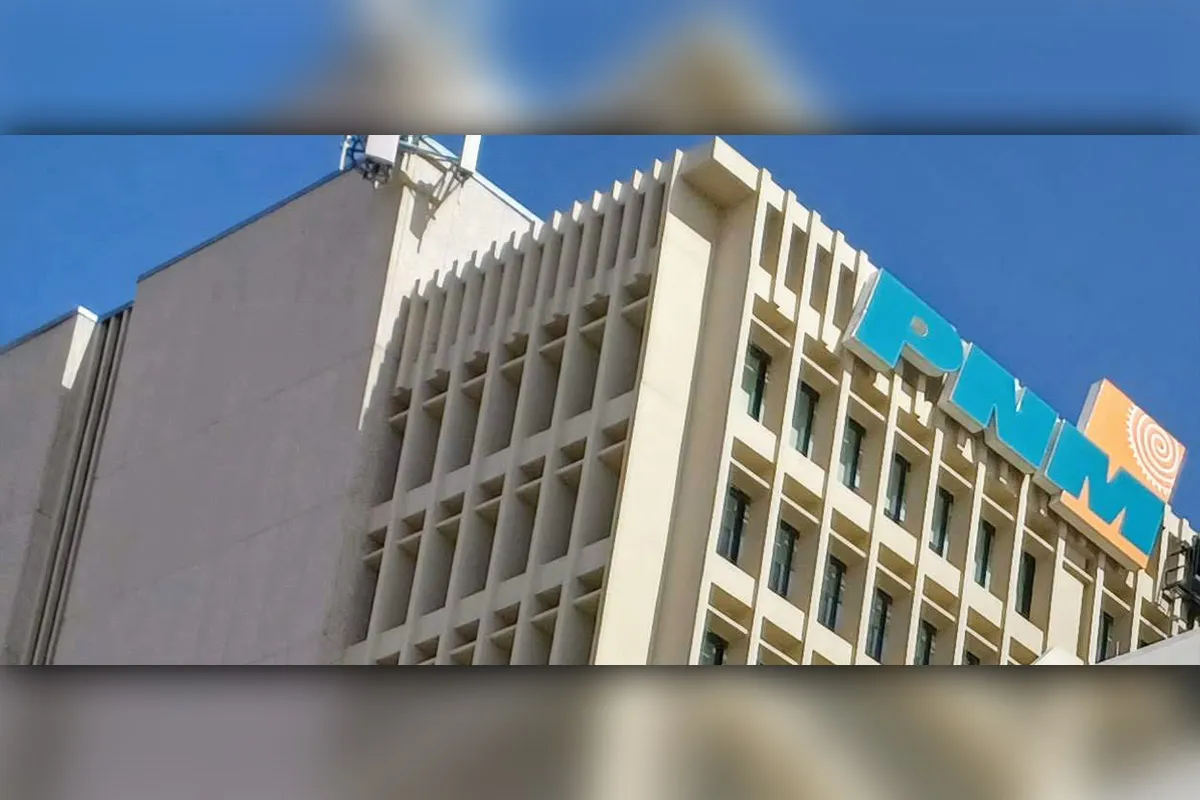
By Pat Davis, New Mexico Political Report – Blackstone is asking the PRC to accept an amended offer to buy PNM, upping the ante with more than $300 million in rate credits and low-income bill payments, among other incentives, and offering to create a New Mexico-run board, in an effort to win approval from the last regulatory authority still evaluating the $11.5 billion acquisition.

This story was originally published at New Mexico Political Report, a nonprofit news service covering politics and policy in the Land of Enchantment. Learn more and support our work at nmreports.org
The increased incentives, which are separate from a $5 billion investment in new grid infrastructure over ten years, increase the total benefits package offered by the private equity company Blackstone to more than $300 million, including $220 million in credits for rate payers. That would extend the initial term of those credits from four to nearly ten years. The company had offered about $175 million in rate credits and economic development funding in their initial deal. If the Public Regulation Commission allows the companies to file an amended application, it would essentially reset the clock on provisions the companies propose to change. Blackstone will ask the PRC to set a new hearing schedule to begin in February to allow for other interveners time to respond to the new proposal.
The PRC paused consideration of the original application and ordered the companies to undo a $400 million purchase of stock in TXNM Energy, the parent company of PNM, which violated PRC regulations. The companies reversed that transaction in August but left open the possibility of a revised application and schedule by extending their purchase agreement until next May.
Officials with PNM and Blackstone told NM Political Report that the revised incentives and governance structure were the result of “ongoing” discussions with stakeholders before and since the stock purchase snafu.
The revised Blackstone application includes several new and increased incentives funded entirely by the company, not PNM rate payers, including:
- A nearly 4-fold increase in the Good Neighbor Fund, a PNM program to subsidize utility bills for low-income households, to $15 million over ten years, increasing PNM’s current investment from about $300,000 a year to more than $1.2 million;
- Establishing a new “economic development fund” to match local incentives to attract new companies creating local jobs in PNM service areas;
- More than $20 million in incentives for professional trades programs in construction and similar fields needed to build new utility infrastructure and support more economic growth;
- A $25 million investment to build a new “smart grid” system allowing homeowners with battery storage or unused solar capacity to sell that power to PNM during peak demand times.
The $220 million in rate incentives is nearly ten times the $ 22.4 million incentives approved by the PRC in July in the $1.25 billion Bernhard Capital acquisition of the New Mexico Gas Company.
To address opponents’ concerns that private ownership of PNM would eliminate many of current SEC filings providing transparency into company finances and internal operations, Blackstone is now proposing a new independent governance structure for PNM with similar reporting to the PRC instead of the SEC:
- Blackstone proposes to create a nine person board of directors with at least five independent directors from New Mexico. The board, Blackstone says, will have full authority over PNM operations.
- The new company would replicate many of PNM’s current SEC filings with the PRC in order to provide greater public and regulatory transparency into how PNM operates. The companies say they will need more time to work with the PRC on how that process would work.
An official with Blackstone told New Mexico Political Report that this type of autonomous oversight of a Blackstone utility investment would be the first of its kind.
Opponents of the acquisition first pushed for the state to buy PNM outright, then pivoted to asking the state to buy a large percentage of stock. The State Investment Council said it did not have the constitutional authority to buy the utility and a legislative proposal to change that died without a vote earlier this year.
Catch up
This is a developing story. Check back throughout the day for more details.