

By Kevin Hendricks, NM Political Report
Congresswoman Melanie Stansbury is giving state agencies until Friday to publicly account for how Project Jupiter, the sprawling AI data center campus near Santa Teresa, will meet its water needs. Stansbury’s office sent a formal letter Monday to five state officials demanding answers on the project’s water rights, permits and compact compliance, a day after the New Mexico Supreme Court unanimously paused two legal fights over the project’s water and air permits.
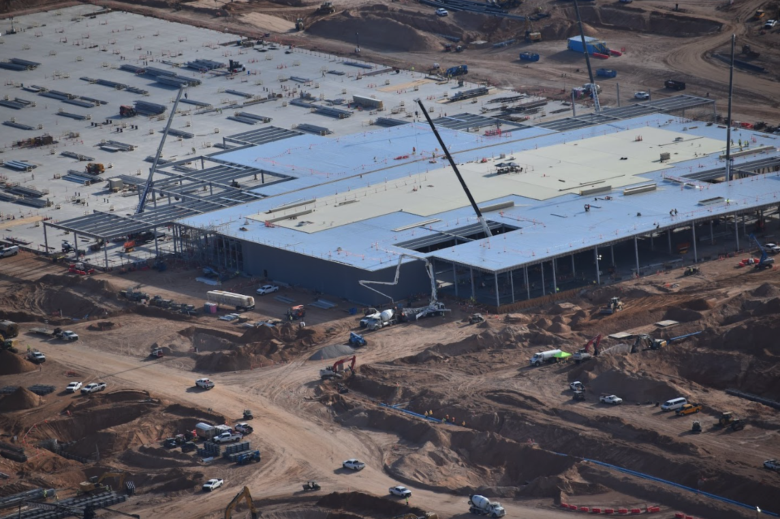
The letter, addressed to Attorney General Raúl Torrez, State Engineer Elizabeth Anderson, Environment Secretary James Kenney, Interstate Stream Commission Chair Mark Sanchez and Director Hannah Riseley-White, asks for a full accounting of the 1,400-acre project’s water use, water rights, permit history and any state analysis of its impacts. Project Jupiter is reported to need nearly a million gallons of water a day, according to Stansbury’s office. “In New Mexico we know water is life and our communities are facing a historic water crisis,” Stansbury said. “This is about transparency, accountability, and protecting New Mexico’s water future.”
New Mexico is under a binding, court-supervised settlement requiring it to cut groundwater pumping in the Lower Rio Grande Basin by 18,200 acre-feet annually by 2036 — the same basin Project Jupiter draws from. Stansbury’s letter notes Elephant Butte Reservoir has fallen to its lowest level since 1971 and the Rio Grande has run dry through the middle reach for more than three months this year.
The Supreme Court’s Aug. 23 orders stayed a Sept. 14 air-quality permit hearing over Project Jupiter’s proposed natural gas fuel cell system, and separately paused an emergency well authorization the State Engineer’s office had allowed for construction. Both cases must be answered by Sept. 2; Stansbury said her Friday deadline is meant to inform the public and the parties before then.
The letter cites months of unresolved public pushback. At a September 2025 Doña Ana County Board of Commissioners meeting, commissioners voted to approve $165 billion in industrial revenue bonds for Project Jupiter, drawing several hundred residents who asked that the vote be delayed for more answers on water impacts. A month later, the Legislature’s Water and Natural Resources Committee raised similar concerns during a briefing in Artesia. On the press call, Stansbury said the project’s own water-use estimates have shifted repeatedly and that her office does not have confirmed figures. “We don’t know what Project Jupiter’s potential water usage is,” she said.