

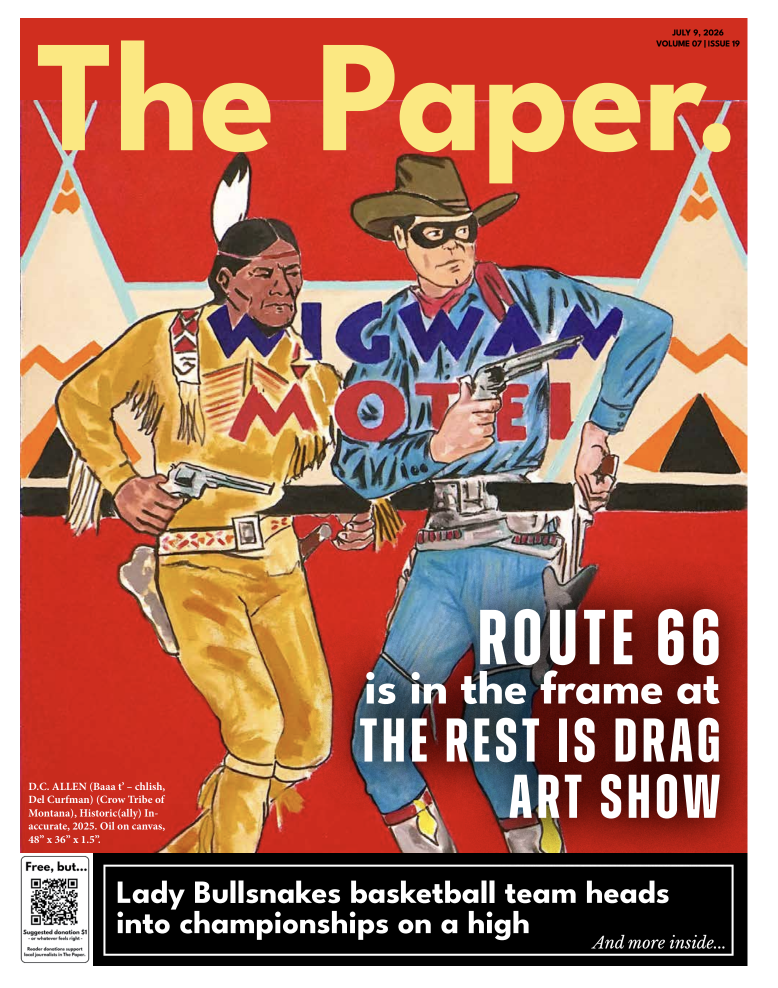
By Sara Atencio-Gonzales, The Paper. – As Route 66 approaches its centennial, a new exhibition at 516 ARTS invites audiences to look beyond the familiar myths of the Mother Road and consider the communities, histories and identities that have shaped it.
Curated by Olivia Amaya Ortiz, The Rest Is Drag examines Route 66 as more than a highway. Through the work of contemporary artists from New Mexico and beyond, the exhibition explores how the iconic corridor has served as a site of visibility, self-expression and cultural invention.
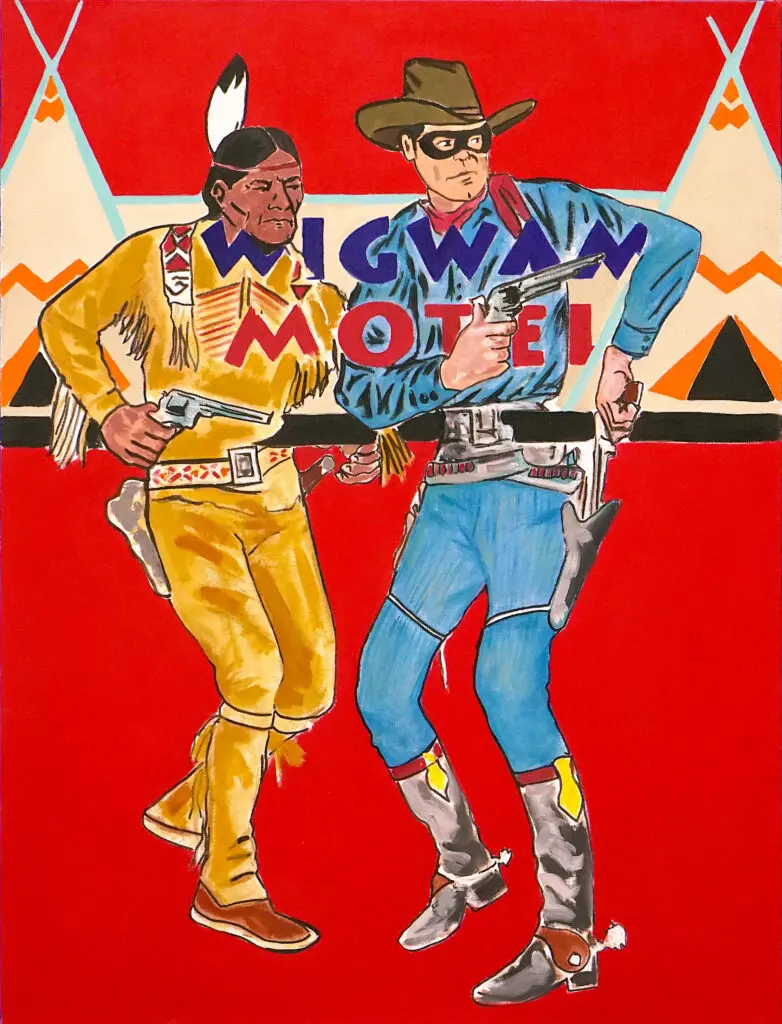
Ortiz explains that the project emerged from conversations surrounding the Route 66 centennial and a desire to engage with the milestone in a more critical way.
“I wanted to participate in that conversation, but also riff off of it in a way, in terms of adding to discourse that felt like it was being critical as well as inclusive of communities that do gather around the Mother Road,” says Ortiz.
The exhibition takes its title from RuPaul’s famous quote, “We’re all born naked and the rest is drag,” but Ortiz broadens the meaning of drag beyond performance. She views it as a framework for understanding how identity is shaped, performed and expressed across many different communities.
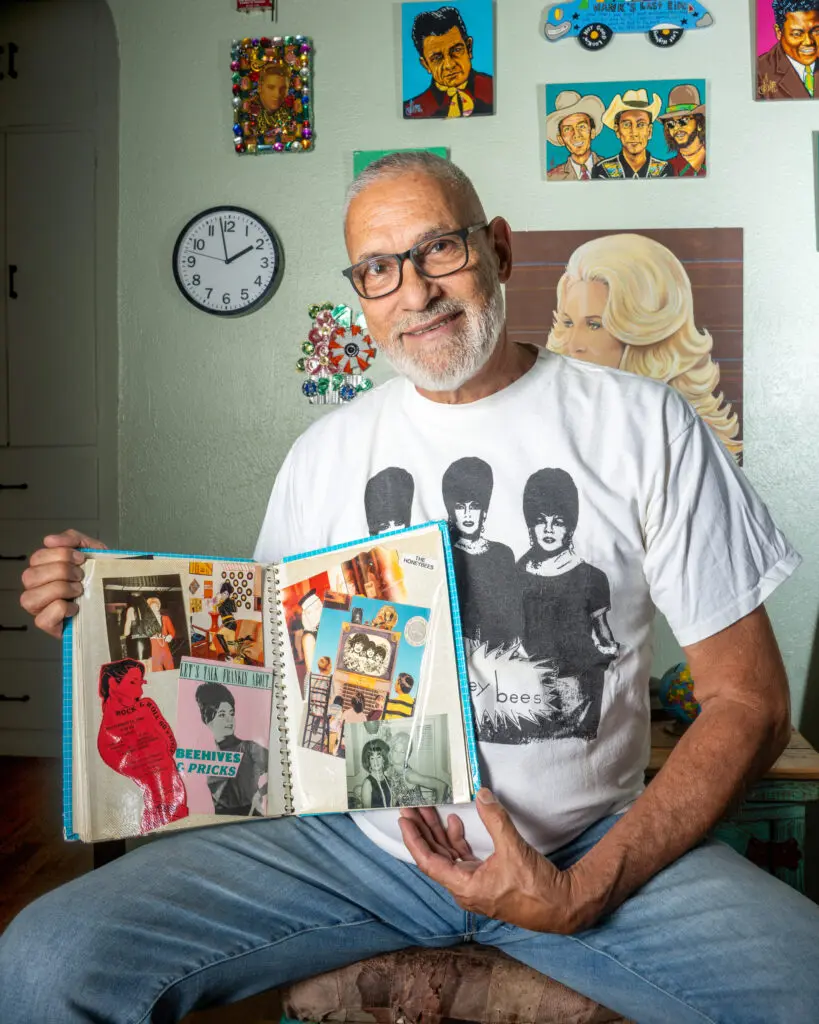
Courtesy of Apolo Gomez, and Kouri + Corrao Gallery)
“The reason I thought it was so fitting is because it kind of plays on words,” says Ortiz. “I think it abstracts what drag means to perform an identity that can be assumed by many different roles.”
That expansive approach allows the exhibition to connect seemingly different cultural practices, from drag performance to lowrider culture. According to Ortiz, those intersections reveal shared experiences of visibility, self-determination and community building.
While Route 66 is often remembered through nostalgic images of roadside attractions and Americana, The Rest Is Drag focuses on stories that have frequently been pushed to the margins. Ortiz points to Indigenous histories, queer communities and questions of who has historically been allowed to move, travel and belong within public spaces.
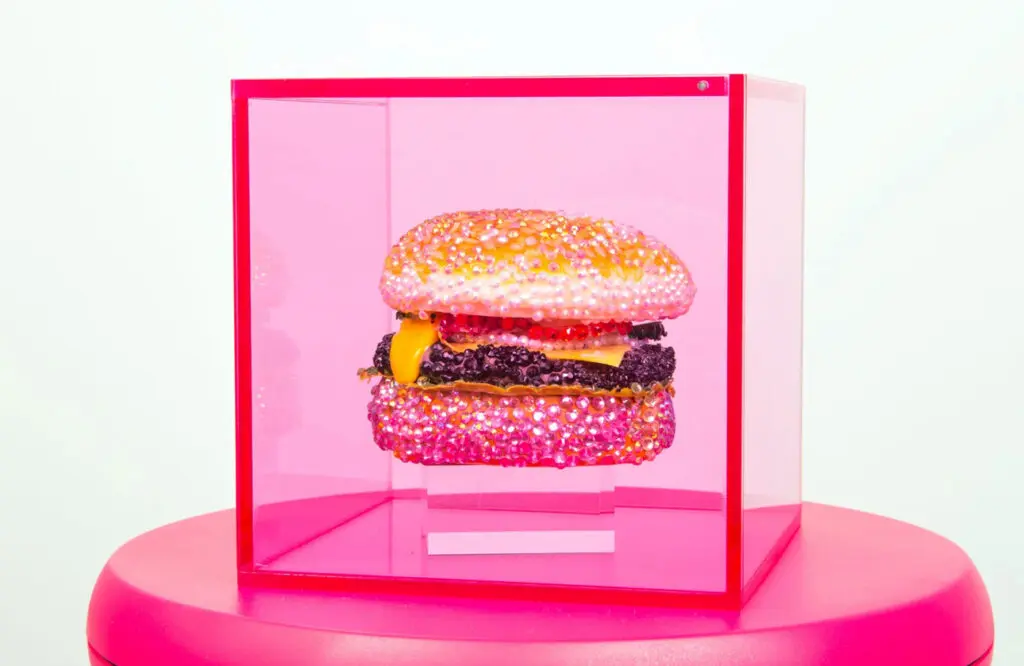
“There are these layered histories of federal jurisdiction atop Indigenous sovereignty,” says Ortiz, noting that Route 66 passes through Pueblo, Diné, Zuni and Hopi lands. Ortiz adds that the exhibition looks at how Native artists are “continuing to assert their own evolving cultural narratives.”
Across the exhibition, artists use a range of approaches to examine identity, visibility and cultural memory. Some draw from oral histories and community interviews, while others explore family histories, migration and contemporary Indigenous experience. Together, their works push back against simplified narratives of Route 66 and, instead, highlight the diverse communities that have shaped life along the corridor.
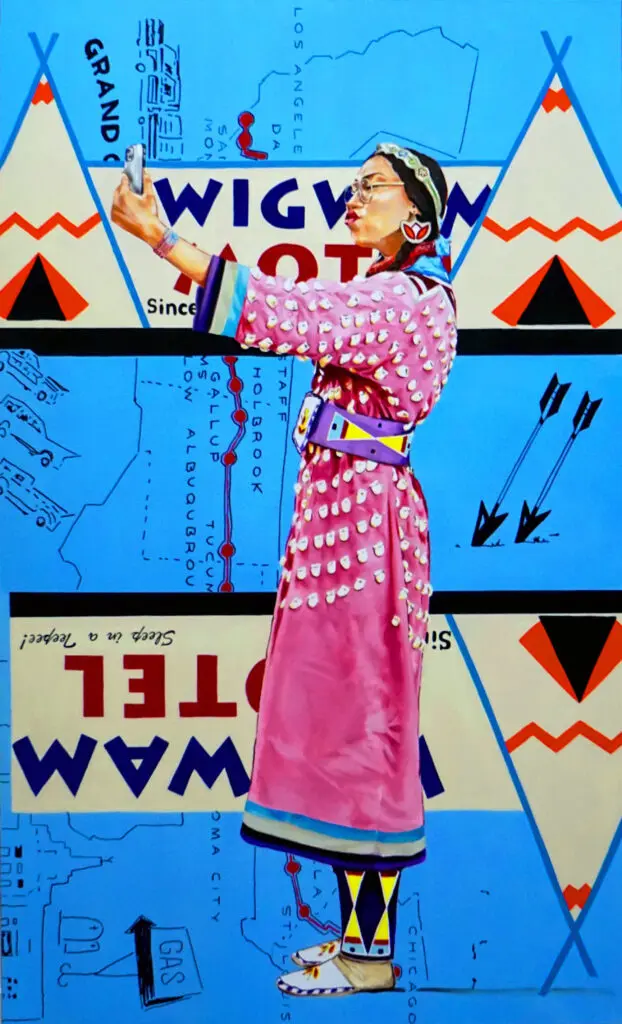
“I’m always excited about opportunities to make things hyper local and personal,” says Ortiz.
Ultimately, Ortiz hopes visitors leave with a greater appreciation for the connections between the diverse communities represented throughout the exhibition.
“I hope that the exhibition offers opportunities for folks to see the intersectionality amongst all of the different kinds of identities and communities on view,” says Ortiz.
The Rest Is Drag opens July 11 at 516 ARTS (516 Central Ave SW). A member preview begins at 5 p.m., followed by a free public opening reception from 6 to 8 p.m. The exhibition will remain on view through Oct. 10, 2026. Admission to both the opening reception and the exhibition is free.
If you go…
The Rest is Drag Opening Reception
- July 11, 6 to 8 p.m.
- 516 Arts (516 Central Ave. SW)
- Free!