


By Sara Atencio-Gonzales, The Paper. — This May, Shakespeare will once again step out of the theater and into Albuquerque area breweries as the Duke City Repertory Theatre brings back its annual Bard Crawl, a production that blends classic text with an anything-can-happen atmosphere.
Now in its eighth year, Bard Crawl invites audiences to experience Shakespeare’s The Comedy of Errors not from a seat in the dark, but from just a few feet away, often with a drink in hand and the sounds of a working bar all around them.
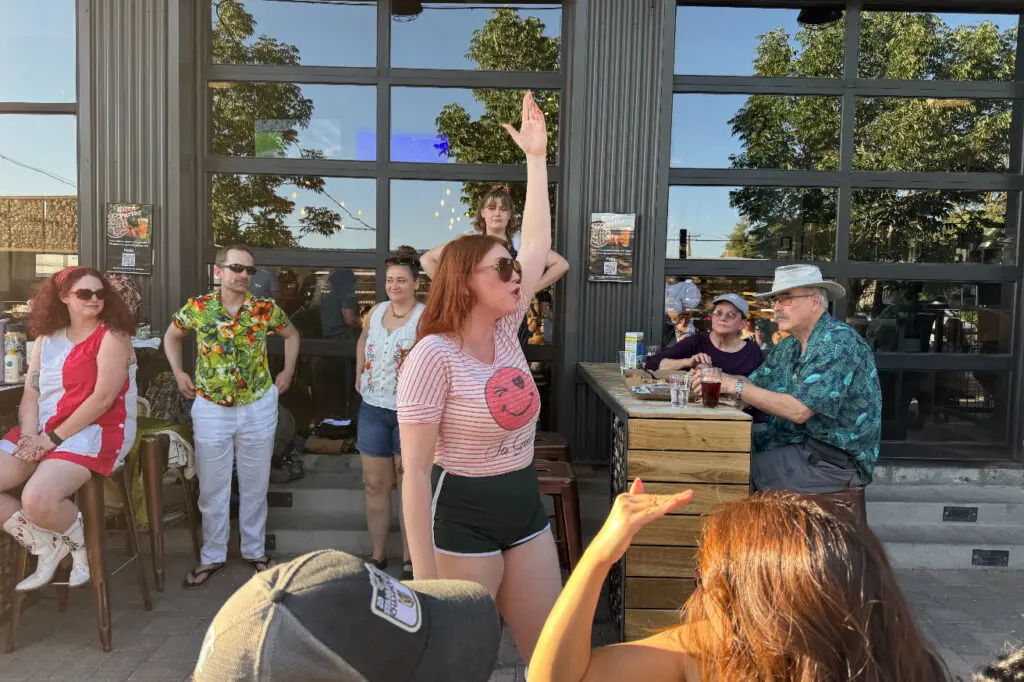
For Amelia Ampuero, artistic director of the Duke City Repertory Theatre and an actor in the production, the setting is not just a gimmick. It is central to the goal of the performance.
“Bard Crawl is actually based on a project called the Backroom Shakespeare project that was originated in Chicago,” says Ampuero. “They wanted to try to get a little bit closer to the environment that William Shakespeare was writing for.”
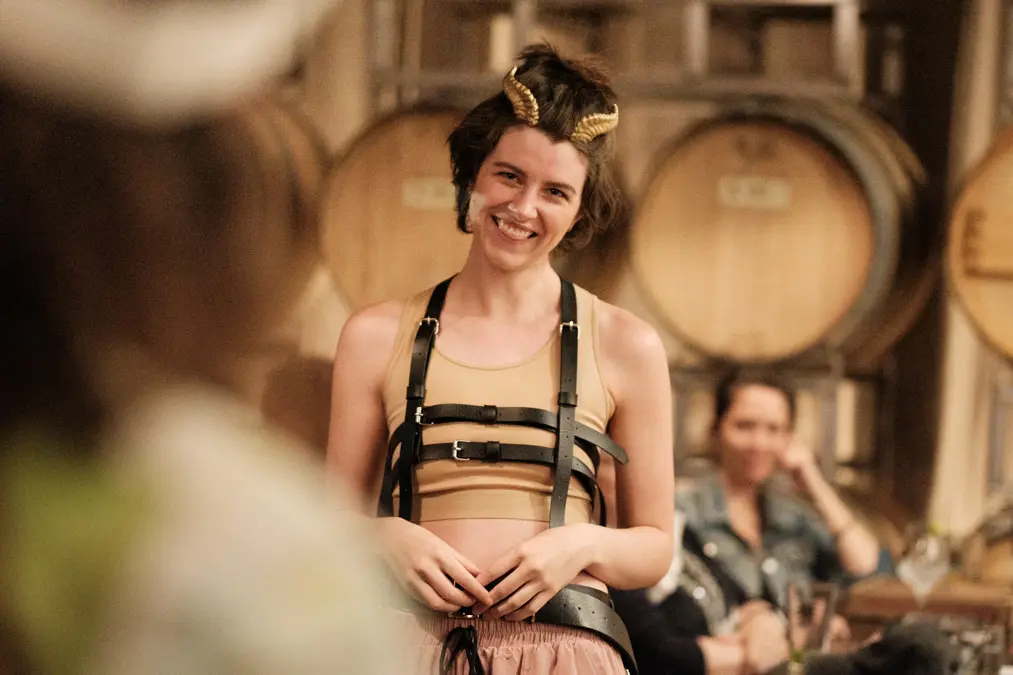
That environment, Ampuero explains, was far more interactive than modern audiences might expect.
“When Shakespeare was writing his plays, the audience was right there within a touching distance,” says Ampuero. “There was no fourth wall. They were an active participant in the action of the play.”
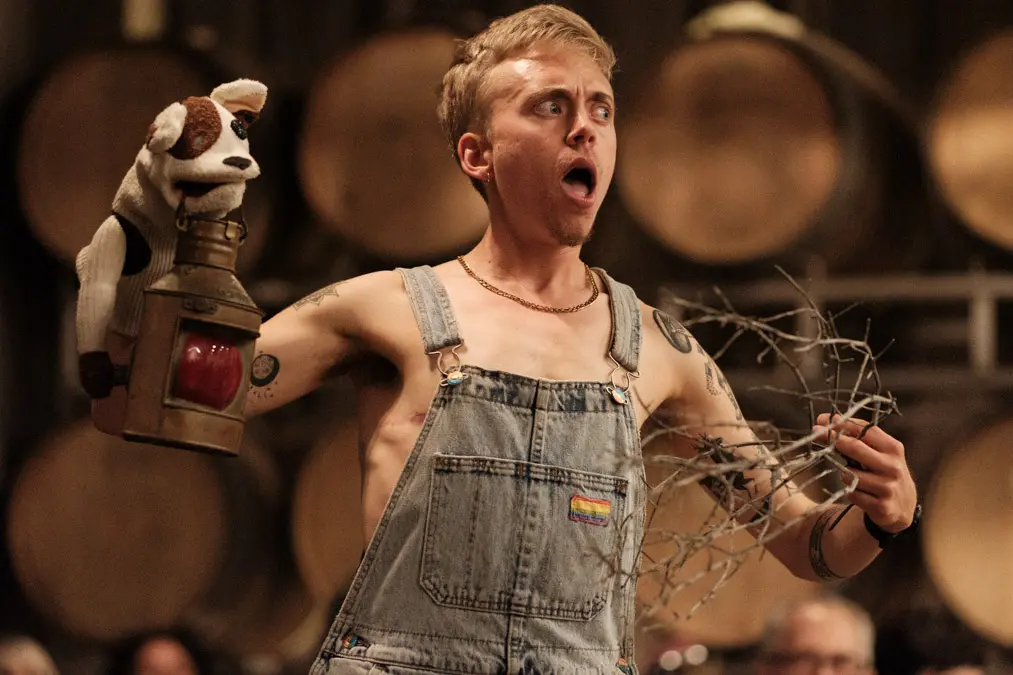
Recreating that kind of immediacy in a modern city led the company to bars and breweries, where noise, movement and audience participation are part of the experience rather than interruptions.
The structure of Bard Crawl pushes that idea even further. There is no director guiding the performance, and the cast only comes together for one full rehearsal before opening night.“It’s true, there is no director and there is one rehearsal,” says Ampuero. “It’s usually pretty terrifying and a lot of fun.”
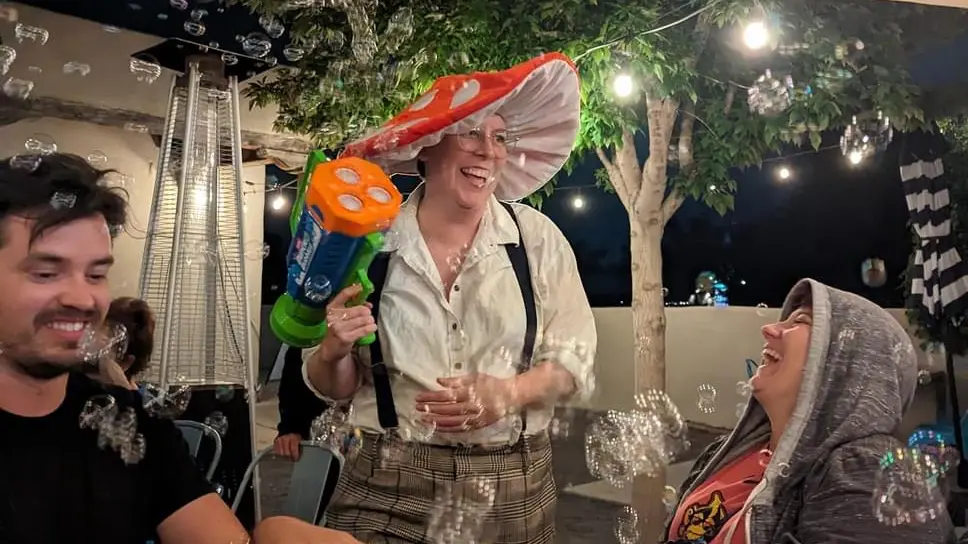
That format puts unusual responsibility on the actors, who must make their own creative choices and build their characters largely on their own.
Evening Star Barron, who plays Antipholus of Syracuse in The Comedy of Errors, explains that lack of direction can feel daunting at first, but it ultimately creates a more personal performance. “It means that everything, all your decisions, are yours,” says Barron.
Without a director to consult, actors are forced to fully commit to their interpretation of the character. “It can be a little daunting, but it’s also really freeing,” says Barron, adding that the process allows actors to “dive deep into the work.”
That sense of ownership carries into the performance itself, where the boundary between actor and audience is almost nonexistent. In many cases, viewers are only inches away from the action, reacting in real time.
“The barrier between performer and audience is much, much thinner,” says Barron. “We often say that the audience is like the last character to join a show.”
For Josh Browner, who plays Dromio of Ephesus, that constant interaction keeps the show fresh, even for returning performers. “Every show kind of feels like an opening night,” says Browner. “We’re doing it in a space that we haven’t done this show with these characters in this space before.”
Because each venue is different and each audience brings its own energy, no two performances unfold the same way. The unpredictability is part of the appeal, but it also presents challenges. “Sometimes we do have to fight the noise a little bit,” says Browner, noting that some audience members are not there for the performance at all.
Rather than trying to eliminate those distractions, the cast often incorporates them into the performance itself. Ampuero describes how even something like a helicopter passing overhead can become part of the world of the play. “There’s no reason why we have to ignore the helicopter going overhead,” says Ampuero.
Moments like that help create what many of the actors describe as a uniquely alive form of theater.
“It’s exhilarating,” says Ampuero. “You really never know what is going to happen.”
This year’s production of The Comedy of Errors leans into that unpredictability. The play follows two sets of twins separated at birth who unknowingly end up in the same city, leading to a cascade of mistaken identities and confusion.
“It’s just madcap,” says Ampuero, describing the fast-paced, chaotic nature of the story.
The structure of the play gives the audience a unique vantage point, as they are often the only ones who understand what is actually happening. “There they are like the only people that truly know everything that’s happening in the play. None of the characters do,” says Browner.
For Barron, part of the excitement lies in seeing how audiences react to that confusion, especially in a setting where reactions are immediate and visible. “I’m really excited and interested in seeing what audience response is going to be to this,” says Barron.
Beyond the humor and energy of the production, Bard Crawl is also driven by a larger goal: making Shakespeare more accessible. “One of the biggest things with Bard call is really just about letting people know that the works of William Shakespeare are accessible to all,” says Ampuero.
That accessibility is reflected not only in the setting, but also in the structure of the event. Performances are offered on a pay-what-you-will basis, removing financial barriers for audiences.
Actors say the down-to-Earth format can change how people think about Shakespeare entirely.
“My hope would be that audience members would take away that Shakespeare isn’t just meant for stuffy old theaters,” says Barron. “That theater is for everyone.”
Browner adds that the production helps audiences connect with the language in a new way. “We want to change the narrative on that,” says Browner. “Shakespeare’s words are for anyone and for everyone.”
At its core, Bard Crawl is about breaking down barriers between performer and audience, and between Shakespeare and the modern world. It invites people to watch, react, and even interrupt, creating a shared experience that feels both spontaneous and communal.
“This show is for you,” says Barron. “Theater is for you.”
That sense of openness has helped Bard Crawl build a loyal following, with audiences returning each year and often packing venues to capacity. Because seating is limited and first come, first served, organizers encourage attendees to plan ahead.
“A lot of times we have people who are like, ‘Oh, I’ll come see the last performance’, and they get turned away at the door,” says Ampuero.
For those hoping to catch the show, arriving early can make all the difference. Performances take place May 2 through 24 at breweries, wineries and veunues across the Albuquerque metro area, including Boxing Bear Firestone, VARA Tasting Room, Canteen Brewhouse, Painted Lady Bed & Brew, Flock of Moons, Ex Novo Corrales and more. A full schedule, along with event details, can be found on the Duke City Repertory Theatre website (dukecityrep.com).
So get to your favorite tavern early, grab a beer and take a seat. Because in Bard Crawl, Shakespeare is not confined to a stage. It unfolds in real time, shaped by the space, the actors and the enthusiastic audience gathered around them.